 Guide On Map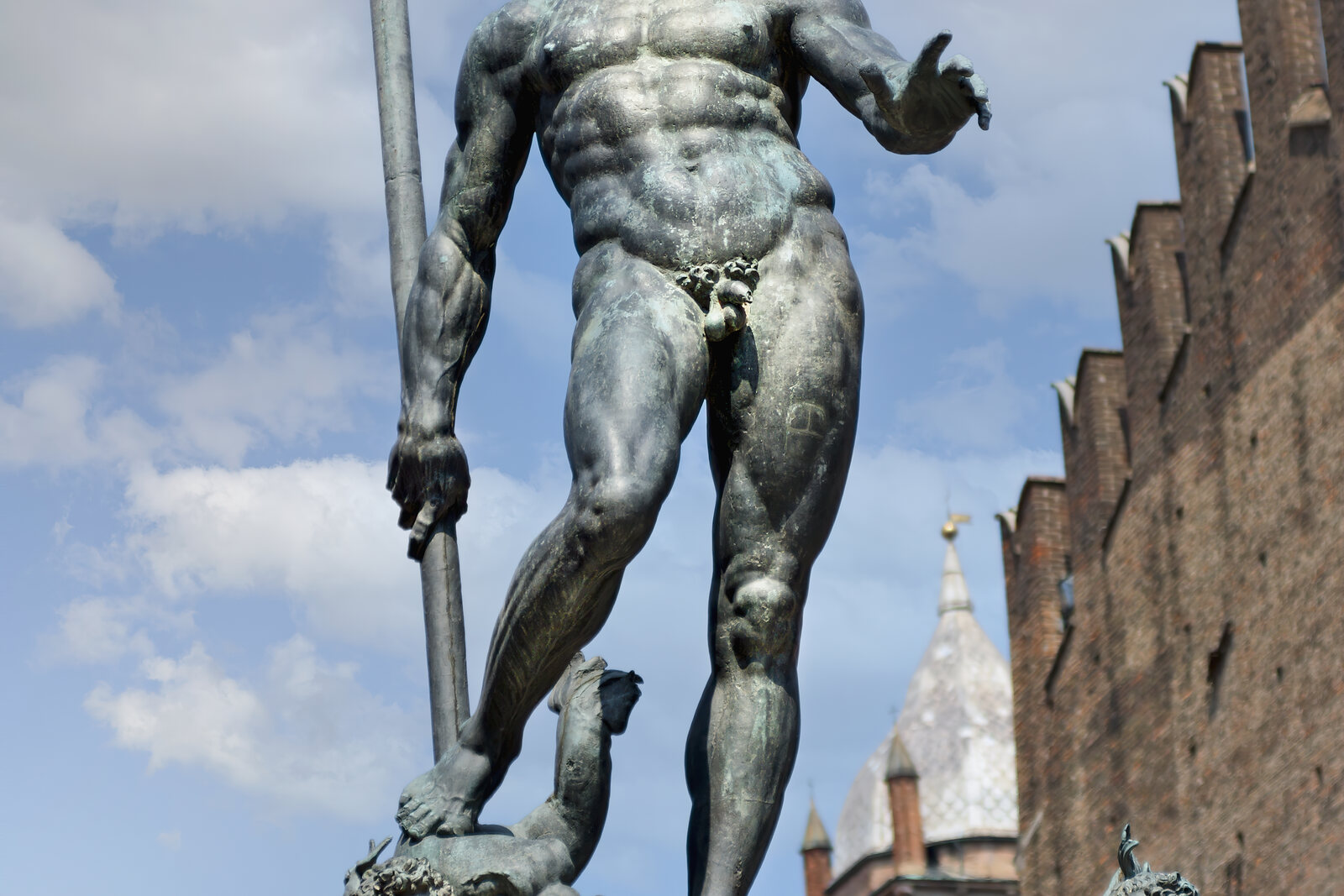
Look around first
What to notice
- The bronze figure of Neptune
- The marble rim with its inscription
- The old wall fountain by the north wall of the palace
The story of the place
Above the broad stone basin rises a three-meter bronze figure of the Roman ruler of the seas, and water once flowed through numerous openings in the sculptures surrounding it. Water was brought to the city center from the hills of San Michele in Bosco, and a separate old fountain for clean spring water survives by the north wall of the municipal palace. A tall iron fence once separated the basin from the square, but it was removed by the end of the nineteenth century, leaving the stone rim open again.
An inscription survives on the fountain's marble rim: “Populi commodo” — “for the convenience of the people.” In the sixteenth century, the people of Bologna understood those words literally, although the patron had intended entirely different uses for the water.
Pier Donato Cesi, the papal legate who governed Bologna on behalf of Pius IV, planned to rebuild the city's main center after the Council of Trent. In fifteen sixty-four, several medieval houses were demolished to make way for the new square. The site was chosen beside the palace housing the papal administration and near the vegetable market: the structure was to show citizens every day who had ordered water brought here.
The architect Tommaso Laureti was commissioned to lay a water conduit from springs in the hills near San Michele in Bosco and assemble the fountain's hydraulic system. The Flemish sculptor Giambologna, who adopted this name in Italy, received the commission for the bronze figures. Between fifteen sixty-three and fifteen sixty-six, a three-meter Roman god of the seas rose above the basin. Neptune was chosen because he rules the waters: the patrons compared him to the pope, who governed Bologna and the Catholic world. At first, the entire fountain was called “Acqua Pia” — “Pius's Water” — in honor of Pius IV. The fountain's and square's present names came from the bronze god.
Water emerged from dozens of openings in the figures, but clean spring water was meant to be drawn from another fountain set against a wall nearby. Cesi wanted Neptune to remain an isolated spectacle. But vegetables were sold nearby, and vendors began washing their goods in the large basin before selling them. Laundresses brought laundry here for which they were paid to wash. Vegetable leaves and dirty water clogged the drains.
In fifteen eighty-eight, the city authorities prohibited washing laundry and vegetables here. Offenders faced corporal punishment and confiscation of vessels, laundry, and goods. The ban did not help. In sixteen oh four, a tall iron fence was installed around the basin. Vendors and laundresses were cut off from the water; the wall fountain served for drinking, and later small water-drawing basins stood at the corners of the fence.
The fence stood for almost three centuries. In eighteen eighty-eight, the city administration removed it along with the corner basins. Today, Neptune is again surrounded by an open stone rim that still promises “the convenience of the people.” The old fountain intended specifically for drawing water remains by the north wall of the municipal palace.
Useful on site
Open urban space; the fountain and square are accessible as an outdoor stop at any time.
Checked: June 28, 2026. Check the official source before visiting.Walk around the fountain: the figure's motion and the famous optical illusion depend on your vantage point.