 Guide On Map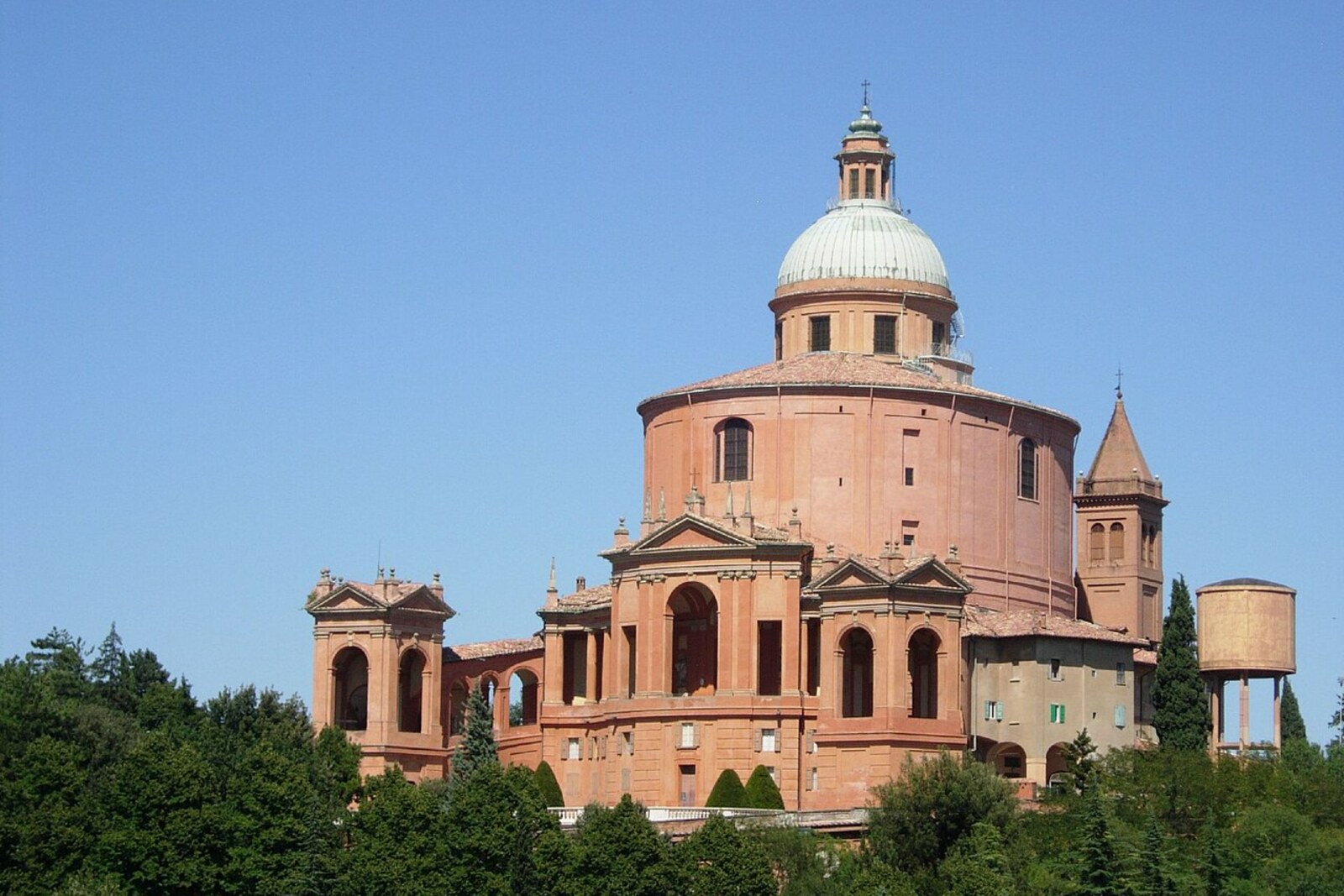
Look around first
What to notice
- Main altar
- Niche above the presbytery
- Icon in a silver-plated copper case
The story of the place
The present sanctuary stands on a site where three churches came before it, and it marks the end of the ascent up the hill. Behind the main altar, in a niche above the presbytery, a small image of Mary with the infant Christ is kept in a silver-plated copper case. The sanctuary's name is connected specifically with this icon; according to tradition, Luke the Evangelist painted it. People come to pray before the image, and services are conducted in the church.
In the late twelfth century, the Bolognese hermit Angelica Bonfantini decided to build a church on Monte della Guardia and establish a religious community beside it. Her choice of site was quite practical: the land at the summit belonged to her family. Angelica came from a wealthy household and supported herself from family property; later, in court, she would value her dowry at one thousand Bolognese lire.
Money and land alone were not enough. The hermit could build a chapel, but priests were needed for Mass and the other sacraments. Angelica made an agreement with the Canons of Santa Maria di Reno, a community of priests at the Church of Santa Maria di Reno. She transferred the land to them while retaining the income from it and from donations. The canons were to help support the church and send two priests to the hill.
Angelica secured the support of Pope Celestine the Third. In eleven ninety-three, he authorized the construction, and the following spring the Bishop of Bologna laid the first stone, sent from Rome. Thus the Church of Santa Maria del Monte della Guardia came into being, the predecessor of the present sanctuary.
Then the agreement concerning the two priests turned into years of litigation. The canons believed that Angelica and her church should be subject to their community. The two priests they appointed once swore to spend eight days on the hill, then left. The prior interpreted the agreement differently: Angelica was entitled to two priests only in the final days before her death; while she was healthy, one was enough. To her, this meant that the church she had built was left without the promised services.
Angelica appealed to church judges and traveled to Rome with a servant to argue her case. By twelve ten, the sides were already disputing the land, the donations, and every item needed for life on the hill. The canons demanded the return of the plots and the income. Angelica replied that their priests had carried off grain, service books, the Gospel book, and the Apostolos. She estimated the travel and legal expenses alone at sixty-six Bolognese lire; her dowry of one thousand lire was also under threat.
In December of that same year, the canons returned five plots of land to Angelica. The full text of the decision has not survived in the documents, but the outcome is evident from what happened next: by the twenties of the thirteenth century, her church was served by its own group of canons. Angelica obtained the priests and the means to support the community for which she had begun the dispute.
The present name is connected with the image that became the principal object of veneration here. The Madonna is Mary with the infant Christ. The words “di San Luca” refer to Luke the Evangelist: church tradition attributes the icon to his hand. It is only a tradition. Researchers date the surviving painting to the end of the twelfth or the beginning of the thirteenth century, while the story of its arrival from Constantinople appeared in later sources.
Angelica's first church did not survive; the present Sanctuary of the Madonna di San Luca became the fourth church on this site. Behind the main altar, in a niche above the presbytery, stands a small icon in a silver-plated copper case. Here people pray before the very image from which the church received its name, and services are conducted by the priests whose presence Angelica sought more than eight hundred years ago.
Useful on site
The sanctuary is open daily 07:00–18:00; access to the icon is closed on weekdays 12:30–14:30; the square is open 06:30–18:00.
Checked: June 28, 2026. Check the official source before visiting.If a service is in progress, look around the interior without talking or using flash. If the entrance is closed, focus on the exterior architecture; look for and check access to the terrace separately.