 Guide On Map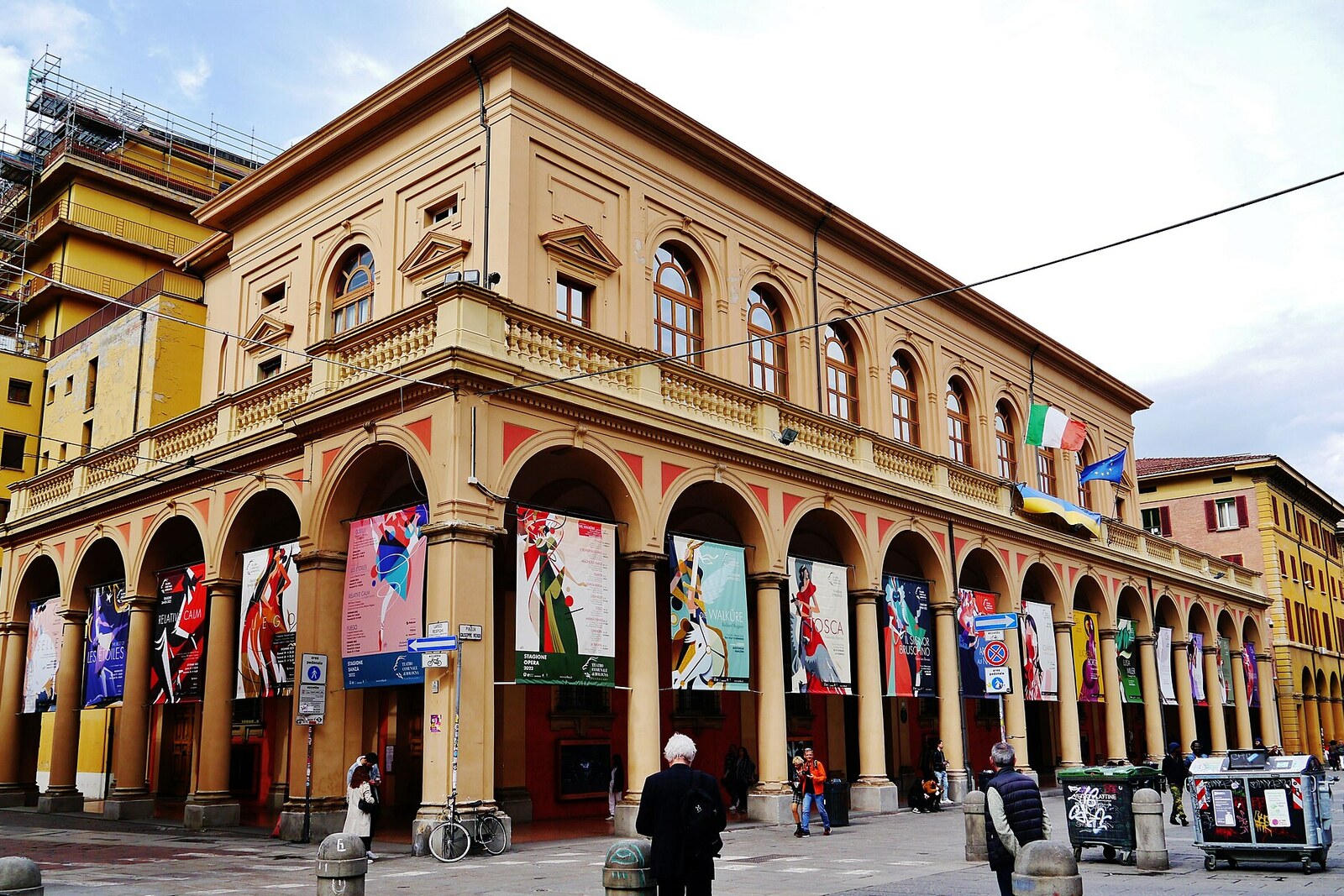
Look around first
What to notice
- The façade of Teatro Comunale di Bologna
- The theater’s side entrance
- The memorial plaque by the entrance
- The apse of the Basilica of San Giacomo Maggiore
The story of the place
Teatro Comunale di Bologna was established after a fire in seventeen forty-five destroyed the Malvezzi family’s private wooden theater. The Bologna Senate decided to build a stone municipal opera house and chose an empty part of Guasto, the site of the destroyed Palazzo Bentivoglio. Antonio Galli Bibiena’s auditorium opened in seventeen sixty-three. In front of it, there remained a space long considered part of Strada San Donato—today’s Via Zamboni.
Piazza Verdi only became a square in nineteen fifty-one. Giuseppe Verdi was an Italian opera composer whose works were regularly staged at Teatro Comunale di Bologna. This auditorium is also connected with a personal action of his. In November eighteen seventy-one, Verdi came here incognito for one of the first Italian productions of Wagner’s “Lohengrin.” He sat in the twenty-third box of the second tier and wrote comments directly on the score’s pages. Verdi was recognized, but he refused to appear before the audience and left for Busseto that same night. The score, covered with his notes, has survived.
Sixty years later, Arturo Toscanini, the celebrated conductor, arrived at the service entrance of this same theater, intending to conduct a memorial concert for Giuseppe Martucci, the former director of the Bolognese orchestra. Before the performance, Toscanini was required to perform “Giovinezza,” the anthem of the Fascist Party, and the Royal March. High-ranking representatives of the regime were expected in the auditorium. The conductor wanted to keep the program as a tribute to Martucci and refused to add political anthems.
For Toscanini, this refusal came at a direct cost. He lived by his work at the conductor’s podium and risked access to the stages of his own country. At the entrance, Fascist militants surrounded the artist, demanding that he change his decision. Toscanini did not yield. He was struck in the face; he never reached the orchestra pit, and the concert was canceled.
The conductor returned to his hotel. A local party leader arrived there with a group of supporters and ordered Toscanini to leave Bologna immediately if he wanted to keep his life and health. The composer Ottorino Respighi acted as an intermediary and obtained permission to escort Toscanini to the train.
The next day, Toscanini wrote Benito Mussolini a letter about the attack and received no reply. After Bologna, he decided not to conduct in Italy while the Fascist regime existed, and he returned to an Italian orchestra only after the war. The Martucci program he had prepared was nevertheless performed at Teatro Comunale di Bologna—exactly sixty years later, on May fourteenth, nineteen ninety-one, under Riccardo Chailly. A plaque at the theater’s side entrance marks the site of the attack that prevented the first concert here from taking place.
Useful on site
The historic theater is closed for unscheduled work; performances have been moved to other venues, including Comunale Nouveau; official tours are temporarily suspended.
Checked: June 28, 2026. Check the official source before visiting.You can listen to the story from the square. A performance, tour, or entry into the theater’s interior requires separate planning.