 Guide On Map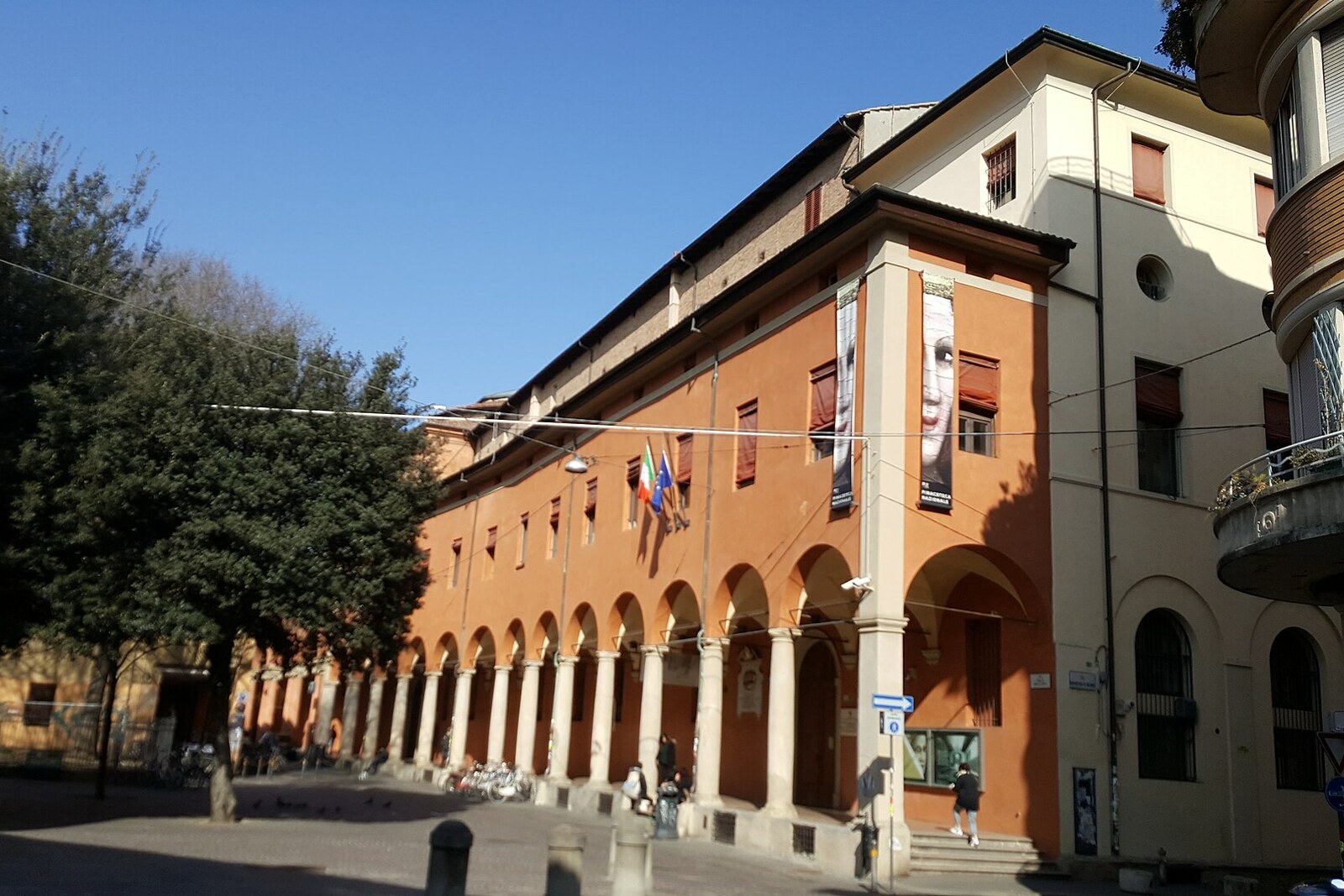
Look around first
What to notice
- Facade of the former Jesuit complex
- Entrance staircase
- Raphael's The Ecstasy of Saint Cecilia
- Guido Reni's The Votive Offering
The story of the place
Behind the facade of the former Jesuit house and the tall entrance staircase is a collection assembled not by one family and not by a single patron. When Bologna's churches and monasteries lost their former owners, the authorities brought almost one thousand remaining paintings here; young men preparing to join the Society of Jesus once lived within these walls. At first, the gallery served the Academy of Fine Arts of Bologna, and later it gained independent state status, leaving the word “National” in its name.
On the night of December eleventh, nineteen forty-three, Raphael's The Ecstasy of Saint Cecilia was taken out of this pinacotheca. Twenty-eight-year-old art historian Francesco Arcangeli accompanied the painting along Via Emilia to a crossing over the Po River near Piacenza. It was then sent to Isola Bella on Lake Maggiore.
Arcangeli was not yet in charge of the museum. Before the war, he taught art history at a Bologna high school, studied under Roberto Longhi, and during the war worked for the office that protected art collections. His task was to keep paintings safe from bombs and theft. He was helped by volunteers—teachers and students from the Academy of Fine Arts of Bologna, which still occupies the neighboring part of this building.
Some works were hidden in the bell tower of Bologna Cathedral. Others were sent to Villa Aria in Marzabotto, Isolani Castle in Minerbio, and Eremo di Tizzano. The most valuable were sent farther away, to Lombardy. Taking a painting out meant risking it on the journey; leaving it meant risking the entire collection at once.
By the end of the war, no serious losses were discovered at the pinacotheca. Only Guido Reni's The Votive Offering was damaged: it was torn while being returned from Marzabotto. The damage was especially dangerous for this painting—Reni had made the huge image in oil on silk.
The Ecstasy of Saint Cecilia had already been saved here after one forced journey. Raphael painted it for the chapel of Elena Duglioli in Bologna's Church of San Giovanni in Monte. In seventeen ninety-six, French commissioners seized the painting and sent it to Paris. After Napoleon fell, the sculptor Antonio Canova secured its return. It arrived in Bologna in a crate in the autumn of eighteen sixteen and remained in the pinacotheca instead of returning to its former altar.
The whole collection was formed in the same way. After Bologna's churches and monasteries lost their former owners, the authorities brought almost one thousand paintings left without their former owners to the Jesuit Complex of Saint Ignatius, founder of the Society of Jesus. It had previously been a novitiate, a house where young men prepared to join the order. In eighteen oh eight, the paintings became the teaching gallery of the Academy of Fine Arts of Bologna. In eighteen eighty-two, King Umberto I separated the institutions that kept works of art from educational institutions. The pinacotheca became an independent state museum—hence the word “National” in its name.
Today, The Ecstasy of Saint Cecilia is in room fifteen, and The Votive Offering, returned from Marzabotto, is in room twenty-four. One painting left this address by way of a crossing over the Po River; the other returned here with its silk torn.
Useful on site
Tue–Sun and public holidays 09:00–19:00, last entry 30 min before; closed Mon. Full ticket 10 €, reduced by agreement 6 €, ages 18–25 2 €, under 18 free.
Checked: June 28, 2026. Check the official source before visiting.The main details of this story can be seen only in the museum galleries, so plan your visit separately. From outside, this stop introduces above all the new home of the relocated paintings.