 Guide On Map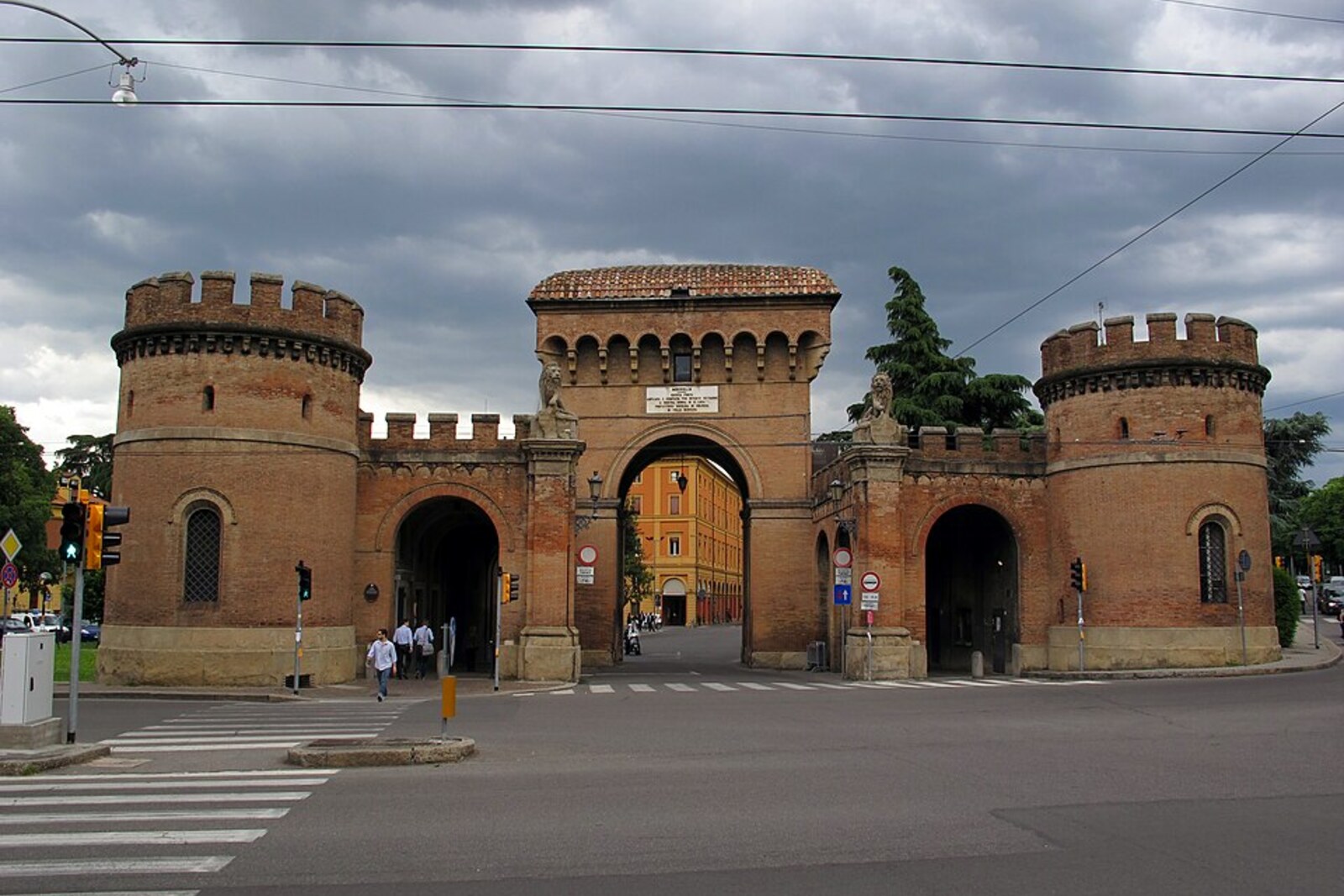
Look around first
What to notice
- Brick passageway
- Round towers
- Battlements above the gate
- Side passageways
The story of the place
The round towers, battlements, and side passageways form a fortress-like façade, though the city wall around them disappeared long ago. The gate's present appearance dates from the nineteenth century, when the brick passageway was redesigned after the model of an old city gate. The Museum of the Blessed Virgin of San Luca now operates inside, and through this narrow passage the city is still connected to the road leading to Monte della Guardia.
The brick passageway with its round towers occupies the site of a gate built into the city wall in the thirteenth century. The name is older than the gate itself: the area was already called Saragozza in eleven eighteen. Bologna's name most likely relates to the Spanish city of Zaragoza, but historians do not know whether settlers from there brought it or whether it arrived through trade and cultural ties.
In the spring of fourteen thirty-three, unbroken rains threatened to destroy the harvest. For peasants, this meant losing what they used to feed their families and pay their landlords; for the city, it meant approaching famine. Graziolo Accarisi, a lawyer and member of the Council of Elders, which governed Bologna at the time, proposed turning to the Madonna di San Luca, kept on Monte della Guardia. He sought to have it brought into the city, just as Florentines brought their revered icon during times of disaster.
The Council agreed and entrusted the carrying of the icon to the Confraternity of Santa Maria della Morte. The grim name belonged to laypeople who cared for the dying and buried those for whom no one else was left to care. The brothers climbed the hill in the rain, took the icon, and carried it down. By the time they returned, the city gates had already been locked. The bearers had to spend the night in a monastery immediately beyond Porta Saragozza; the Church of San Giuseppe now stands on its site.
At dawn on July fifth, they passed with the icon through this very passageway. According to church tradition, the clouds parted and the sun appeared at that moment. The carrying of the icon itself and Accarisi's initiative are confirmed by historical evidence; the link between the clearing sky and the icon's appearance belongs to the account of a miracle.
The icon was carried through the city for three days, then returned to the hill. The Council of Elders vowed to repeat the procession every year. In fourteen seventy-six, Bologna's ruler, Giovanni II Bentivoglio, moved it from July to the days before the Ascension: in July, the residents of nearby villages were busy with the harvest and could not leave their fields. So the decision made out of fear of losing the harvest remained in the calendar, adjusted for the people who gathered that harvest.
In sixteen seventy-four, the townspeople began building a covered route to the Sanctuary of the Madonna di San Luca so that the bearers and the faithful accompanying the icon could walk under a roof. After that, the annual route was permanently assigned to Porta Saragozza, and the former route through Porta Sant'Isaia was abandoned. In eighteen fifty-eight, a group of townspeople paid to rebuild the gate specifically for the icon's ceremonial entry. Enrico Brunetti Rodati and Giuseppe Mengoni, who completed his work, added round towers, battlements, and side passageways. Its current medieval appearance is a nineteenth-century design for a procession that was by then more than four centuries old.
The Museum of the Blessed Virgin of San Luca is now inside. The city wall around it has disappeared; once a year, the passageway where the bearers waited for dawn in fourteen thirty-three receives the same icon again.
Useful on site
The passage through the gate is open around the clock; the museum inside follows a separate schedule.
Checked: June 28, 2026. Check the official source before visiting.View the gate from a spot that does not obstruct pedestrians or street traffic. It is useful here to first locate the direction of the portico, and only then start the narration.