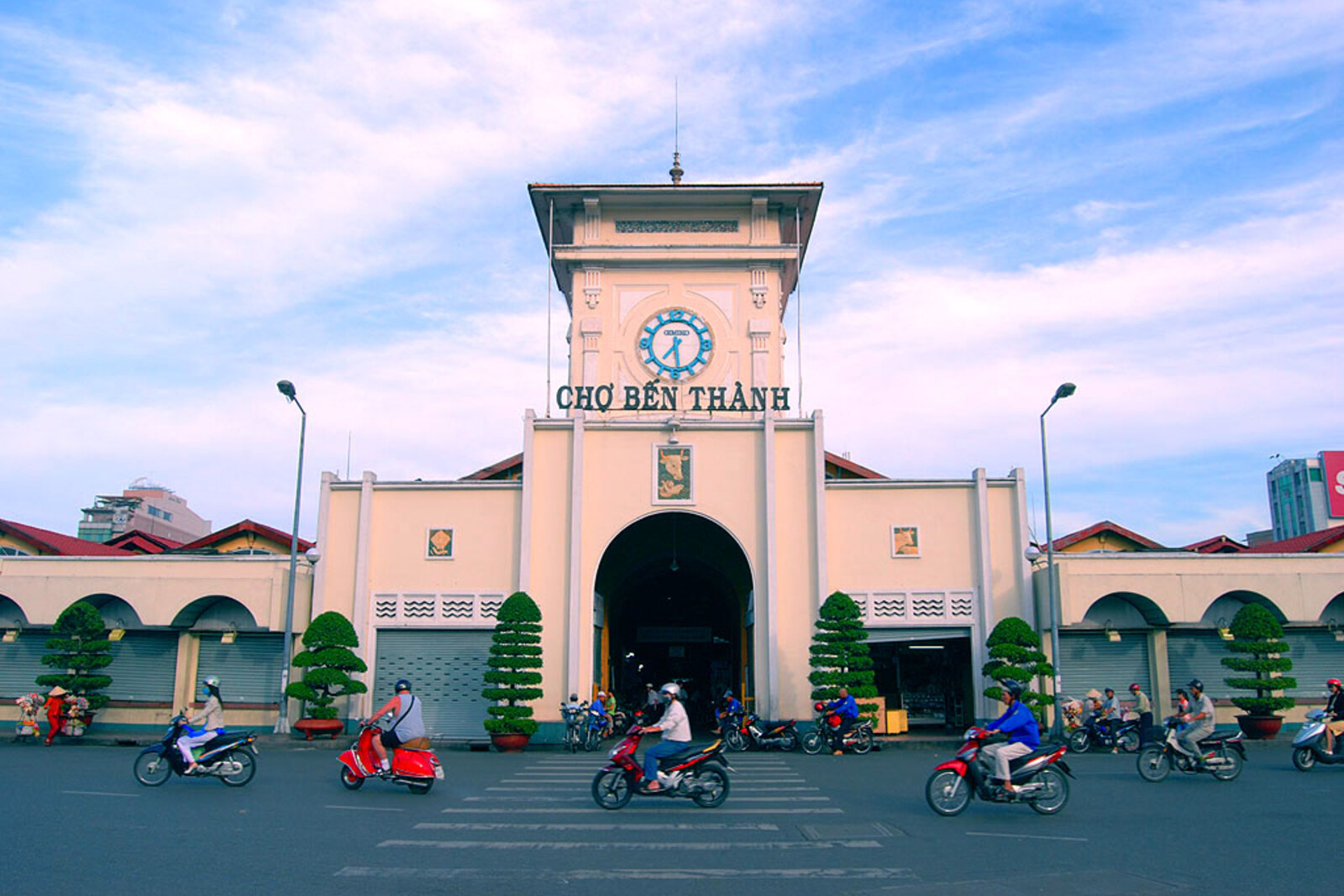
Bến Thành Market History Bến Thành Market: story on the “Around Bến Thành: commercial Saigon and Art Deco” route The ceramic commission will bring young masters whose names did not appear on the finished work to the foreground.
Binh Tay Market History Binh Tay Market: story on the “Cholon: markets, medicine streets, and community temples” route It will show how a private calculation shifted Cholon’s trading center westward.
Calmette Street and Bridge History Calmette Street and Bridge: story on the “Around Bến Thành: commercial Saigon and Art Deco” route The final stop will connect an ordinary road sign with a new system for producing and delivering vaccines.
Dejean de la Bâtie Dispensary History Dejean de la Bâtie Dispensary: story on the “Around Bến Thành: commercial Saigon and Art Deco” route This stop will show how a free clinic became a municipal institution and a subject of dispute over memory.
Hai Thuong Lan Ong Street History Hai Thuong Lan Ong Street: story on the “Cholon: markets, medicine streets, and community temples” route It will explain why different traders in medicinal raw materials gathered at one intersection.
Ho Chi Minh City Museum of Fine Arts History Ho Chi Minh City Museum of Fine Arts: story on the “Around Bến Thành: commercial Saigon and Art Deco” route Here, family real estate, genealogy, and a museum come together in one house.
Lương Nhữ Học Street of Lanterns History Lương Nhữ Học Street of Lanterns: story on the “Cholon: markets, medicine streets, and community temples” route Will link a family craft to sellers’ decisions, on which the holiday market depended.
Nghia An Assembly Hall History Nghia An Assembly Hall: story on the “Cholon: markets, medicine streets, and community temples” route It completes the cycle of assistance in which a former newcomer, once successful, became a donor.
Old Market and Quảng Triệu Assembly Hall History Old Market and Quảng Triệu Assembly Hall: story on the “Around Bến Thành: commercial Saigon and Art Deco” route The route will need the local trade association as a community that turned pooled funds into a school and a dormitory.
Phương Nam Mansion History Phương Nam Mansion: story on the “District 3: Memory, Villas, and Secret Rooms” route The closed estate raises the question of whether costly restoration is enough when no use has been found for the house.
Quách Thị Trang Square History Quách Thị Trang Square: story on the “Around Bến Thành: commercial Saigon and Art Deco” route Here you will trace how the memory of a schoolgirl became attached to the main space in front of the market.
Quan Am Pagoda History Quan Am Pagoda: story on the “Cholon: markets, medicine streets, and community temples” route It will show how an assembly hall acquired a new city name as worshippers shifted their preference.
Secret Weapon Cellar History Secret Weapon Cellar: story on the “District 3: Memory, Villas, and Secret Rooms” route The house brings the history of the underground out of military reports and beneath the floor of an ordinary living room.
Sở Hỏa xa — the building on Hàm Nghi History Sở Hỏa xa — the building on Hàm Nghi: story on the “Around Bến Thành: commercial Saigon and Art Deco” route The history of the station district will explain why the authorities chose this busy sidewalk for a demonstrative punishment.
Southern Women's Museum History Southern Women's Museum: story on the “District 3: Memory, Villas, and Secret Rooms” route Here, private testimonies from Southern women come together in the story of a distinct museum and the Mother of the South Monument.
Tân Định Church History Tân Định Church: story on the “District 3: Memory, Villas, and Secret Rooms” route The finale will connect the parish, the orphanage, and the craft from which Vietnamese publishing grew.
Thích Quảng Đức Memorial History Thích Quảng Đức Memorial: story on the “District 3: Memory, Villas, and Secret Rooms” route This stop connects an act of personal self-sacrifice, a photojournalist's work, and a political turning point.
Thien Hau Pagoda History Thien Hau Pagoda: story on the “Cholon: markets, medicine streets, and community temples” route It reveals the religious, commercial, and educational life of the Cantonese community.
Turtle Lake History Turtle Lake: story on the “District 3: Memory, Villas, and Secret Rooms” route Here you will see how residents adapted a ceremonial square for meeting, trade, and food.
War Remnants Museum History War Remnants Museum: story on the “District 3: Memory, Villas, and Secret Rooms” route The exhibition will begin a conversation about how photographs by fallen correspondents became a lasting public memory.
Xá Lợi Pagoda History Xá Lợi Pagoda: story on the “District 3: Memory, Villas, and Secret Rooms” route Here you will learn why a building with a shrine, school, and library became the headquarters of the Buddhist movement.
An Dong Market Streets and squares Ánh Sao Bridge History April 30 Park Parks Ba Chieu Market Streets and squares Ba Son Bridge History Bach Dang Quay Streets and squares Bách Tùng Diệp Park Parks Bàn Cờ Market Streets and squares Bến Thành Theatre Museums Binh Dong Quay Streets and squares Bình Tây Market Streets and squares Bình Triệu Bridge History Bitexco Financial Tower History Bui Vien Street Streets and squares Cao Dai Temple of Saigon Sacred sites Carmelite Convent of Saigon Sacred sites Cầu Bông History Cầu Bùi Hữu Nghĩa History Cầu Điện Biên Phủ History Cầu Kiệu History Cha Va Bridge History Chi Lăng Park Parks Cholon Jamial Mosque Sacred sites Nearest audio-route stop: Nghia An Assembly Hall — 140 m in a straight line, route Cholon: markets, medicine streets, and community temples
Crescent Mall Streets and squares Dam Sen Cultural Park History Dan Sinh Market Streets and squares Diamond Plaza Streets and squares Dong Khoi Street Streets and squares Dragon House Museums Fort of Chi Hoa History Gia Dinh Park Parks Giác Lâm Pagoda Sacred sites Go Vap Market Streets and squares Guandi Temple Sacred sites Hainan Thien Hau Temple Sacred sites Ham Nghi Boulevard Streets and squares Ho Chi Minh City Museum of History Museums Hồ Con Rùa Streets and squares Nearest audio-route stop: Turtle Lake — 50 m in a straight line, route District 3: Memory, Villas, and Secret Rooms
Hoa Binh Market Streets and squares Hoàng Văn Thụ Park Parks Hùng King Temple Sacred sites Independence Palace History Jade Emperor Pagoda Sacred sites Jeanne d'Arc Church Sacred sites Kênh Tẻ Bridge History Kim Bien Market Streets and squares Labor Cultural Palace of Ho Chi Minh City Museums Lam Sơn Square Streets and squares Landmark 81 History Le Duan Boulevard Streets and squares Le Loi Boulevard Streets and squares Lê Thị Riêng Park Parks Le Van Sy Bridge History Le Van Tam Park Parks Lo Gom Bridge History Mariamman Temple, Ho Chi Minh City Sacred sites Mê Linh Square Streets and squares Minh Phung Market Streets and squares Mong Bridge History Museum of Ho Chi Minh City Museums Nguyen Hue Boulevard Streets and squares Nguyen Thai Son - Nguyen Kiem Interchange Overpass History Nhi Thien Duong Bridge History Ông Lãnh Bridge History Ong Lon Bridge History Paris Commune Square Streets and squares Pham Ngu Lao Street Streets and squares Pham Van Hai Market Streets and squares Phan Đình Giót Streets and squares Quan Am Temple Sacred sites Nearest audio-route stop: Quan Am Pagoda — 50 m in a straight line, route Cholon: markets, medicine streets, and community temples
Quan khu 7 Stadium With children Quang San Art Museum Museums Sacred Heart Church Sacred sites Saigon Bridge History Saigon Central Mosque Sacred sites Saigon Notre-Dame Basilica Sacred sites Saigon Tax Trade Centre Streets and squares Saigon Times Square History Saigon Trade Center History Saigon Zoo and Botanical Gardens History Saint Francis Xavier Church Sacred sites Southeastern Armed Forces Museum Military Zone 7 Museums Sri Thenday Yutthapani Temple Sacred sites Subramaniam Swamy Temple Sacred sites Tan Binh Market Streets and squares Tan Dinh church Sacred sites Tan Dinh Market Streets and squares Tân Sơn Nhứt cemetery History Tao Dan Park Parks Thai Binh Market Streets and squares Thich Quang Duc Monument History Thien Hau Temple Sacred sites Nearest audio-route stop: Thien Hau Pagoda — 60 m in a straight line, route Cholon: markets, medicine streets, and community temples
Thong Nhat Stadium With children Tomb of Pigneau de Behaine History Ton Duc Thang Boulevard Streets and squares Tran Hung Dao Temple Sacred sites Union Square Streets and squares Văn Thánh Park Parks Vietcombank Tower History Vietnam People's Air Force Museum, Ho Chi Minh City Museums Vincom Center Dong Khoi Streets and squares Vinh Nghiem Pagoda Sacred sites Vuon Tao Dan Parks War Remnants Museum Museums Nearest audio-route stop: War Remnants Museum — 30 m in a straight line, route District 3: Memory, Villas, and Secret Rooms
Xá Lợi Pagoda Sacred sites Nearest audio-route stop: Secret Weapon Cellar — 100 m in a straight line, route District 3: Memory, Villas, and Secret Rooms
 Guide On Map