 Guide On Map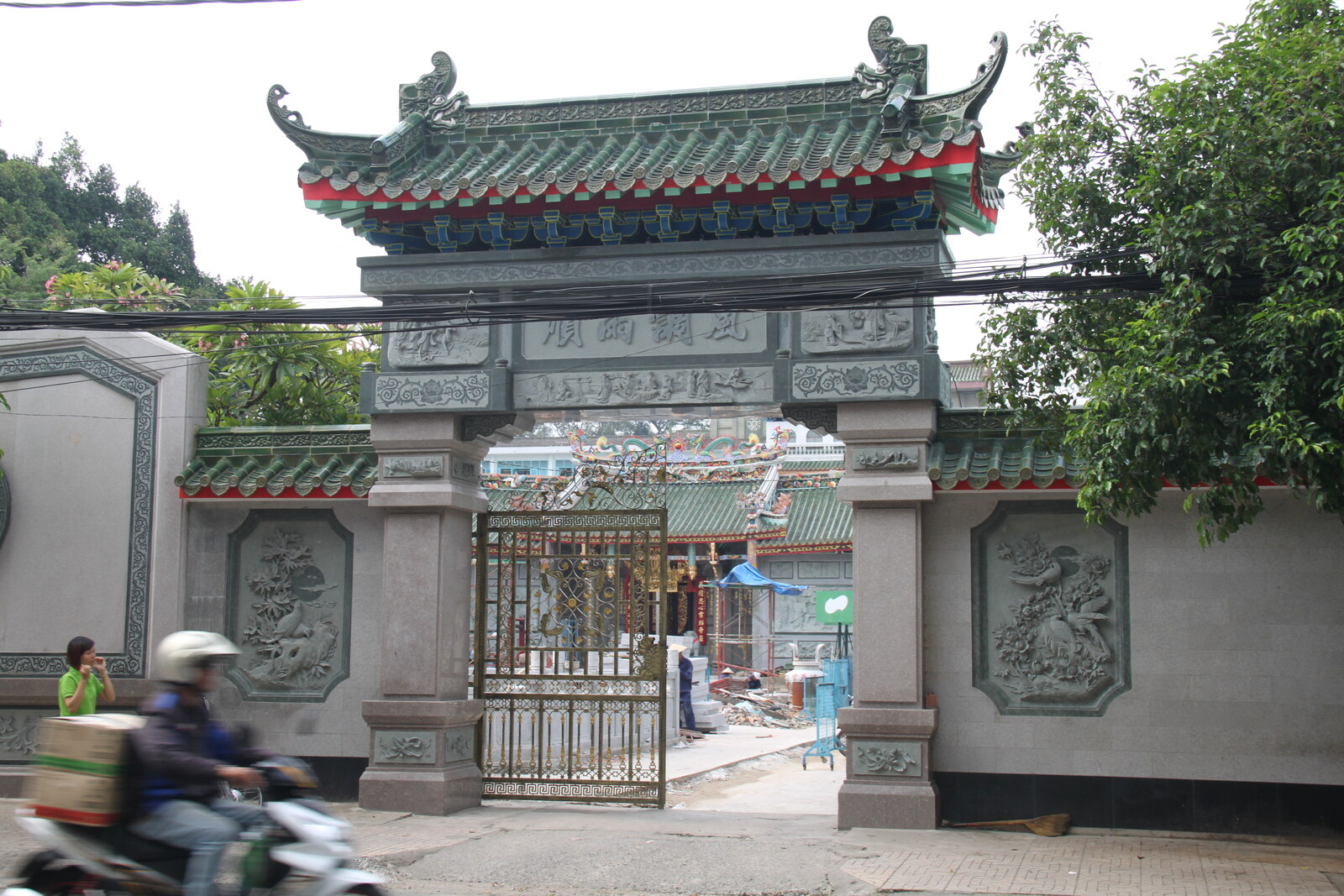
Look around first
What to notice
- Statue of Guan Yu
- Statue of Red Hare
- Stone inscriptions
- Main altar
The story of the place
The stone inscriptions in the hall recall four trading houses that contributed money to its reconstruction. The hall served as a common home for the Chaozhou native-place community: arrivals from the Chinese coast sought housing, information about hiring, and connections with people from the same places. The name Nghia An preserves the old name of the area around Chaozhou, and an inscription on a bronze bell confirms that the community was already gathering here in eighteen forty.
In the main hall of Nghia An Assembly Hall sits Guan Yu, a general of the late Han dynasty who, after his death, came to be revered as the patron of honest dealing and faithfulness to one’s word. He was chosen by merchants for whom someone else’s guarantee could cost them an entire consignment of goods. In nineteenth-century Cholon, merchants released goods on deferred payment, assembled shipments through fellow natives, and entrusted money to intermediaries. Other members of the community could deprive anyone who broke an agreement of orders and credit; for a small trader, that meant ruin.
The hall’s very name indicates whose community it was. Nghia An was an old name for the area around Chaozhou in southern China. People from there gathered here when they needed housing, work, business connections, or help in hardship. The exact founding date has been lost, but an inscription on a bronze bell shows that the hall already existed in eighteen forty.
The community preserved an account of how the hall operated during the French colonial period. Recent migrants from the Chinese coast came here without work and without people willing to vouch for them. The managers housed them, passed on information about hiring, and connected them with fellow natives. Some started out as porters and street vendors, then opened shops of their own. Once they had succeeded, they contributed money to the hall’s fund; it helped the next arrivals and poor members of the community.
The verifiable part of this chain remains in the stone inscriptions. In eighteen sixty-six, four trading houses each contributed funds toward the reconstruction of Nghia An. The wealthy gave more, although the amount of a contribution formally remained voluntary. Someone who had once been helped with housing, connections, or trade credit became, after succeeding, one of those who supported the hall.
Guan Yu stood at the center of this arrangement because the common fund and trade on credit rested on promises. His image reminded merchants before whom they affirmed their word. Beside it stands a statue of his horse, Red Hare, about two and a half meters tall, but the main action takes place at the altar. On the fourteenth and fifteenth days of the first lunar month, rituals of “borrowing good fortune” and “returning good fortune” are still held here: a symbolic loan is borrowed from Guan Yu before the new trading year and returned with an offering.
Useful on site
The district’s tourism portal lists 08:00–17:00 daily. On lunar festival days, hours and crowds may change; checked 2026-06-29.
Checked: June 29, 2026. Check the official source before visiting.Do not pass in front of someone addressing the altar, and do not repeat festival actions without understanding the local order; it is safer to observe from the side.