 Guide On Map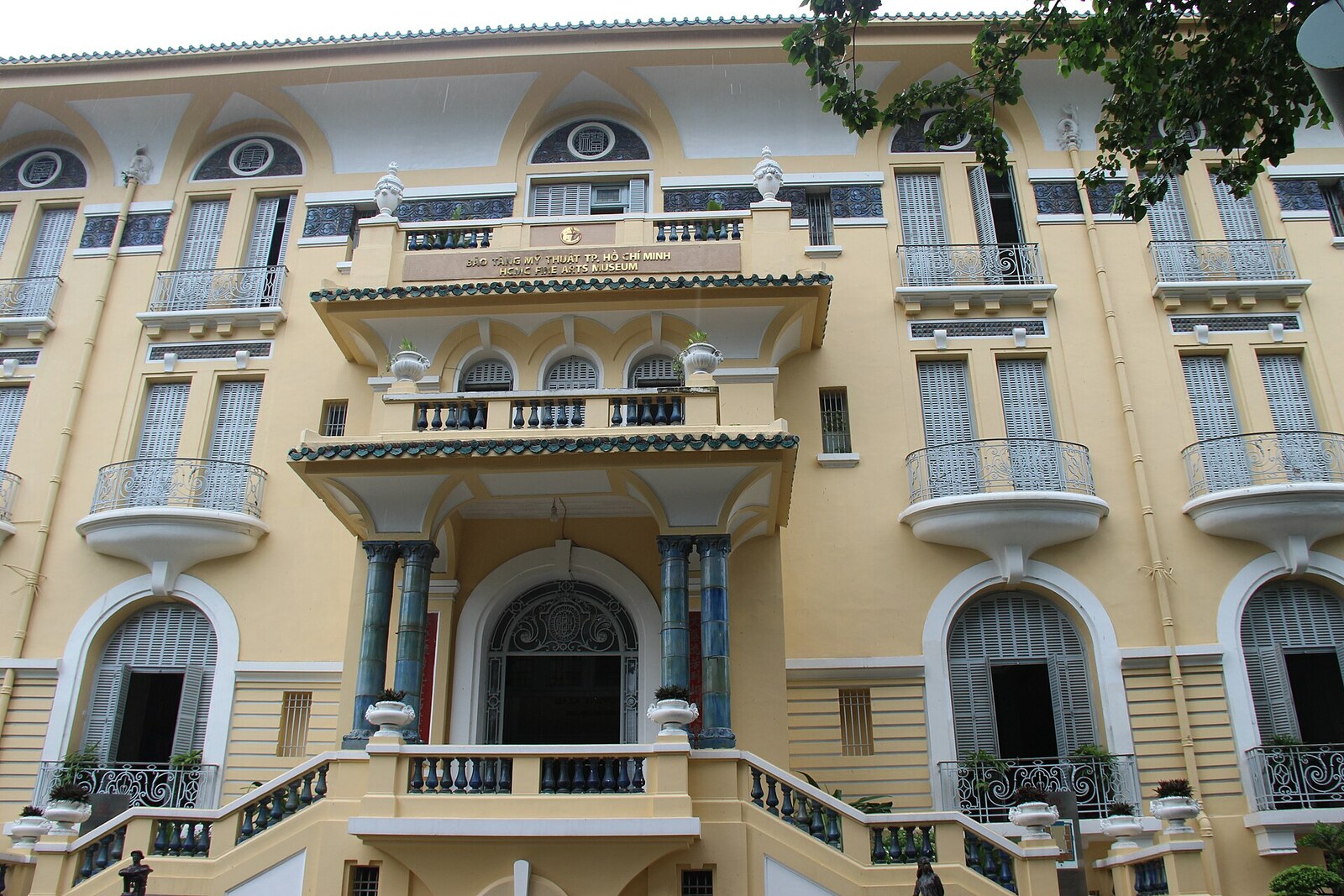
Look around first
What to notice
- Wrought-iron initials above the entrance
- Chinese roof tiles
- Wooden elevator cabin
- Plaque with names by the rear facade
The story of the place
The present museum occupies a former family complex near the central market of old Saigon. An office once operated downstairs, while the upper rooms remained residential and were used for family rites. The European geometry of the facade stands alongside Chinese roof tiles, ceramic details, and a wooden elevator cabin resembling a palanquin. Paintings and sculptures now hang above the former office.
The initials of Hui Bon Hoa remain in the wrought-iron pattern above the central entrance. They are the former owners' family mark. Residents still call the entire complex Uncle Hoa's House, although Uncle Hoa himself never lived in these rooms.
That was the nickname given to Hui Bon Hoa, an entrepreneur of Chinese descent who made money from pawnshops, city plots, and renting out houses. He died in China in nineteen oh one—almost three decades before the main building appeared. His name became attached to the building because his sons turned their father's name into the surname of a business dynasty.
In nineteen twenty-five, the heirs registered the Hui Bon Hoa Real Estate Company and based it at this address. Saigon's central market stood nearby—this was what Ho Chi Minh City was called then—and the family owned plots and rental houses in the neighboring blocks. An office operated on the lower floor, while upstairs were living rooms and an ancestral worship hall. The present main exhibition building was constructed for Tang Hung Hui Bon Hoa, one of the founder's sons. European art deco here stands alongside Chinese roof tiles, ceramic decoration, and a wooden elevator cabin designed like a palanquin.
In nineteen thirty-one, Tang Hung carved Chinese characters onto a long wooden board. He wrote poetry, but the occasion was a family matter and a matter of numbers: he and his brother Tang Chan together turned one hundred. The characters from this board began to be used in turn in the names of later generations. From a relative's Chinese name, family members could tell which generation of the family a person belonged to. In a house where the family both lived and managed real estate, genealogy became a rule for naming future heirs.
After the family left, the board disappeared. In nineteen oh seven, one of the descendants came to Vietnam and found it with a street vendor. He bought back the family relic and took it to Paris. So the object created here for people who were to continue the shared business returned to them thousands of kilometers from Saigon.
Municipal authorities established the Ho Chi Minh City Museum of Fine Arts in the former family complex in nineteen eighty-seven. After the collection was prepared, it opened to visitors in May nineteen eighty-nine. The main building housed modern Vietnamese painting, lacquer works, and sculpture; the other buildings were assigned to ancient art and temporary exhibitions.
Tang Hung's wooden board is no longer here. Of the former family, only the initials above the entrance, a plaque with names by the rear facade, and the building's very division remain: museum paintings now hang in the rooms above the former office.
Useful on site
Daily 08:00–17:00, no days off.
Checked: June 26, 2026. Check the official source before visiting.You can understand the house's history from outside; viewing the museum collection requires separate time.