 Guide On Map
Cholon: markets, medicine streets, and community temples
From Binh Tay Market to Nghia An Assembly Hall through the medicine district
Guide On Map on your phone
Open the walk like a regular app
It takes about 10 seconds to install. No app store needed.
The whole path
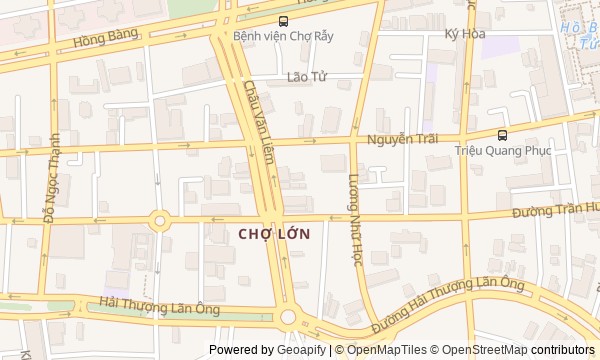
Route map
About the walk
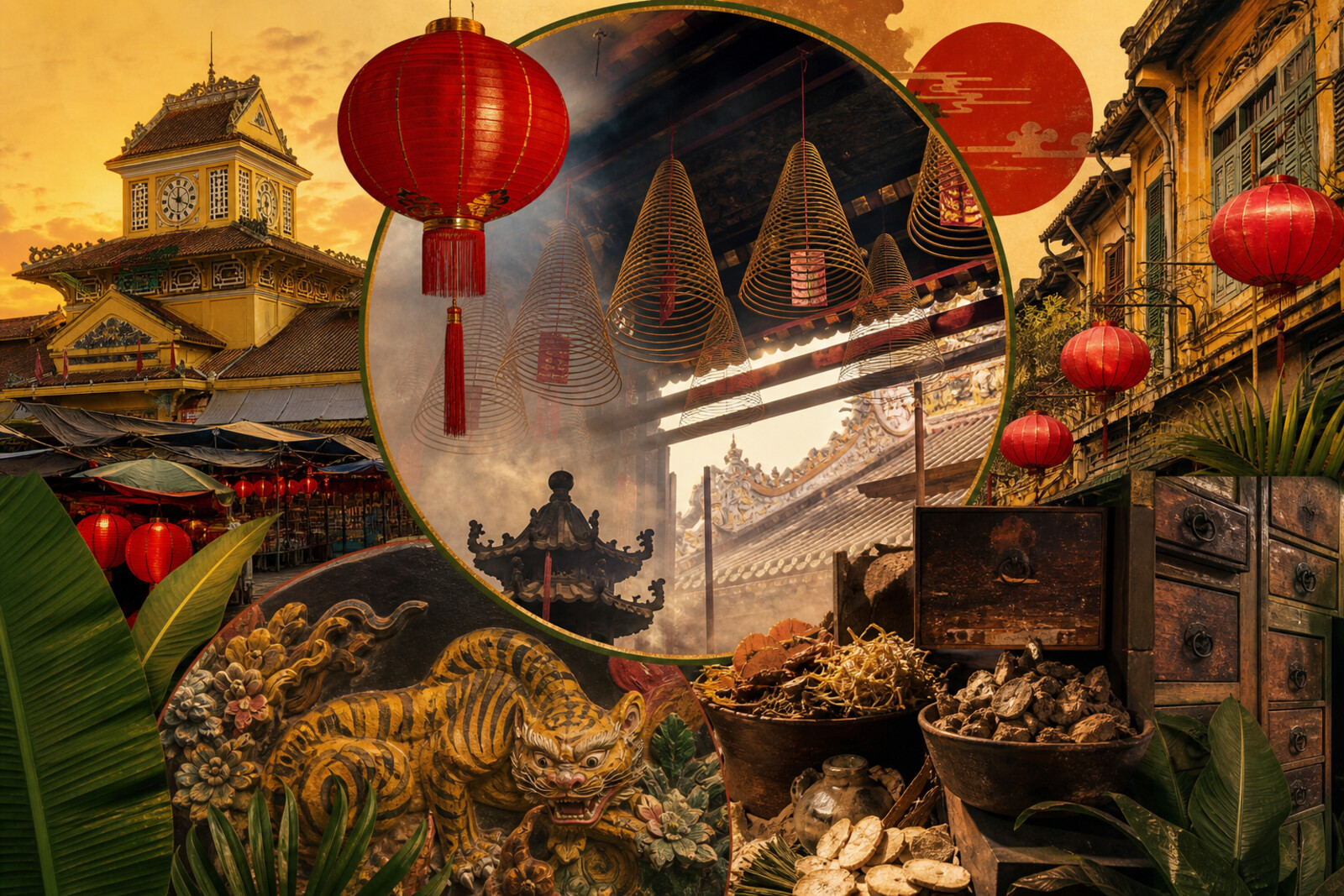
You will cross Cholon from west to east: from the wholesale rows of Binh Tay Market, along the medicine streets, to temples and community assembly halls. Instead of grand landmarks, you will find places where people traded, lent money, and received newcomers.
By the market fountain, you will see lions, dragons, and the bust of a man—but not the document he once held in his hand. After the market, you will enter a street lined with sacks of roots, named for a physician who never worked here. Beyond temple gates, one building will carry 2 names, while paper and plastic lanterns share a single stall.
The story unfolds through deals, family shops, donations, and obligations between people from the same home region. By the end, you will be able to explain why Cholon's market, medicine street, and temple courtyards form one system of mutual support.
Why this order
Binh Tay Market sets the scale: large batches of goods spread outward from here. Next, the medicine street shows how the wholesale flow takes root in family shops and passes to the children. After the trading houses, On Lang Assembly Hall (Quan Am Pagoda) introduces the home-region association a migrant could rely on in illness or a dispute. Tue Thanh Assembly Hall (Thien Hau Pagoda) continues that thread among Cantonese sea traders and shows how a shared house was sustained through contributions. Nearby, the lantern street brings the route back from the hall to the stall: here you can see how a wholesaler's choice changes the fate of a craft. That is why the final stop, Nghia An Assembly Hall, does not simply add another temple—it closes the chain. Successful merchants added to the fund that helped new arrivals begin the same journey.
Those who want to understand Chinese Cholon through trade and home-region associations Fans of urban stories about migration, craft, and mutual support Those interested in working markets and temple complexes
Those looking for a walk through the grand center of Ho Chi Minh City Those uninterested in markets, religious sites, and the history of trade Those who prefer a route without busy shopping streets
Before you go
Wear modest clothing suitable for active places of worship and comfortable shoes: the route follows busy shopping streets. At Binh Tay Market, keep to the edge of the aisles and give way to carts and porters right away. In medicine shops, do not touch raw ingredients, open packages, or taste powders or infusions unless a seller directly offers them. Ask permission before photographing workers, customers, or people taking part in rituals. In temples, silence loud audio, do not cross the line between a person and an altar, do not touch offerings, and first watch how worshippers use the space.
When to go
Start while the market and medicine rows are busy with their everyday work: without goods in motion, the first stops lose an important part of their meaning. Daylight is needed for roof ceramics and small details. The bright evening look of Lương Nhữ Học Street is mainly tied to preparations for the Mid-Autumn Festival; in other months, take it in as a craft and trading street. On major temple festival days, you may see processions and offerings, but crowds grow heavier and a quiet look around the halls becomes more difficult.
Backup plan
If the market is overcrowded, do not try to walk every interior row: see the central courtyard, fountain, and Quach Dam memorial site, then continue the route. A temple hall closed for a ceremony does not mean a lost stop—the gates, courtyards, roof figures, and the sanctuary's connection to the surrounding shops remain outside. If the smell of raw ingredients or too much smoke feels overwhelming, step into the open air and listen there. If Lương Nhữ Học Street looks ordinary, focus on the materials, boxes, and types of goods. If needed, shorten the first trading spaces, but keep Nghia An Assembly Hall: that is where the route reaches its conclusion.
Route conditions
Surface. Asphalt — 2 km (data covers 84% of the route)
Elevation. Ascent — 12 m; descent — 12 m
OpenStreetMap extract of August 25, 2026: database data, not a check on the ground. Data © OpenStreetMap contributors, ODbL licence
Walk plan
Open in maps ↗- 1
Binh Tay Market
It will show how a private calculation shifted Cholon’s trading center westward. - 2
Hai Thuong Lan Ong Street
It will explain why different traders in medicinal raw materials gathered at one intersection. - 3
Quan Am Pagoda
It will show how an assembly hall acquired a new city name as worshippers shifted their preference. - 4
Thien Hau Pagoda
It reveals the religious, commercial, and educational life of the Cantonese community. - 5
Lương Nhữ Học Street of Lanterns
Will link a family craft to sellers’ decisions, on which the holiday market depended. - 6
Nghia An Assembly Hall
It completes the cycle of assistance in which a former newcomer, once successful, became a donor.
Route features
Everything you need stays in the browser
Progress, saves and your trip plan are stored on this device.
Add Guide On Map to your home screen so the walk opens outside the browser.
How we handle sources, maps and corrections: our editorial standards