 Guide On Map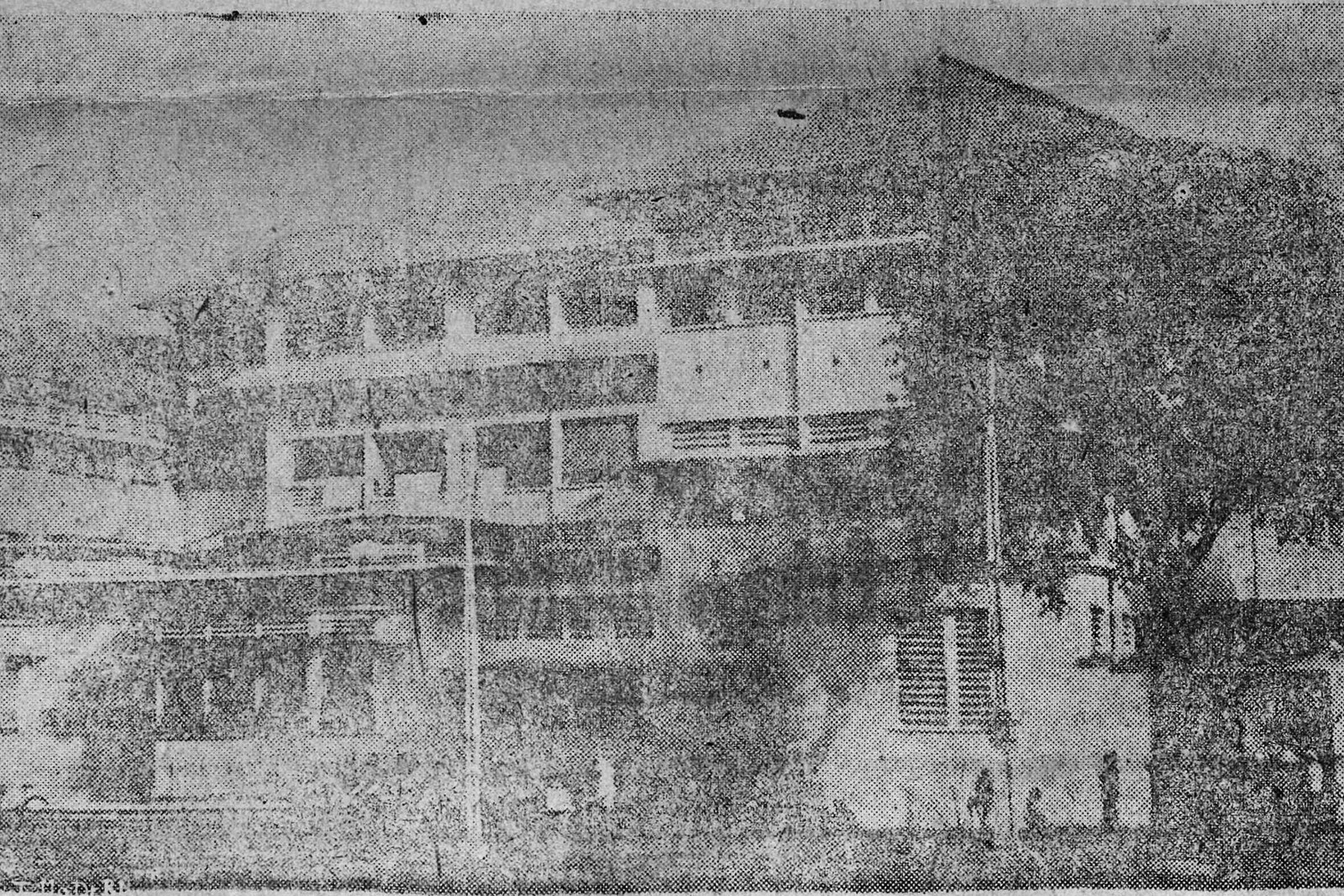
Look around first
What to notice
- Gia Định People's Hospital sign
- Main facade
- Connected hospital buildings
- Emergency entrance
The story of the place
The connected buildings by the main facade grew out of a clinic designed above all for patients who did not need a long stay in a ward. People came here for a consultation, medicine, a dressing, or a minor operation, then returned home. This care was especially needed by poor city residents: well-equipped hospitals served mainly Europeans, while everyone else had to make their way to Chợ Quán or seek out a small clinic at a monastery. The emergency entrance is a reminder that this hospital address still lives in a continuous flow of urgent cases.
Before you is the second building of Gia Định People's Hospital. Patients are seen here, operations are performed, and an emergency service is on duty around the clock. The historic name—Dejean de la Bâtie Dispensary—no longer appears on the modern sign. Dejean himself never worked in these buildings either.
Théodore Dejean de la Bâtie was a city doctor who wanted to give Vietnamese people and other Asian residents of Saigon access to European medicine. At the beginning of the twentieth century, most of the city's well-equipped hospitals served Europeans. Poor city residents had to make their way to Chợ Quán Hospital or seek help at a small clinic attached to a monastery.
In April nineteen oh three, Dejean rented premises on d'Adran Street—today's Hồ Tùng Mậu Street—and opened a free clinic with his own money. Patients were not placed in wards unless necessary: they came for consultations, medicines, dressings, and minor operations, then returned home. In its first year, three thousand one hundred fifty-one people visited the doctors nearly sixteen thousand times.
The more people came, the faster Dejean lost his fortune. For almost two years, he paid for the clinic himself, until the costs became more than he could bear. The municipality then took the institution over at its own expense. Dejean died in nineteen twelve, at the age of forty-seven, with no accumulated fortune; his widow lived on a modest teacher's salary.
Two years later, the clinic was moved here, to Bonard Boulevard—today's Lê Lợi Street. Even before construction, the city council resolved to name it after Dejean, but in practice residents and officials called it the “municipal dispensary.” In nineteen twenty-five, a commission tried to restore the intended name, but the decision remained on paper.
In nineteen thirty-seven, Triệu, a Vietnamese member of the city council, secured a new vote. He wanted the name of the doctor who had spent his own funds on the hospital's predecessor to appear above the expanded hospital. The council agreed. Soon afterward, the governor of Cochinchina proposed another name: Doctor Montel, the dispensary's head at the time, who had expanded its work at this very location.
The city councilors left Montel one pavilion and gave the entire complex the name of Dejean de la Bâtie. The new buildings erected here between nineteen thirty-seven and nineteen thirty-nine became the tangible outcome of this dispute.
Since January first, two thousand twenty-six, the old hospital has been part of Gia Định People's Hospital as its second building. Dejean's name is no longer on the facade; an intensive care and emergency department operates around the clock at this address.
Useful on site
Open around the clock; access inside is limited.
Checked: date not specified. Check the official source before visiting.Remember that this is a medical space: keep to a quiet exterior visit and do not photograph patients.