 Guide On Map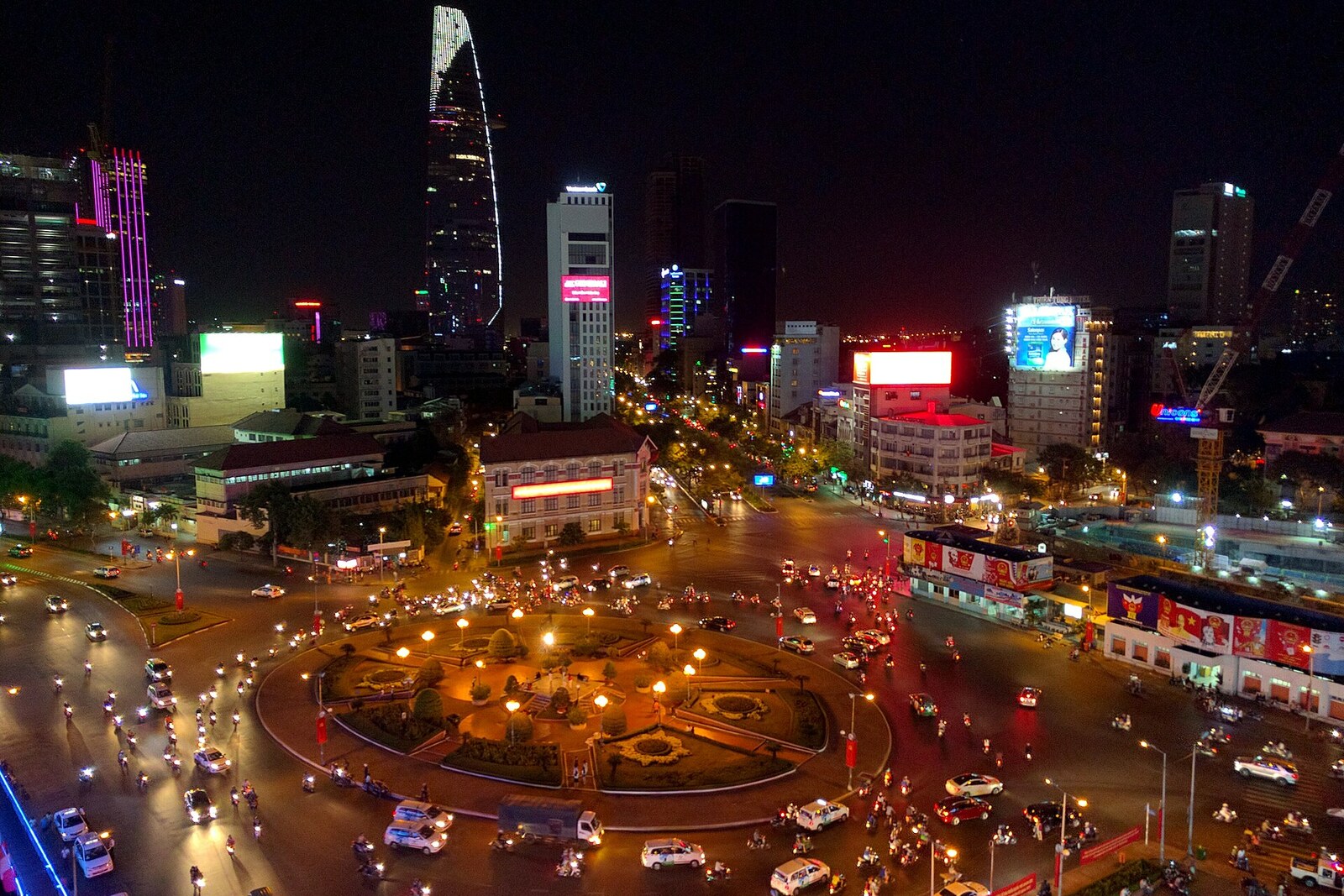
Look around first
What to notice
- The market's southern gate
- The clock tower
- The square's open space
The story of the place
The square is named after a fifteen-year-old schoolgirl. On August twenty-fifth, nineteen sixty-three, a police bullet struck Quách Thị Trang in the right temple right here, in front of the market's main entrance.
At the time, the square was called Diên Hồng Square. Seven streets converged around it, with tram stops and the central bus station nearby. It was easy to reach from different parts of Saigon, and a crowd gathered in front of the market could not be hidden away in side streets. That is why students chose this spot for a protest against the martial law imposed by the government of President Ngô Đình Diệm.
Quách Thị Trang grew up in a family of migrants from the north. In nineteen fifty-four, her father remained in his homeland and soon died; her mother raised the children alone and tried not to take them out of school, although money was scarce. Trang belonged to a Buddhist youth community under the name Diệu Nghiêm. According to accounts by those close to her, senior activists tasked her with carrying documents and liaising between student groups.
By the summer of nineteen sixty-three, a dispute over Buddhists' right to fly their flag had grown into a nationwide crisis. After demonstrators were killed in Huế and the monk Thích Quảng Đức set himself on fire, the government promised concessions, but on the night of August twenty-first, the military and police stormed pagodas and arrested monks and activists. Four days later, Trang came to the square without her mother's knowledge. Those gathered demanded the release of the detainees and an end to the persecution of Buddhists.
Police pushed people back with batons and rifle butts. Some of the schoolchildren remained in the square, and Trang moved to the front row. After the shot, the crowd dispersed, and police took the severely wounded girl to a military hospital, where she soon died.
Her mother, the widow Hà Thị Vân, tried to find out where her daughter had been taken. The family was told that Trang was under arrest. One of her teachers insisted that he had personally seen the girl in prison and had given her money. Meanwhile, her body was secretly buried in an unmarked grave at the military cemetery near Gò Vấp.
A few months later, the country's new leadership released political prisoners. Trang was not among them. Only in December were her mother and siblings summoned to officials, informed of her death, and given back the clothes the girl had worn on the day of the demonstration.
In nineteen sixty-four, the student Vũ Quang Hùng led a committee that decided to mark the exact place of her death. Students collected donations, commissioned a white bust, and during another large march brought a stone pedestal and building materials to the square. While those gathered shielded them from police, the students assembled the base and set up the bust where Trang had fallen a year earlier. The monument remained, and city residents began calling the former Diên Hồng Square after the schoolgirl.
The old round traffic island and pedestal in front of the market are now gone. In two thousand fourteen, before construction of the metro station, the bust was moved to Bách Tùng Diệp Park. The name remains at the original site: Quách Thị Trang Square still refers to the area in front of the market's main entrance, where police tried to hide even the very fact of her death.
Useful on site
Open around the clock, a busy traffic circle.
Checked: date not specified. Check the official source before visiting.View the monument from a safe part of the square, and do not linger in the path of traffic.