 Guide On Map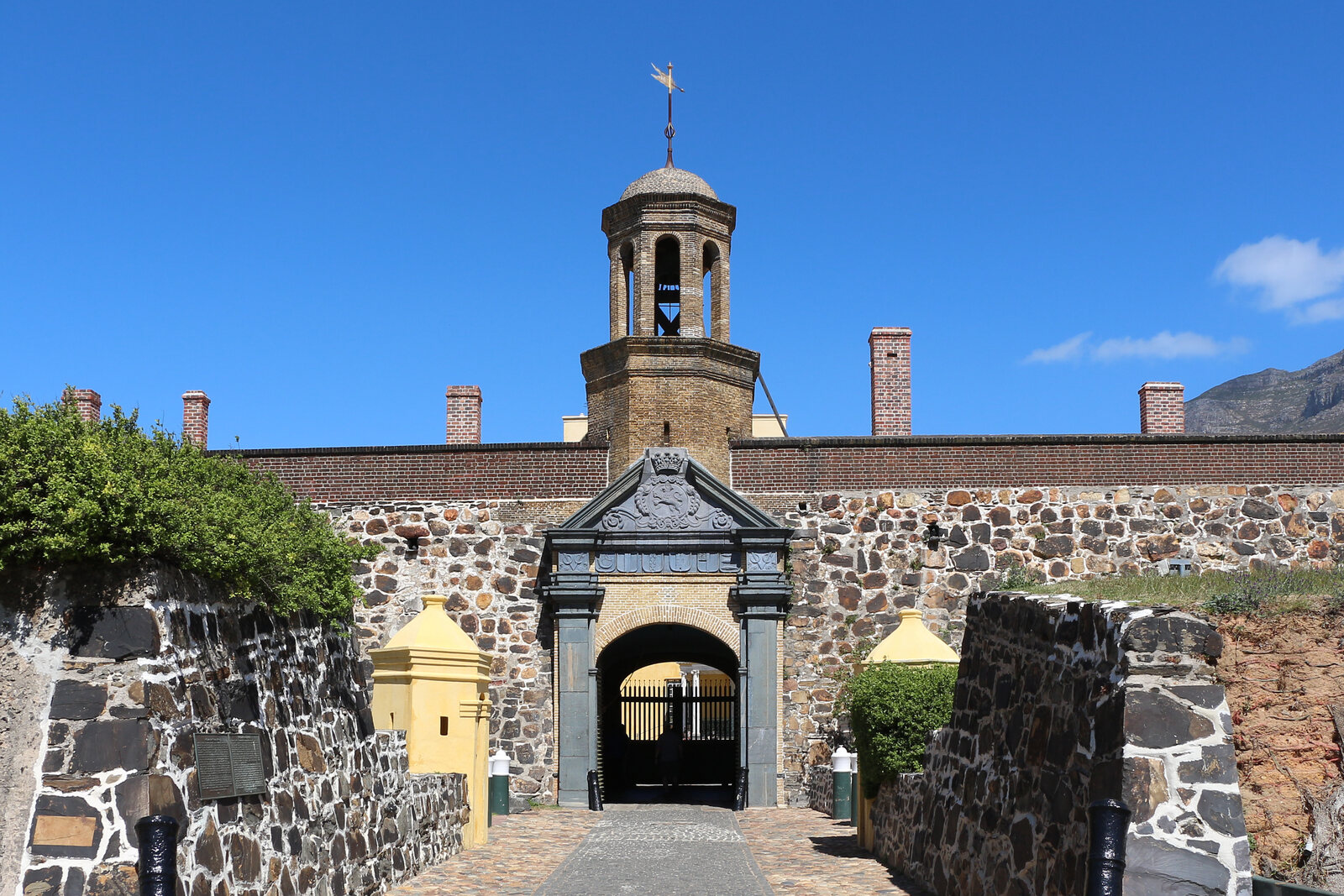

This place does not have an audited photo yet.
Selected place
Castle of Good Hope
Local name:
Here the route will show how a written complaint managed to get beyond the walls where its author was held.
Start with 19 highlights or open the complete catalog of 148 curated places.
Highlights include Castle of Good Hope, Auwal Mosque, Battery Park, Bo-Kaap Museum, Clock Tower, District Six Museum.
We have connected important places into ready-made walks with a clear order, stories and practical details.
Start with 19 highlights, or reveal all 148 curated places.
Local name:
Here the route will show how a written complaint managed to get beyond the walls where its author was held.
Here the route will show how a written complaint managed to get beyond the walls where its author was held.
Here, a private house, a school, and a will come together in the story of how a community secured its right to its place.
The remains of the fortification will take the park back to the morning when coastal guns were trained on their own squadron.
This stop will show how the official display displaced the memory of the real residents and how documents helped restore it.
A small harbor headquarters explains how the harbor handled the wartime flow of ships, people, and cargo.
Here, private memories will first come together into a shared map of the destroyed district.
The route needs the square as the place where one person’s release became a public event for the entire city.
Here you will learn why the man whose name was given to the terminal accepted this honor not only on his own behalf.
This stop shows personal freedom as a transaction whose terms were set by the owner.
From here, individual stories of resistance give way to a peaceful city march.
Inside, it will become clear which part of the industrial building had to be reinforced before the museum could be carved out.
The finale will shift the conversation about preservation from museums and monuments to an ongoing family business.
This stop returns to a time when communal prayer was a public risk and no authorized mosque yet existed.
This is where the story begins of how the saddle linked maritime observation, defense, and roads to the city.
Five bronze compositions reveal whom the memorial's creators added to the four famous laureates.
The crossing shows how one narrow channel changed the work of ferrymen and the movement of pedestrians.
The time ball will show why precise time was a navigational instrument.
The story of one retail stall will show whom the conversion of the old shed made room for on the waterfront.
The ravine shows how builders turned an almost inaccessible slope into a freight route to the mountain dams.
Nearest audio-route stop: The Boundary on Buitengracht — 10 m in a straight line, route Bo-Kaap: Houses, Faith, and Family Stories
Nearest audio-route stop: Grand Parade — 40 m in a straight line, route District Six and Old Cape Town
Nearest audio-route stop: Company's Garden — 10 m in a straight line, route District Six and Old Cape Town
Nearest audio-route stop: Battery Park — 60 m in a straight line, route Cape Town Harbor: From the Clock Tower to the Silo District
Nearest audio-route stop: Camps Bay: Names Above the Atlantic Ocean — 10 m in a straight line, route Pipe Track: Table Mountain's Working Slope
Nearest audio-route stop: Swing Bridge and a Living Harbor — 90 m in a straight line, route Cape Town Harbor: From the Clock Tower to the Silo District
Nearest audio-route stop: District Six Museum Homecoming Centre — 10 m in a straight line, route District Six and Old Cape Town
Nearest audio-route stop: Grand Parade — 100 m in a straight line, route District Six and Old Cape Town
Nearest audio-route stop: City Bowl: the city in a stone bowl — 10 m in a straight line, route Pipe Track: Table Mountain's Working Slope
Nearest audio-route stop: Time Ball Tower — 70 m in a straight line, route Cape Town Harbor: From the Clock Tower to the Silo District
Nearest audio-route stop: St George's Cathedral (the People's Cathedral) — 140 m in a straight line, route District Six and Old Cape Town
Nearest audio-route stop: Chiappini Street — 130 m in a straight line, route Bo-Kaap: Houses, Faith, and Family Stories
Nearest audio-route stop: Company's Garden — 120 m in a straight line, route District Six and Old Cape Town
Nearest audio-route stop: St George's Cathedral (the People's Cathedral) — 110 m in a straight line, route District Six and Old Cape Town
Nearest audio-route stop: Slave Lodge — 80 m in a straight line, route District Six and Old Cape Town
Nearest audio-route stop: The Boundary on Buitengracht — 40 m in a straight line, route Bo-Kaap: Houses, Faith, and Family Stories
Nearest audio-route stop: St George's Cathedral (the People's Cathedral) — 80 m in a straight line, route District Six and Old Cape Town
Nearest audio-route stop: St George's Cathedral (the People's Cathedral) — 70 m in a straight line, route District Six and Old Cape Town
Nearest audio-route stop: Chiappini Street — 50 m in a straight line, route Bo-Kaap: Houses, Faith, and Family Stories
Nearest audio-route stop: District Six Museum — 140 m in a straight line, route District Six and Old Cape Town
Nearest audio-route stop: Auwal Mosque — 70 m in a straight line, route Bo-Kaap: Houses, Faith, and Family Stories
Nearest audio-route stop: Company's Garden — 20 m in a straight line, route District Six and Old Cape Town
Nearest audio-route stop: Grand Parade — 120 m in a straight line, route District Six and Old Cape Town
Nearest audio-route stop: Slave Lodge — 20 m in a straight line, route District Six and Old Cape Town
Nearest audio-route stop: Grand Parade — 130 m in a straight line, route District Six and Old Cape Town
Nearest audio-route stop: Clock Tower — 40 m in a straight line, route Cape Town Harbor: From the Clock Tower to the Silo District