 Guide On Map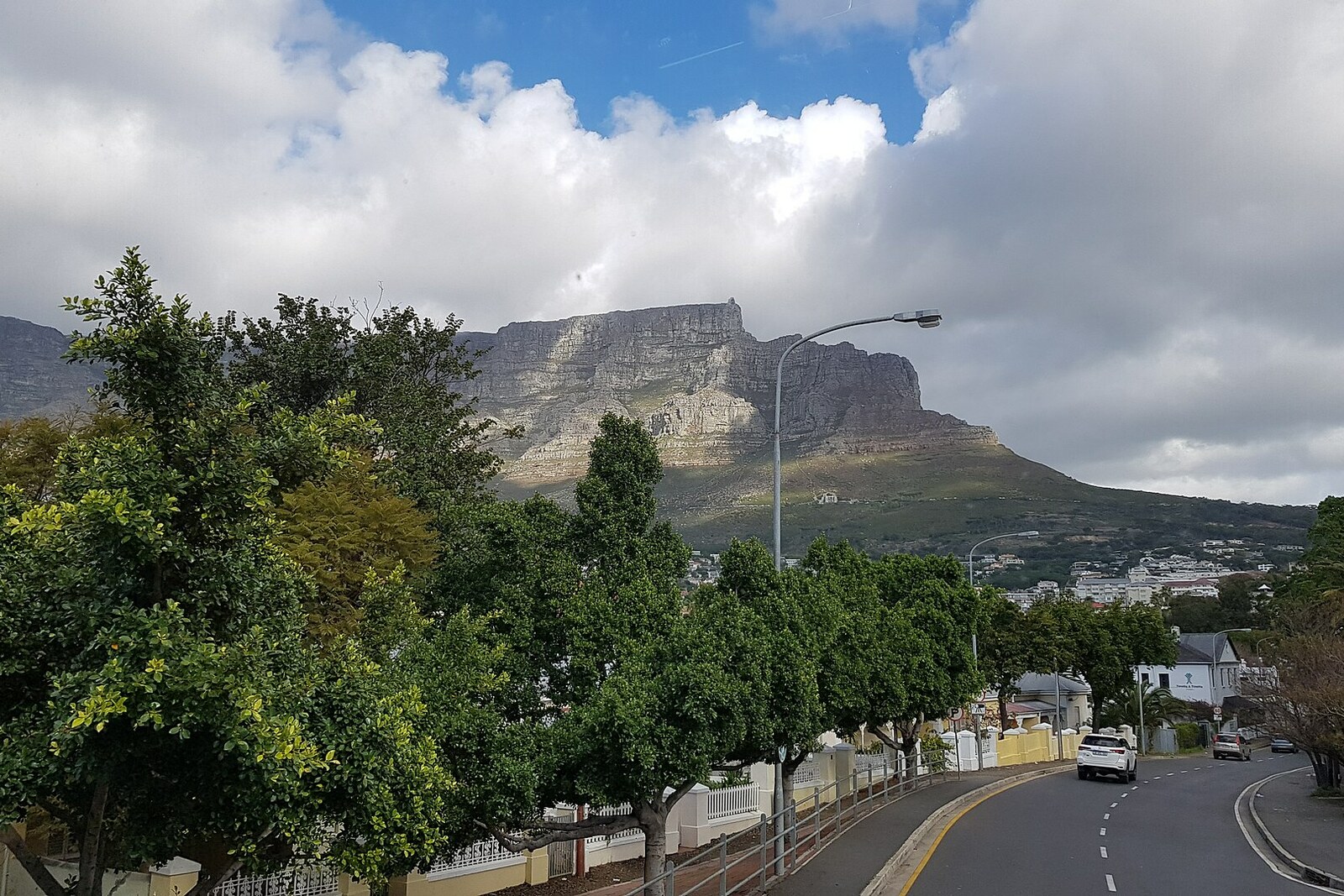
Look around first
What to notice
- The saddle between Table Mountain and Lion's Head
- Two old cannons
- Roads on both sides of the pass
The story of the place
Kloof Nek is named after the terrain itself: “kloof” means a ravine or mountain pass, and “nek” means a saddle. Here lies the low dip between Table Mountain and Lion's Head. Roads lead from here toward central Cape Town, Camps Bay, Signal Hill, and the slopes of Table Mountain. The earliest of them served the people who watched the sea.
In March sixteen seventy-three, IJsbrand Godske, governor of the Cape Colony, was tasked with strengthening the Dutch anchorage during the war with France. He needed to learn of approaching ships before they could be spotted from the fort by the bay. Godske ordered a flagstaff and two small bronze cannons to be placed on the summit of Lion's Head.
Carts brought barrels of gunpowder, flags, provisions, and a spyglass to Kloof Nek. From there, everything had to be carried up the steep slope. A house for the signalmen was built on the saddle itself, and the pass came to be called Flagman's Kloof—“the signalmen's ravine.”
The signalman set out from here before dawn with water, food, and fresh gunpowder. On the steep section, he pulled himself up along a rope tied near the summit, spent the whole day at the top, and descended before darkness fell. If the weather changed too quickly, the signalman stayed on the mountain overnight. In a court record from seventeen thirteen, a sailor assigned to this post confirmed that he was required to remain at the signal house from sunrise to sunset and had no right to leave earlier. Later, pairs took eight-day shifts. They received rations and were paid as experienced sailors responsible for provisioning ships.
On spotting a sail, the signalman raised a flag and fired: one ship, one shot. Once the vessel's flag became distinguishable, the same flag was raised at the top. At the fort, they had time to decide whether to prepare the artillery for battle or for a ceremonial salute; merchants and nearby farmers brought supplies to the pier, and a doctor went to check the arrivals for infectious diseases.
The signal had one more task. Dutch captains received, in sealed orders, a description of a special flag that changed regularly. They were allowed to open the envelope only at the Cape. The correct flag meant that the Cape anchorage remained under the Dutch East India Company. If the code did not match, the captain was to consider it captured and not bring a ship with valuable Asian cargo into the bay.
For the same reason, the military also watched the road through the saddle. An enemy landing in Camps Bay could pass through here to reach the city from the rear. In seventeen eighty-two, an earthwork battery for several guns was built on the seaward side of Kloof Nek, and its soldiers were housed in that same signal house. Two old cannons on the Camps Bay side recall this defense. They were found in the ravine and returned to the slope in nineteen ninety-eight.
The signalmen continued their service after Godske's departure. In January eighteen oh six, their successors saw almost sixty British warships and transport vessels. Signal shots roused the garrison, but a few days later the British won at Blaauwberg and occupied the colony.
Regular sea mail then made the old post on Lion's Head unnecessary. In eighteen twenty-one, the signal station was moved to the more accessible Lion's Rump, which received its current name—Signal Hill. The house at Kloof Nek served as quarters for convicts and as a roadside inn, then disappeared in the eighteen seventies. A road junction remained in its place, and on either side of the saddle are a road, the two returned cannons, and the slopes along which the signalmen carried gunpowder to the summit.
Useful on site
Open starting point by the road; it is best to walk in daylight and stable weather.
Checked: June 28, 2026. Check the official source before visiting.The pass is noisy and busy with cars; start the narration only where you can safely step away from the roadway without getting in other people's way.