 Guide On Map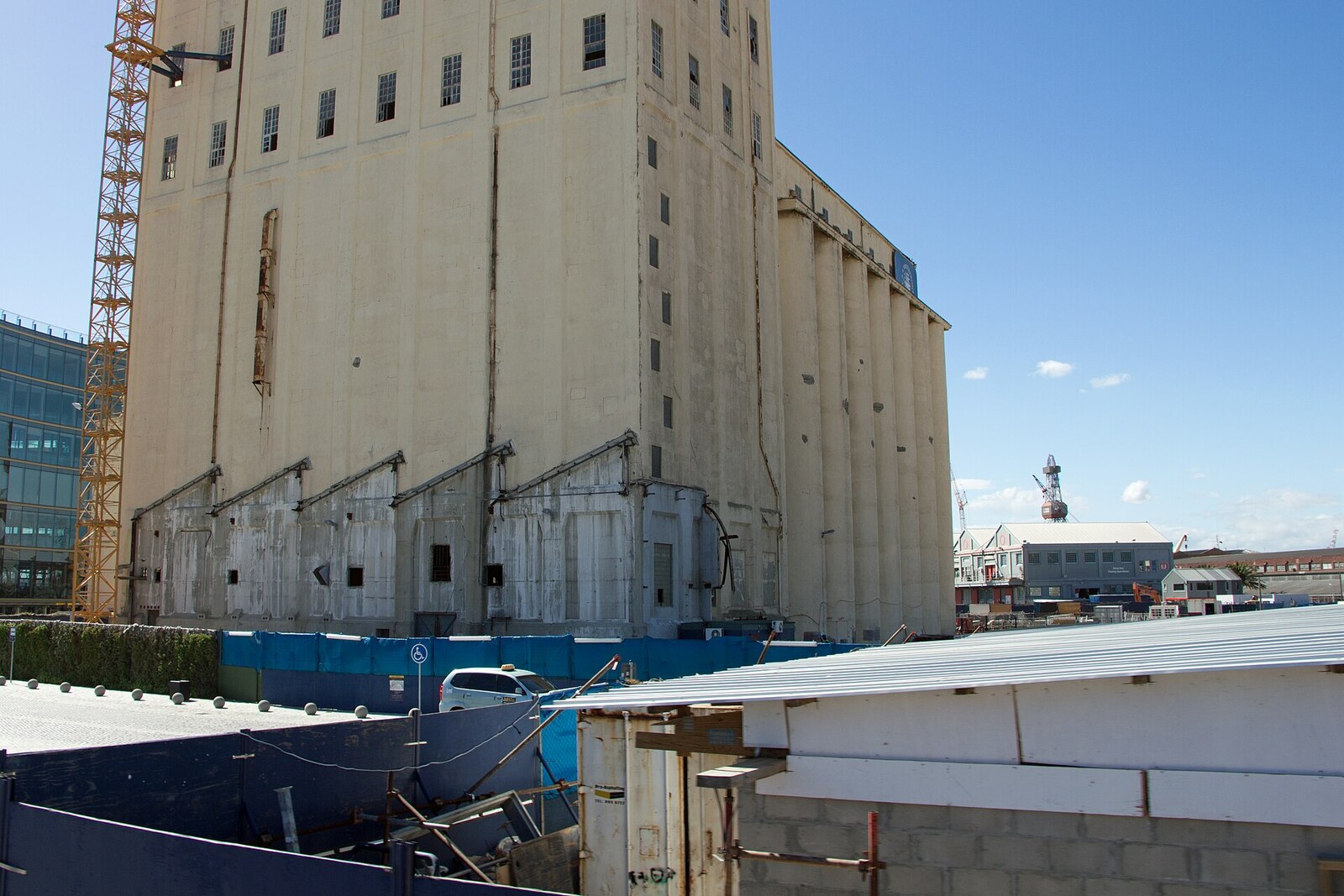
Look around first
What to notice
- The former elevator tower
- Concrete cylinders
- The oval opening of the atrium
- Galleries in the former cells
The story of the place
The harbor handled grain here long before paintings and installations: railcars brought it in by rail, and forty-two concrete containers held the stock before it was sent on to ships. The tall tower of the former elevator and its concrete cylinders still stand beside the quays, although the grain operation closed at the start of the new century. Galleries, studios, and the educational programs of the museum of contemporary art from Africa and its diaspora were placed in the former cells. An enlarged grain of maize was used for the outline of the atrium's uneven oval void.
The surname above the entrance belongs to Jochen Zeitz—a German entrepreneur, former head of PUMA, and collector. He does not own the building. When the museum opened, even his collection remained Zeitz's personal property: he placed the works on long-term loan. His name appeared in the title because this collection made it possible to fill the new museum with contemporary art from Africa and its diaspora.
Before it became a museum, this was a harbor grain elevator. It was built between nineteen twenty-one and nineteen twenty-four. Grain arrived by rail, was sorted, stored in forty-two concrete cylinders, and transferred onto ships. It was precisely the proximity of the tracks and the quays that determined the location for such a building. By the start of the new century, the elevator had closed, and the waterfront's owners spent several years unable to find a suitable use for it.
David Green, head of V&A Waterfront, wanted to place a public institution here. At that time, the South African curator Mark Coetzee was helping Zeitz collect art and was looking for a permanent public home in Africa for the collection. Coetzee put the collector in touch with the elevator's owners.
In two thousand thirteen, they established the museum. Green's company committed to spend five hundred million rand on converting the building and to provide it to the new nonprofit organization. Zeitz placed the collection on long-term loan and took on part of the initial costs. Coetzee became the director and chief curator.
The remaining task was to turn the grain cells into rooms where paintings and large installations could be exhibited. This was Thomas Heatherwick's first museum project. He decided to preserve the concrete cylinders and cut out space inside them. His team scanned an actual grain of maize, enlarged the resulting outline to twenty-six meters, and made it the shape of the central atrium.
The walls of the old cylinders were only eighteen centimeters thick and would not have withstood such cutting. The engineers first poured new reinforced-concrete shells, twenty-five centimeters thick, inside them. Only after that did workers remove parts of the old concrete with diamond wire, saws, and jackhammers. Galleries were arranged around the resulting void.
The museum opened on September twenty-second, two thousand seventeen. Later, Zeitz donated to it a substantial portion of the works that had previously been on long-term loan. By two thousand twenty-four, the permanent collection numbered more than five hundred items; alongside temporary exhibitions, educational programs and artists' studios operate here.
The uneven oval void in the atrium follows the outline of the single grain of maize that Heatherwick's team scanned for this conversion.
Useful on site
Daily 10:00–18:00, last admission at 17:30; adults R265, children under 18 free.
Checked: June 28, 2026. Check the official source before visiting.From outside, you can grasp the building's industrial scale without a ticket. The atrium and galleries require a separate visit; allow extra time for it, and do not count the museum as part of a short walk.