 Guide On Map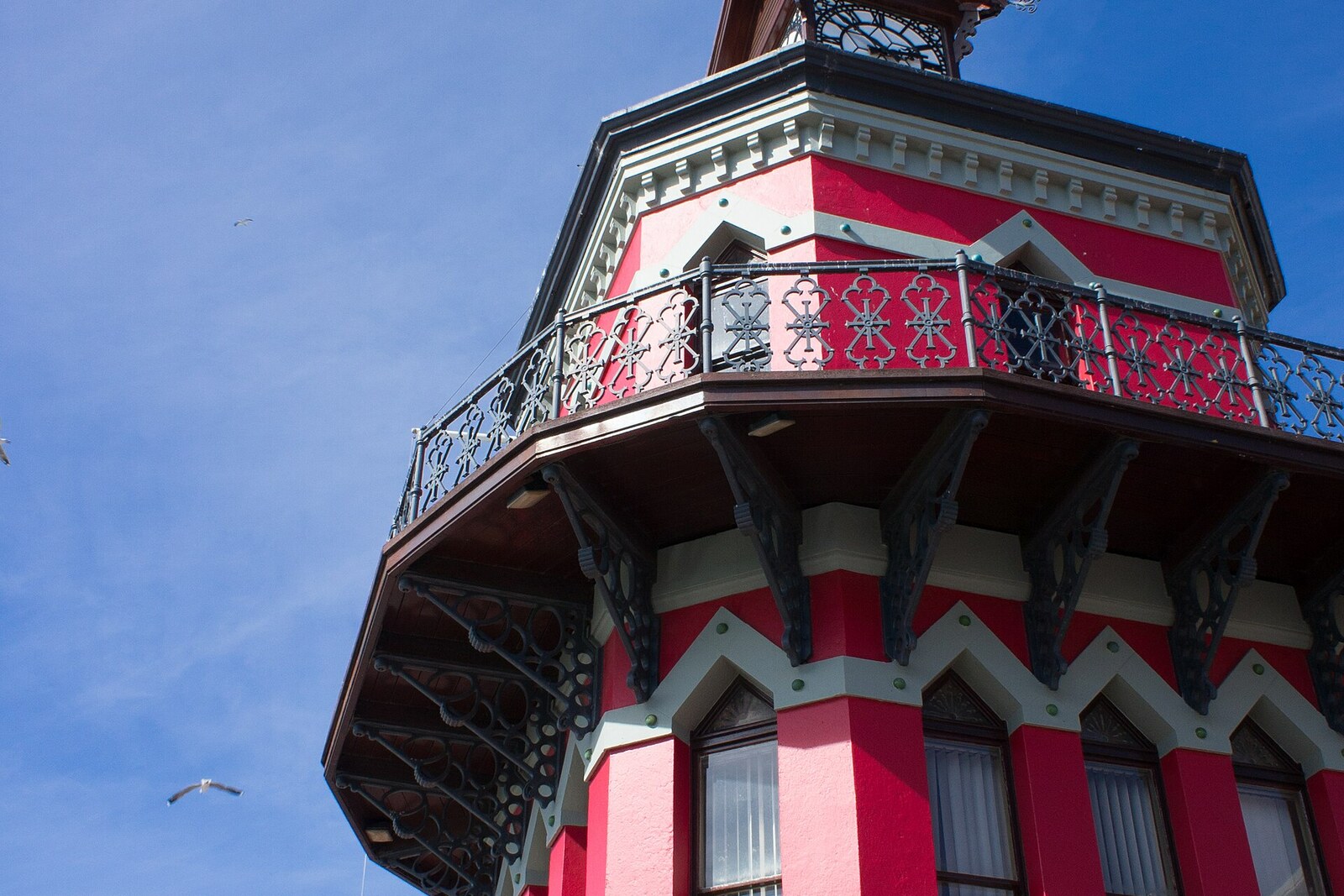
Look around first
What to notice
- Red three-story building
- Tower-clock faces
- Entrance to Alfred Basin
The story of the place
The red three-story building with clock faces was built at the mouth of Alfred Basin so that the port captain could watch vessel movements. From the upper level, a system of mirrors covered the harbor, while a shaft below connected the tide gauge to the sea. Its readings determined whether there was enough depth for a vessel; flags and a telescope conveyed instructions to crews. Later, the staff moved to a neighboring building, but the clock mechanism from Edinburgh remained here and continues to run.
On one day in nineteen oh one, a signalman counted one hundred twenty-eight vessels in the harbor and bay. Their movements were coordinated from this tower: a small three-story building with just one room on each floor.
The tower was built at the entrance to Alfred Basin in eighteen eighty-two for the port captain—an official who decided when and where vessels could pass. The site was chosen because of the narrow passage between the basins: every arrival could be seen from here. On the upper level, mirrors provided a panoramic view of the harbor. A tide gauge operated below: a shaft connected the instrument to the sea, and the captain knew the exact water level. A ship's draft could be greater than the available depth, so the captain's decision determined whether a ship would enter the dock or run aground. Clocks, signal flags, and a telescope made it possible to send instructions to the crews.
The hardest test of this system began in eighteen ninety-nine. The British Empire was at war with two Boer republics in Southern Africa and was moving troops, horses, mules, weapons, and food here from across the ocean. A career officer in the British navy, Captain Sir Edward Chichester, was appointed head of sea transport. He worked to ensure that arriving transports did not clog the harbor and that cargo moved on from the quays by rail without delay.
Chichester placed his headquarters in the Clock Tower. His men received vessels, organized the unloading of soldiers, supplies, and animals, and put sick people and those discharged from service aboard for the return journey. An error in the sequence delayed the next transport along with everything it carried. It was then that the signalman saw those one hundred twenty-eight ships. Military reports judged Chichester's work a success: through four South African ports, his service moved thousands of people and an enormous flow of cargo.
After the war, the harbor continued to grow. In nineteen oh four, the port captain and staff moved across the narrow passage to a spacious building opposite. The red tower retained its mirror room, tide gauge, and clock mechanism brought from Edinburgh. Ships are no longer directed from here, but the original clock still runs above that same entrance to Alfred Basin.
Useful on site
Exterior viewing is available daily 09:00–21:00. Entry inside is not possible.
Checked: June 28, 2026. Check the official source before visiting.You can listen to the story from outside. Step back toward the water to see the whole tower, and do not go beyond the service barriers.