 Guide On Map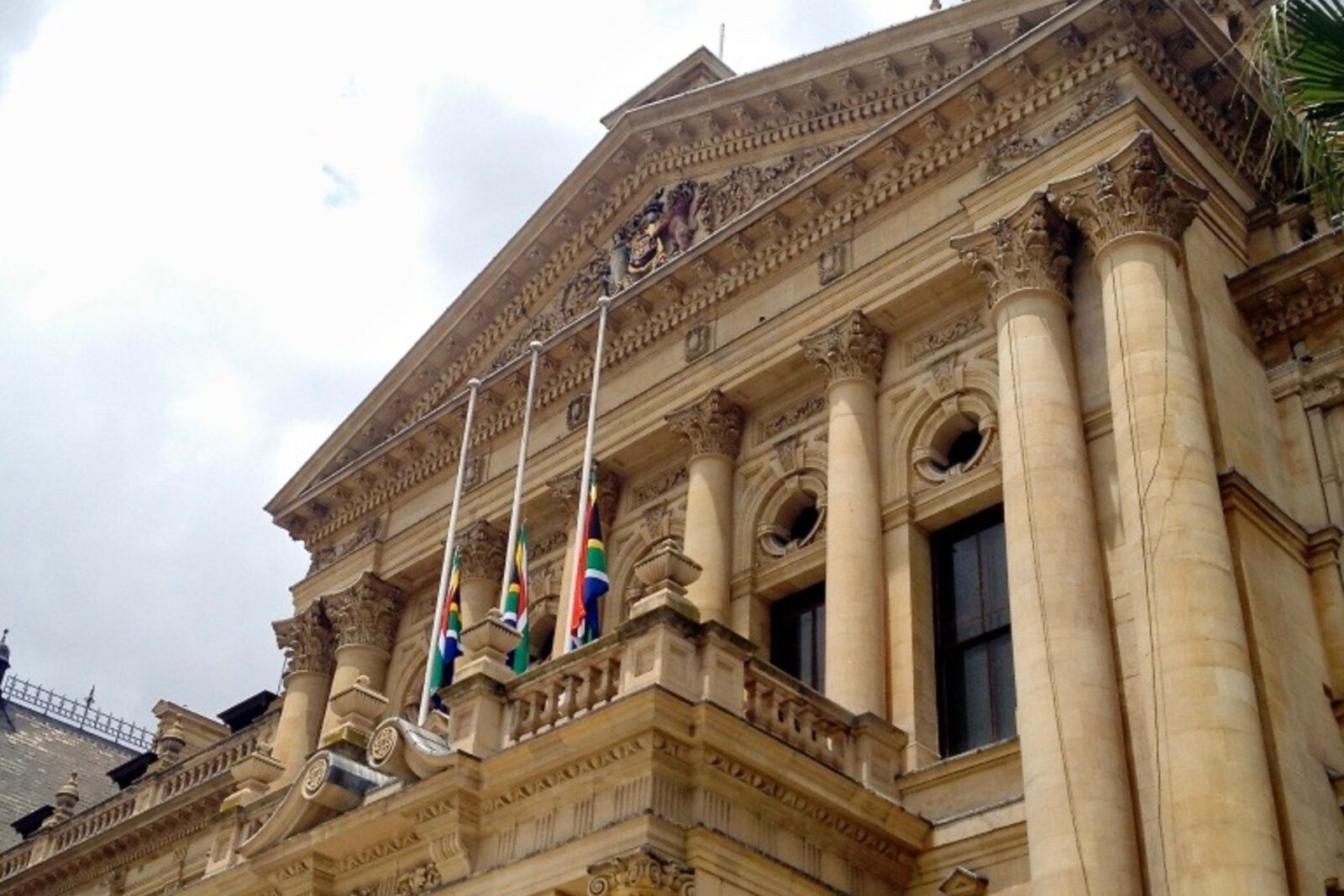
Look around first
What to notice
- The open field of the square
- The balcony of Cape Town City Hall
- The bronze figure with pages of the speech
- The glasses in the figure’s hand
The story of the place
On February eleventh, nineteen ninety, the rally at Grand Parade was prepared in less than a day. Only the day before did it become known that Nelson Mandela would be released. He led the African National Congress—a banned movement seeking the abolition of apartheid, the legally imposed division of people by race. At the nineteen sixty-four trial, Mandela was sentenced to life imprisonment in a sabotage case. He spent twenty-seven years in prison.
The old city parade ground was chosen for the gathering. After the garrison was transferred to the Castle of Good Hope, soldiers drilled here and underwent inspections—hence the literal name Grand Parade. Later, the open field began to host markets and city meetings. On ordinary days, vendors still lay out their goods here; for major events, the square is cleared. The balcony of Cape Town City Hall faces this entire space.
By the appointed time, tens of thousands of people had come here. There were no mobile phones yet, and the organizers had not managed to obtain two-way radios. People climbed onto kiosks and trees, and a press platform collapsed under their weight. Those who fainted were passed over people’s heads toward the balcony. The crowd crushed the cables of the sound equipment.
The police officers escorting Mandela were supposed to bring him to the rear entrance of Cape Town City Hall, but they turned directly onto the square. The car got stuck among the people. Mandela had become unaccustomed to crowds after twenty-seven years; the driver managed to break free and drove him out of the city center. While the entire square waited for the newly released prisoner’s first speech, the speaker himself sat barefoot, drinking tea in a quiet private house.
Desmond Tutu, the Archbishop of Cape Town and one of the leaders of the struggle against apartheid, worked to get Mandela to return: the organizers feared a crush and unrest. Tutu reached him by phone and warned that people could no longer bear the wait. Mandela drove back to Cape Town City Hall and entered from the rear.
By the time he appeared, it had grown dark. His own glasses had remained in prison, so he had to read the prepared speech by lantern light in borrowed ones. This was Mandela’s first public speech in twenty-seven years. He demanded the release of the remaining political prisoners, the lifting of the state of emergency, and permission for free political activity. He considered negotiations possible only after that. He ended the speech with words he had already spoken before receiving his life sentence: a democratic society remains an ideal for which he is prepared to die.
Official negotiations began in May. Four years later, the first elections were held in which citizens of all races voted as equals. On May ninth, nineteen ninety-four, Mandela, elected president, again spoke before people at Grand Parade.
In twenty eighteen, sculptors Xhanti Mpakama and Barry Jackson installed a bronze figure of Mandela precisely at the spot on the balcony where he spoke after his release. In one hand, the figure holds the pages of the speech and a pair of glasses. Mandela left his own behind the prison gates; on his first evening of freedom, he had to read in someone else’s.
Useful on site
Open city square. Best experienced in daylight; interior access to Cape Town City Hall depends on events.
Checked: July 1, 2026. Check the official source before visiting.This is an active city square, not a museum site: trading, events, and the flow of people change its appearance. Look around, do not block passageways, and do not interfere with vendors’ work.