 Guide On Map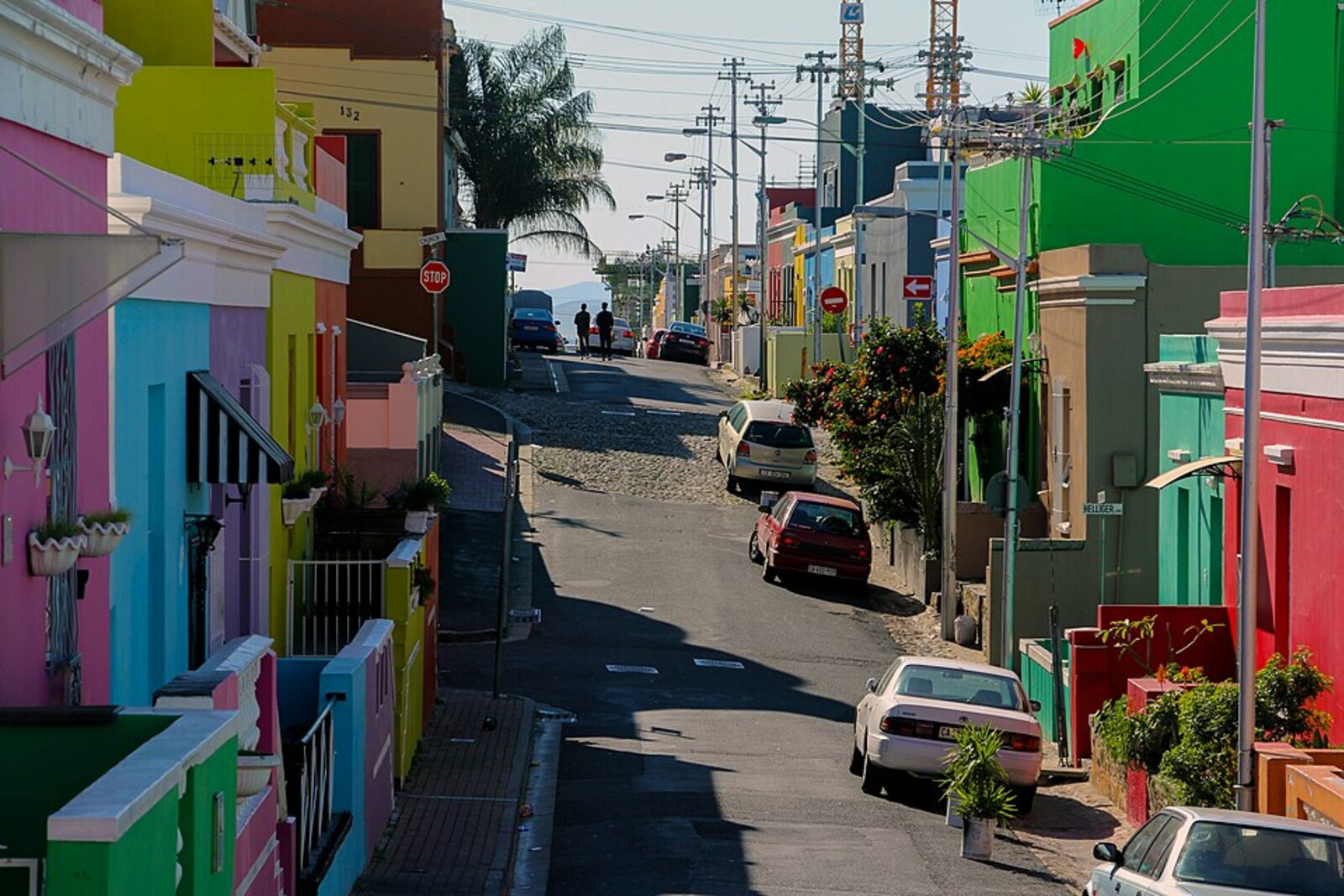
Look around first
What to notice
- Narrow passage by house No. 98
- Stone hollow
- Two residential houses inside the quarry
The story of the place
At number ninety-eight Chiappini Street, a narrow passage begins. Behind the row of facades lies a stone hollow—a former quarry called Prayer Quarry. At the end of the eighteenth century, Cape Town Muslims gathered here, although the colonial administration did not permit open Islamic services.
They were led by Tuan Guru (Abdullah Kadi Abdus Salaam), a religious scholar who sought the community's right to communal Friday prayer. By then, he had spent thirteen years imprisoned on Robben Island: the Dutch had exiled him for taking part in a conspiracy against them in the East Indies. After his release in seventeen ninety-three, Tuan Guru (Abdullah Kadi Abdus Salaam) settled in Bo-Kaap and requested permission for a Friday service. He was refused.
Private prayer in a home was allowed. A public gathering of people of another faith was considered an offense punishable by death. Tuan Guru (Abdullah Kadi Abdus Salaam) nevertheless led Muslims to the abandoned quarry on the edge of the neighborhood and held Friday prayer here. He risked renewed imprisonment or his life; the participants risked punishment for merely being present. For the first time, the quarry allowed them to gather as a community in the open air, without an authorized mosque and without trying to pass the service off as a gathering in a home.
This prayer is sometimes dated to seventeen ninety. That date conflicts with the documented period Tuan Guru (Abdullah Kadi Abdus Salaam) spent on Robben Island: he was still a prisoner then. A more consistent version places the gathering after his release, in seventeen ninety-three.
Two years later, the British occupied the Cape Colony, and General James Craig allowed Muslims to establish a mosque. The community moved into premises on Dorp Street, which became Auwal Mosque. The quarry did not become empty at once after that: residents continued to use the stone hollows along Chiappini Street for prayer and gatherings into the nineteenth century.
The name on the street sign has no connection to this story. Chiappini is the surname of an Italian family that settled in Cape Town. Its founder, Antonio Chiappini, a native of Florence, became a merchant and property owner. Sources differ on the exact dedication: some say the street was named for Antonio himself, while others say it commemorates his son, the physician Peter James Chiappini, and other prominent members of the family. What is reliably established is the family origin of the name.
In two thousand nineteen, Prayer Quarry was included in the Bo-Kaap National Heritage Site. Two residential houses now stand inside the hollow, and the entrance still leads from Chiappini Street near number ninety-eight. Stone has not been quarried here for a long time; the quarry's name remains from the Friday prayer held after a direct refusal.
Useful on site
Open residential street; it is best to visit during the day and not linger at private doorsteps.
Checked: July 1, 2026. Check the official source before visiting.The early prayer site itself does not appear as a developed place to visit. Do not look for a passage through private property or linger by the doors of houses.