 Guide On Map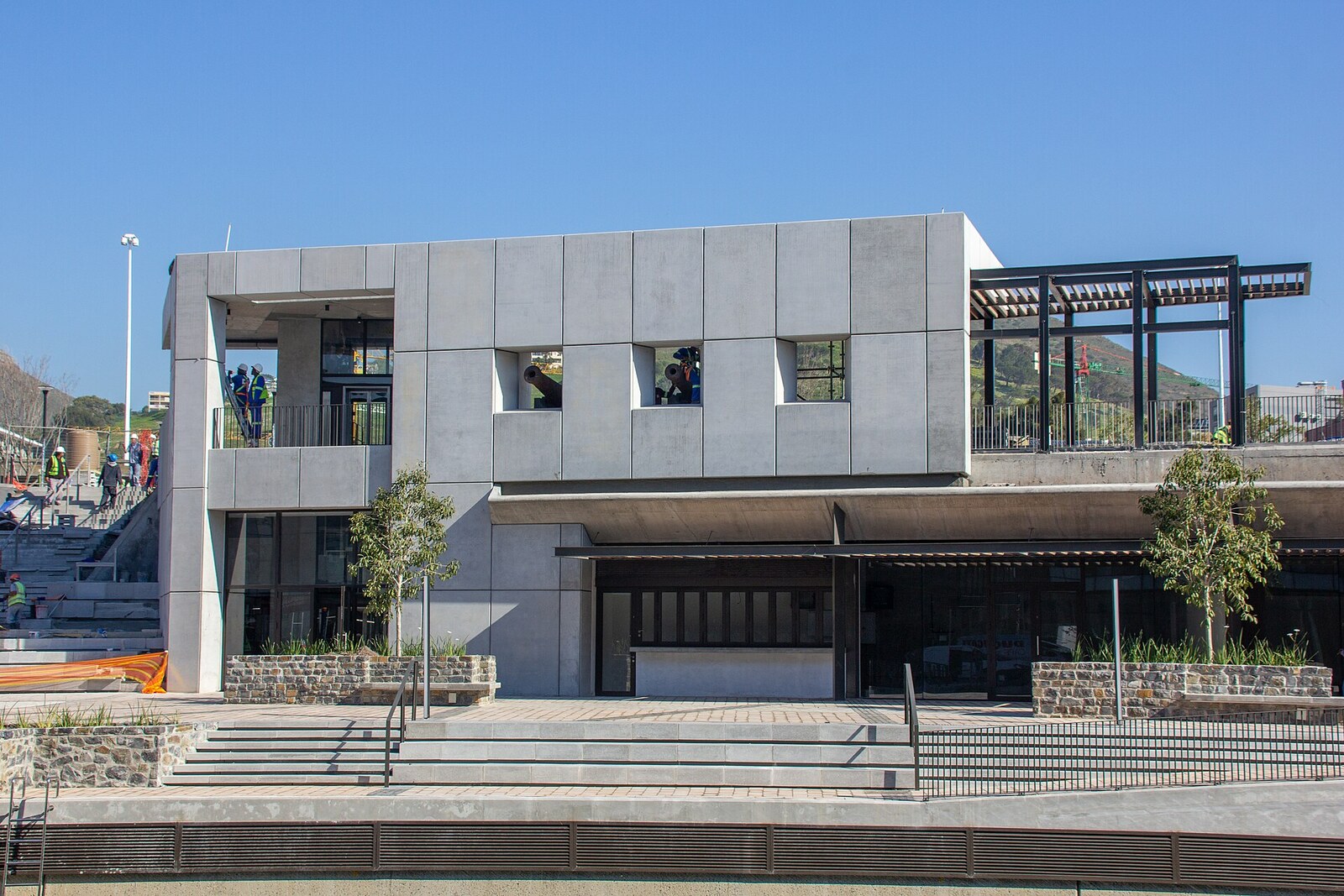
Look around first
What to notice
- Curved remains of the rear rampart
- Three old guns
- Pavilion
- Skate area
The story of the place
On the site of today's park stood a large coastal fortification with gun positions, casemates, ammunition stores, and rooms for gun crews. It was built during the war between the Netherlands and Great Britain, when the sea reached its front wall; the battery was meant to keep hostile ships out of Table Bay and from landing men near the town. Most of the fortification was dismantled while a railway was being laid to the harbor, and the park was raised to the level of the former inner courtyard, preserving the curved remainder of the rear rampart. Three old guns in the pavilion are still aimed toward the canal, although a skate area and a basketball court have been built nearby.
On the morning of November seventh, seventeen ninety-seven, the artillerymen at this spot were not aiming at an enemy fleet. The guns of Amsterdam Battery were trained on the British ship of the line HMS Tremendous and neighboring warships. Cannonballs were already being heated red-hot in furnaces: if one struck a wooden hull, it could start a fire.
The battery was built during the war between the Netherlands and Great Britain. The directors of the Dutch East India Company ordered the old coastal redoubt replaced with a huge fortification and gave it the name Amsterdam Battery. A battery was a group of guns together with their positions, ammunition stores, and rooms for gun crews. At the time, the sea reached the fortification's front wall. Guns on the upper rampart and in the casemates were meant to prevent enemy ships from anchoring in Table Bay and landing men near the town. Battery Park received its present name from this function.
By seventeen ninety-seven, the Cape Colony was occupied by the British, and the battery was now protecting their ships. The squadron was commanded by Thomas Pringle, who needed to get the crews back to duty during the war with France. The sailors lived on naval pay and issued provisions. They complained about poor bread, delayed payments owed to them, and officers taking the best cuts of meat. In October, the crews of several ships refused to obey, sent unpopular commanders ashore, and elected delegates for negotiations. Pringle promised to deal with the food supplies and granted the participants amnesty. The sailors returned to their duties.
One dispute remained. The captain of HMS Tremendous, George Hopewell Stephens, whom the crew accused of cruelty and neglect of duty, sought a formal trial to clear his name. A court-martial acquitted him. When the sailor and elected delegate James Willis tried to object during the proceedings, the judges sentenced him to one month in prison. To the crews, this meant that their testimony had changed nothing. The sailors of HMS Tremendous, HMS Sceptre, and several other ships mutinied again.
Pringle now refused to bargain. He ordered the coastal guns trained on the ships and delivered an ultimatum: within two hours, hand over the delegates and return to duty, or the batteries would open fire. The mutineers knew the stakes. The military code punished participation in a mutinous gathering with death. Ten minutes before the deadline, the crew of HMS Tremendous surrendered; the crews of the remaining ships complied after them. Amsterdam Battery did not fire a shot.
The delegates were taken to the fort and tried. The sailors Philip James, Richard Foot, and James Rees from HMS Tremendous, and Daniel Chapman from HMS Sceptre, were executed. Three others were imprisoned. Captain Stephens, though acquitted, was nevertheless removed from the ship and sent to England, and HMS Tremendous was given a new commander.
Most of the battery was dismantled in nineteen oh five to make way for railway tracks to the harbor. As Battery Park was created in two thousand eighteen, its designers preserved the curved remains of the rear rampart and raised the park to the level of the former inner courtyard. People now pass through here on their way to the waterfront, skateboard, and play basketball, while three old guns in the pavilion are still aimed toward the canal.
Useful on site
The park is open daily 9:00–18:00.
Checked: June 28, 2026. Check the official source before visiting.Look not only at the park but also below the level of the paths: important fragments of the fortification are easy to mistake for ordinary walls. Stay on accessible paths and do not climb the historic masonry.