 Guide On Map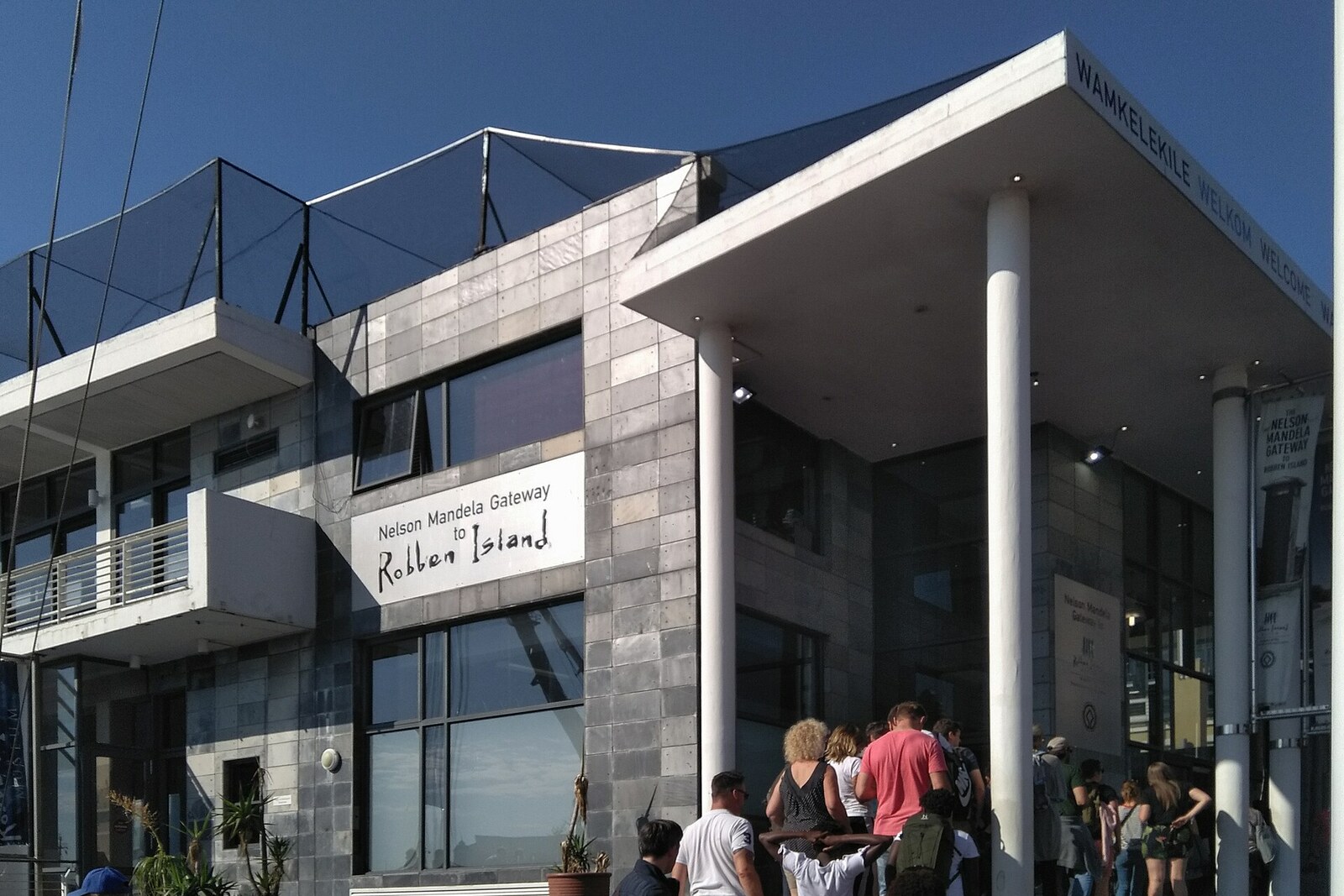
Look around first
What to notice
- Three-story building
- Nelson Mandela's name above the entrance
- Ferry pier
- Documents and photographs in the exhibition halls
The story of the place
The three-story building by the water connects Cape Town harbor with Robben Island: its halls hold documents, photographs and personal belongings, while tour ferries wait at the pier. The old Pier One used to be the departure point, where prisoners were held before the crossing and relatives who had come to visit them were registered. When trips to the island became widespread, a separate terminal was built on the shore so that an introduction to the prison could begin before going out to sea.
On December first, two thousand one, Nelson Mandela came here to open a new building named after him. By then he was already the former president of South Africa. But he began with the day when he expected to live only a few more hours.
In nineteen sixty-four, Mandela, one of the leaders in the struggle against apartheid—a system of racial segregation that denied political rights to the Black majority—was awaiting the verdict in the Rivonia Trial. He and his comrades were tried for organizing sabotage. The defendants expected the death penalty. The court sentenced eight of them to life imprisonment.
A few hours after the verdict, seven of those convicted, including Mandela, were flown at night to Robben Island. The present terminal did not exist then, and Mandela himself did not pass through here on his way to prison. He spent nearly eighteen years on the island, then was transferred to mainland prisons. In all, his imprisonment lasted twenty-seven years. After his release, Mandela took part in negotiations to end apartheid and, in nineteen ninety-four, became the country's first president elected in an election in which citizens of all races took part.
Meanwhile, Robben Island ceased to be a prison. In nineteen ninety-seven, former prisoners and museum staff opened it to visitors. The first tour ferries left from old Pier One, where prisoners were held before the crossing and relatives who had come to visit them were registered. When the flow of visitors grew, a separate three-story terminal with exhibition halls and a pier was built on the Cape Town shore. It was meant to prepare a person for the island before they boarded a vessel.
At the opening ceremony, Mandela reminded everyone that one person's name should not overshadow the shared fate of the prisoners. He accepted the honor on behalf of former political prisoners from different generations, then declared the building open.
Now documents, photographs and personal belongings connected with Mandela and the island's history are displayed here, and tour ferries also depart from here. Mandela's name remains above the entrance on the Cape Town shore, and his cell is on the island; between them lies the sea route that begins at this terminal.
Useful on site
Robben Island Museum usually runs tours from Nelson Mandela Gateway at 09:00, 11:00, 13:00 and 15:00; ferries depend on the weather, the vessel and tickets.
Checked: June 28, 2026. Check the official source before visiting.You do not need to take the ferry for this stop. A trip to the island requires separate planning and may depend on tickets and sea conditions; do not obstruct the line of departing passengers.