 Guide On Map
Zurich by the Lake: Squares, Parks, and Art
From Bürkliplatz through Bellevue to Zürichhorn
Guide On Map on your phone
Open the walk like a regular app
It takes about 10 seconds to install. No app store needed.
The whole path
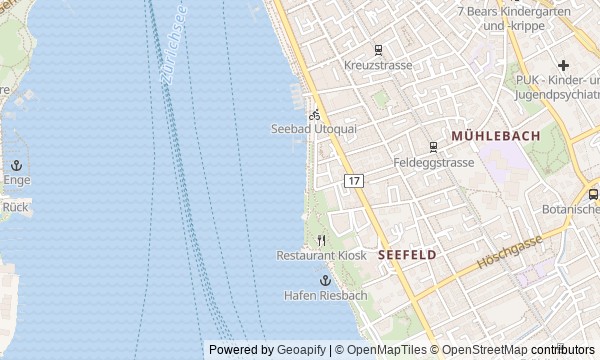
Route map
About the walk
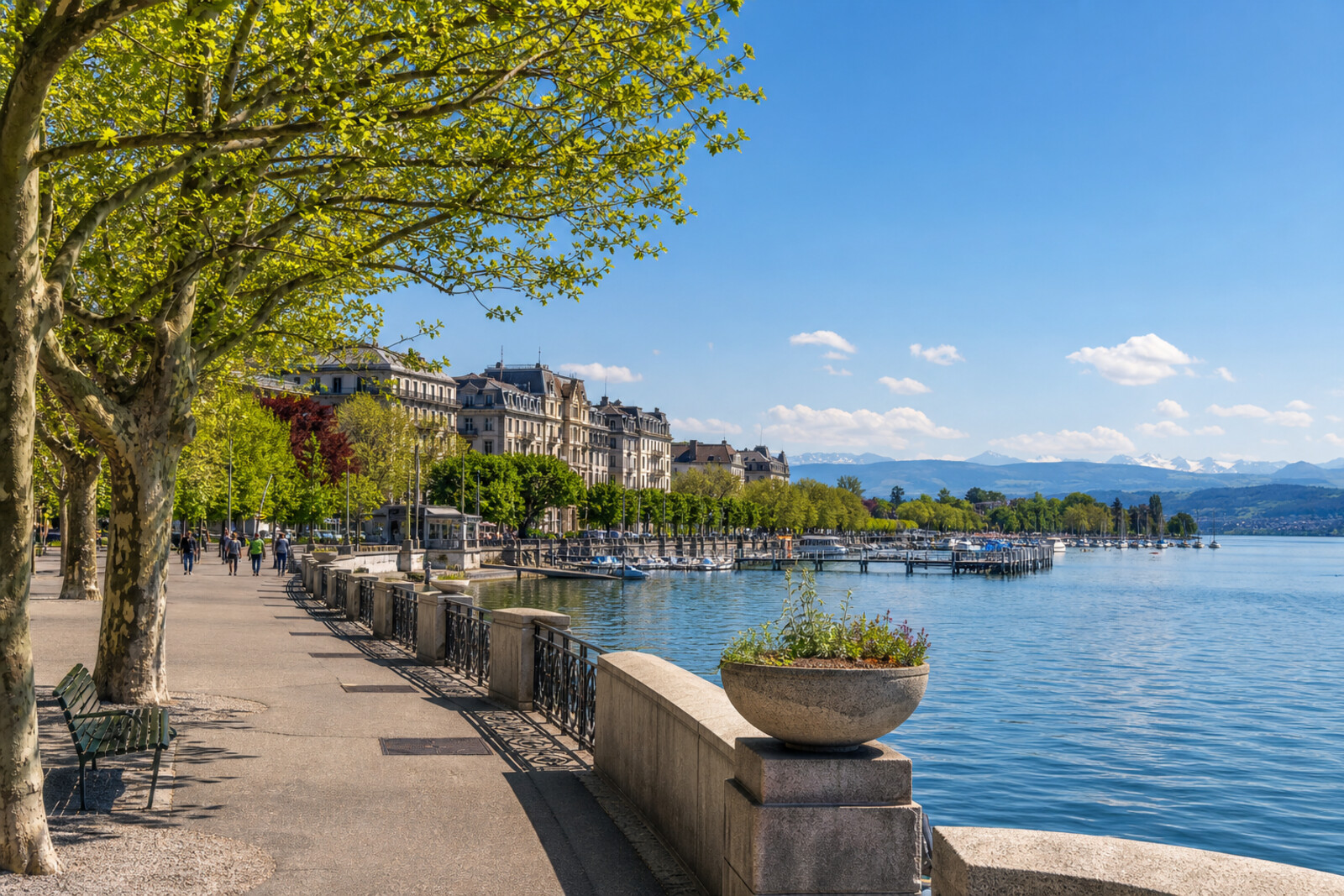
You will begin at Bürkliplatz, by the piers and market, then cross to Bellevue and follow the right bank of Lake Zurich as far as Zürichhorn. The way runs through a great festival square, past Zurich Opera House and an old bathing house, toward a colorful pavilion, the red walls of the Chinese Garden, and a black machine on the grass.
Along this shore, nearly every peaceful spot came about after an argument, an act of persistence, or a stroke of chance. Why would a male figure by the water matter to people the client never mentioned? Why hide pyrotechnics inside the head of a spring snowman? What could make someone keep old roof tiles for more than twenty years?
The story unfolds through letters, newspaper objections, building decisions, and things with unlikely fates. By the end, you will see Zurich's right bank not as park scenery, but as reclaimed land, hard-won access to the water, and other people's ideas that the city made its own.
Why this order
The order follows one question: how did Zurich gain this shore, and what did it fill it with? At Bürkliplatz, the land reclaimed from the lake itself comes into view; the bridge leads straight to a square where open space became the setting for a shared ritual. Zurich Opera House at its edge shows the next way of claiming the shore—building with private money—while Utoquai, running on from the theater, continues the story through access to the water. Farther on, the promenade reaches a pavilion where private initiative gained a public address. The neighboring Chinese Garden extends that thread into cooperation between two cities. Beyond its red wall begins Zürichhorn, so the route ends here with something the city struggled to find a place for over a long time.
Those who want to see Zurich from the lake Lovers of urban history told through objects and human decisions Those interested in promenades, architecture, and sculpture
Those looking for a route only through the Old Town Those who dislike long, open promenades Those expecting a story solely about classical architecture
Before you go
Almost the entire route can be done outdoors, but entering Seebad Utoquai, Pavillon Le Corbusier, and the Chinese Garden is a separate part of the visit. If you want to swim, bring what you need in advance and allow extra time; it is best to check the museum and garden before you set out, since access can be seasonal. Sechseläutenplatz may host markets, event setup, and major celebrations, so the usual way across the square sometimes changes. Comfortable shoes and protection from sun or wind matter more here than any special preparation.
When to go
Without visiting interiors or swimming, the walk takes about two hours. Going into the pavilion or garden, resting by the water, and stopping on the lawns can easily extend it to two and a half hours. The shore is quieter in the morning and the light is softer in the early evening; midday sun is especially noticeable on the open squares.
Backup plan
Closed doors do not break the route: view the bathing house from the promenade, focus at the pavilion on its steel roof, glass, and colored panels, and at the Chinese Garden on the red wall, the gate, and the nearby Klausstudie. If the weather turns sharply, it makes sense to do the compact city section from Bürkliplatz to Zurich Opera House and save the long open stretch along the water for later. In a brief rain shower, do not try to rush the whole route: skip interior visits and leave more time for the finale at Zürichhorn once it is drier.
Route conditions
Surface. Paved — 2 km; unpaved — 349 m (data covers 94% of the route)
Stairs. Flights: 3, 39 m in total
Access. Wheelchair — no; stroller — limited (stairs)
Facilities. Toilets — 18; drinking water — 8
Elevation. Ascent — 17 m; descent — 16 m
OpenStreetMap extract of June 23, 2026: database data, not a check on the ground. Data © OpenStreetMap contributors, ODbL licence
Walk plan
Open in maps ↗- 1
Bürkliplatz and “Ganymede”
Here you will see how the fight for an open shore created a place that was later given a new public meaning. - 2
Sechseläutenplatz and Bellevue
This stop will explain how a work bell, a children's bonfire, and a guild procession became a single city festival. - 3
Zurich Opera House
History will link the rushed construction on a marshy site with an opera whose missing act was replaced by a pantomime. - 4
Seebad Utoquai
Here, a dispute over propriety will turn into a practical question: who will be allowed to use the city’s lake. - 5
Pavillon Le Corbusier
This stop will show the price a private client paid to ensure that the architect’s final project was ultimately opened to the public. - 6
Chinese Garden and Seefeldquai
The garden’s history explains how technical assistance to one city led to construction in another and why the roofs had to be saved with an old stockpile. - 7
Zürichhorn and the sculpture “Heureka”
The finale will show how a request for a short film shoot decided the fate of a sculpture that no one wanted to install anywhere.
Route features
Everything you need stays in the browser
Progress, saves and your trip plan are stored on this device.
Add Guide On Map to your home screen so the walk opens outside the browser.
How we handle sources, maps and corrections: our editorial standards