 Guide On Map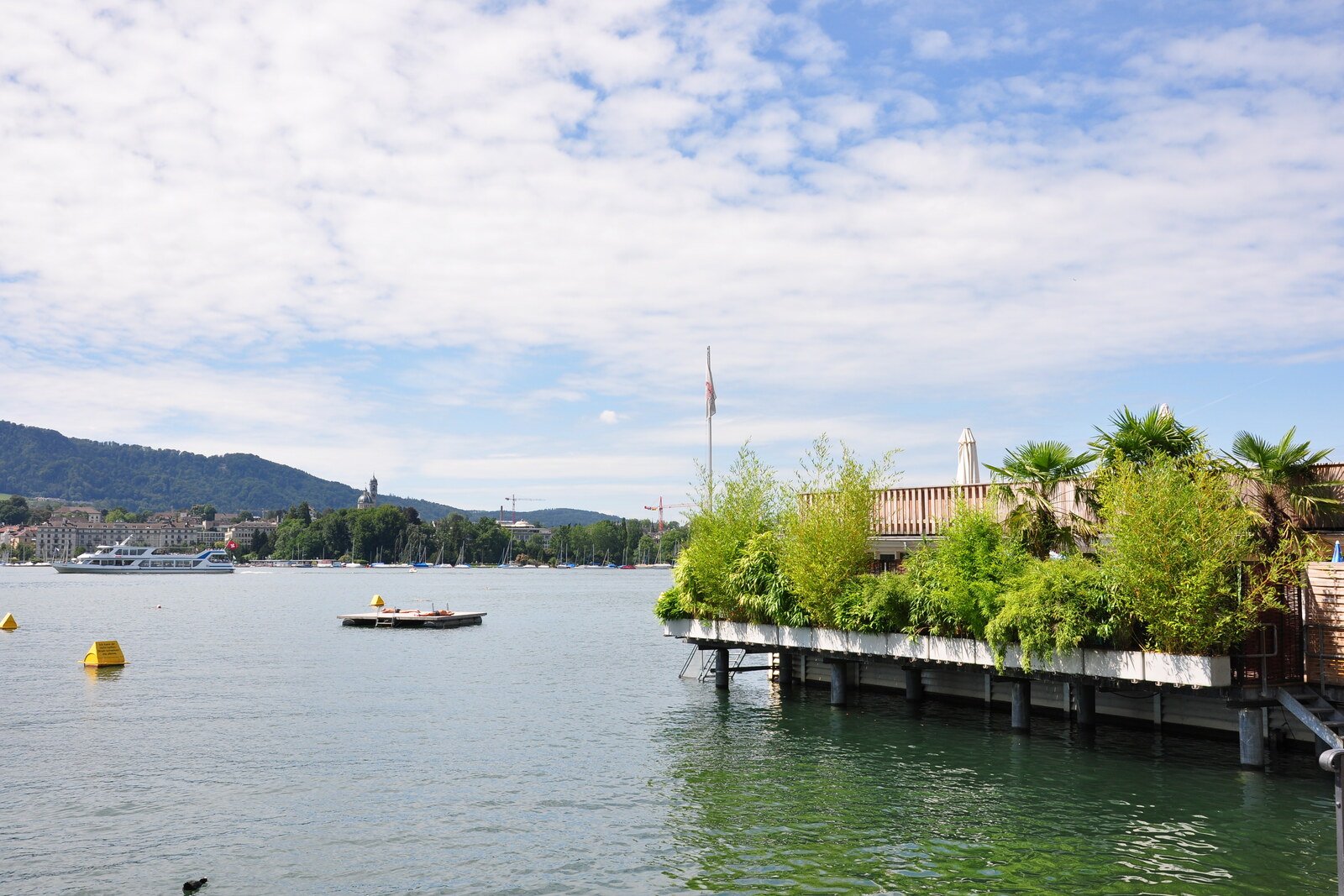
Look around first
What to notice
- Wooden structure on piles
- Two pools open to the lake
- Sun terraces
- Separate relaxation areas
The story of the place
The wooden structure on piles extends directly into the lake and serves as a bathing facility; the two remaining pools are open to the water, with sun terraces above them. It was built to replace the Riesbach bathing facility, demolished after the promenades were laid out: the municipality, independent at the time, needed to preserve its residents’ customary access to the lake. Inside, there were once four sections with their own pools and exits to the water, hidden from the shore by walls. Later, people came here not only to wash and learn to swim, and the two middle pools were covered with decks for relaxing.
Three years before the opening of the lakeside bathing facility that stands here, an anonymous author in the Neue Zürcher Zeitung, an opponent of the project, assured readers that women and girls would not grow accustomed to the freedom of life by the water and would not dare enter the open lake.
The dispute was not about idle recreation. Bathrooms remained rare, so municipal bathing facilities served hygiene and swimming instruction. After the promenades were built, Riesbach’s former bathing facility was demolished. The municipality, independent at the time, had to either provide a replacement or deprive its residents of their customary access to the water.
Riesbach commissioned a new bathing facility from architect William Henri Martin. He had to bring men and women under one roof without violating the ideas of propriety of the time. Martin set a wooden structure on piles and divided it with walls into four enclosed sections: for women, girls, men, and boys. Each had its own pool with access to the lake; the bathers could not be seen from the shore.
So, in eighteen ninety, men and women were allowed to use the same bathing facility here for the first time in Zurich—on the condition that they would swim separately. Newspaper opponents failed to stop the project, and women and girls received their own pools instead of advice to stay away from the “wild lake.”
By nineteen eight, visitors needed more than an enclosed place for washing and swimming. Sun terraces were built on the roofs: people came here to sunbathe and spend several hours by the water. The bathing facility gradually lost its towers and some of its interior partitions. In nineteen seventy-three, the two middle pools were covered with decks for relaxing.
Today, this is Zurich’s oldest surviving lakeside bathing facility. Two of the original four pools remain, and separate sun terraces for women and men still repeat the division that Martin incorporated into the plan at the request of a society that feared mixed bathing.
Useful on site
Season 2026: April 11-October 25; hours vary by period, until 21:00 during peak weeks, admission charged.
Checked: June 27, 2026. Check the official source before visiting.The appearance of the bathing facility can be seen from the promenade. Entry, swimming, terraces, and other services require a separate visit; without a ticket, do not enter the enclosed bathing areas.