 Guide On Map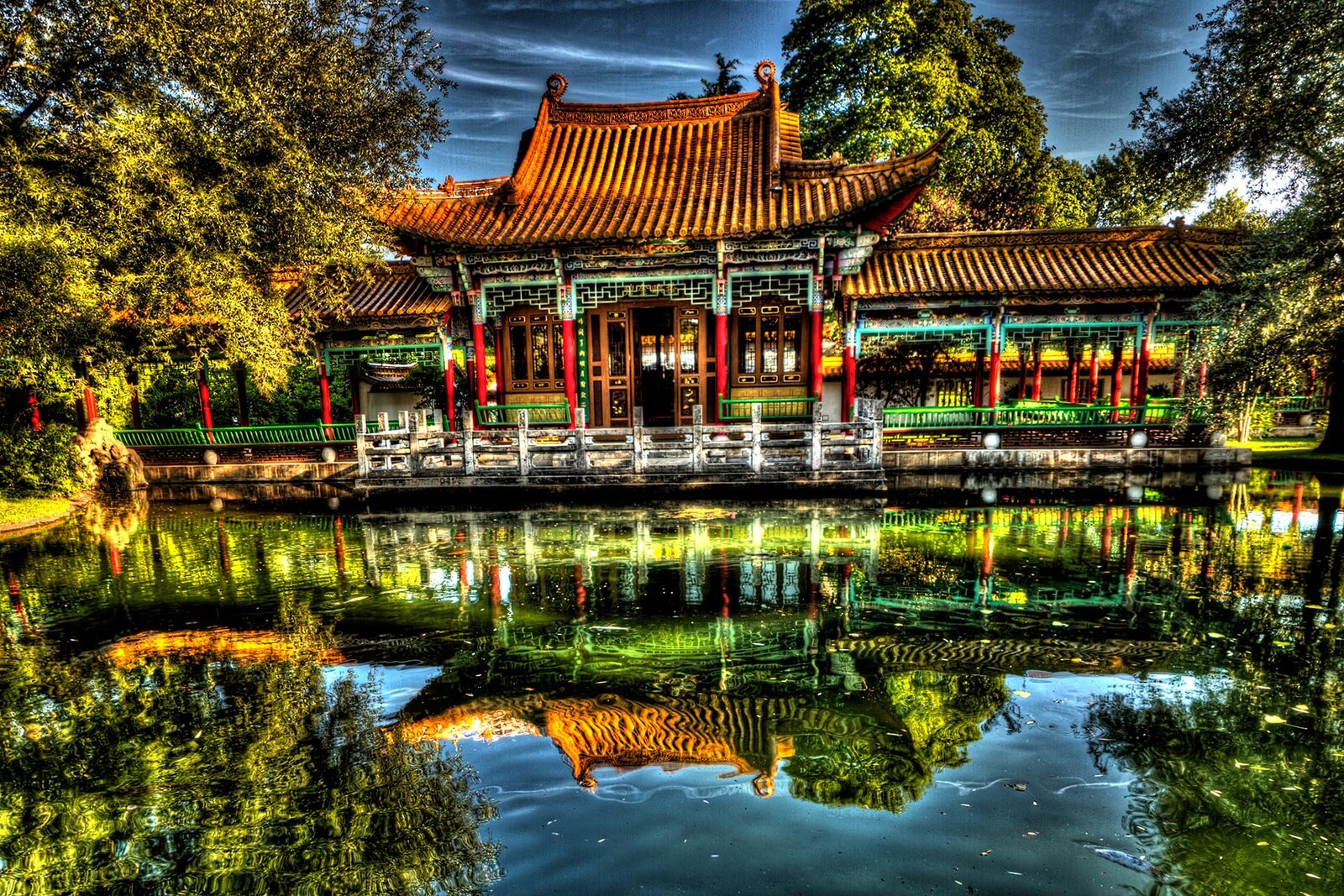
Look around first
What to notice
- Red wall
- Gilded plaque above the gate
- Yellow tiles
- Pavilions and bridges
The story of the place
The Chinese Garden is composed of pavilions, galleries, bridges, and a man-made rock. Pine, bamboo, and winter plum form the Three Friends of Winter here—the Chinese tradition’s expression for resilience in the cold. Yellow tiles cover the wooden roofs, and a gilded plaque bearing the garden’s name is mounted above the gate.
At the end of Seefeldquai, a red wall occupies the edge of Blatterwiese. The lawn takes its name from the K. Blatter & Son silk-dyeing works, built here in eighteen thirty-nine. In nineteen twenty-six, the city bought the business, demolished its buildings, and expanded the public park by the lake. Later, part of this municipal land was set aside for the Chinese Garden.
The reason for its creation lay several thousand kilometers from here. Kunming was growing quickly, its old pipes were leaking, and the system lacked water. From nineteen eighty-seven onward, engineers from the two cities worked together on a water supply and sewerage plan. About fifty Kunming specialists came to Zurich for internships lasting two to three months. Afterwards, Kunming established leak detection, began replacing pipes, and created a central water-testing laboratory—one of the first such laboratories in China to receive state accreditation. The water supply plan was later implemented almost in full.
Kunming decided to thank the people of Zurich with a garden. The Chinese side provided the design, plants, materials, and the work of its own crew; Zurich’s water utility paid for the construction for its one hundred twenty-fifth anniversary. From May to October nineteen ninety-three, craftspeople from Kunming and Zurich built the wall, pavilions, galleries, bridges, and artificial rock. The main theme chosen was the Three Friends of Winter: pine, bamboo, and winter plum—plants that retain their resilience in cold weather. A gilded plaque was mounted above the gate. The inscription meaning “Chinese Garden” was written by Wang Tingchen, the mayor of Kunming, who came in the spring of nineteen ninety-four to present the gift to the city. His calligraphy remains above the entrance.
Kunming temple builders brought with them one hundred fifty thousand tiles of local clay and stoneware. They fixed them to the wooden roofs with their customary mixture of sand and cement. Four years later, it became clear that the technology familiar to the builders could not withstand a Zurich winter. Severe frosts are rare in Kunming; here, water seeped into the joints, froze, and caused the mortar to disintegrate. All the tiles had to be removed.
Kunming specialists took responsibility for the repair. New frost-resistant tiles were fired in Beijing for the garden, and in the summer of nineteen ninety-eight, a Chinese construction crew returned to Zurich. The repair continued until November; the following March, the garden reopened. However, the Beijing tiles lasted only about fifteen years as well. They began to detach from the roofs, and falling heavy pieces became dangerous for visitors.
When the city’s roofers began another restoration, so many tiles broke while the old mortar was being cleared away that the restoration was put at risk. Then a long-serving employee of the municipal service remembered a stockpile of the first, Kunming-made pieces left in storage after the original construction. Engineers tested different compounds on them and selected a mortar designed for frost and water in the joints. The current edge of the yellow roofs was supplemented with tiles that builders brought from Kunming in nineteen ninety-three and that had lain in a Zurich warehouse for more than two decades.
Useful on site
Free admission; May-October daily 11:00-19:00, November-April daily 11:00-17:00; dogs are not permitted.
Checked: June 27, 2026. Check the official source before visiting.The garden’s full layout can be seen only when the entrance is open, so it is worth checking in advance. If the garden is closed, inspect the gate and find the boundary marker by the harbor, without trying to look over the fence.