 Guide On Map
Turin's Savoy Center: Palaces of Italy's First Capital
From Piazza Castello to the Palatine Gate and via Palazzo Carignano to Piazza San Carlo
Guide On Map on your phone
Open the walk like a regular app
It takes about 10 seconds to install. No app store needed.
The whole path
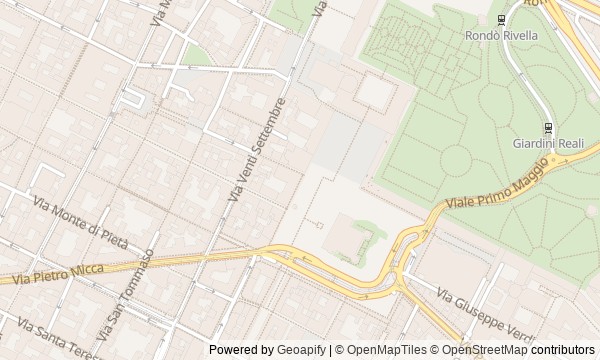
Route map
About the walk
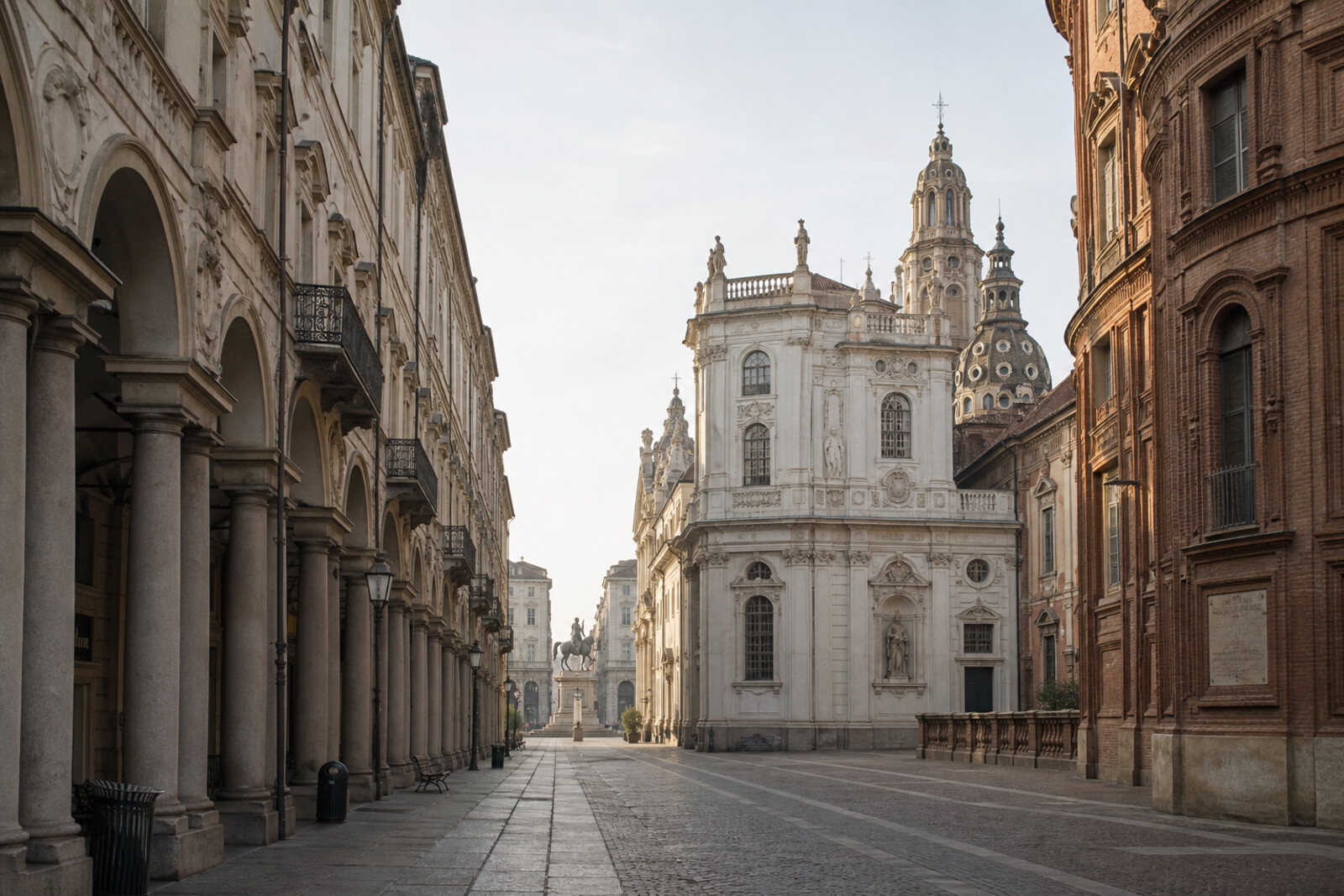
You will begin on Piazza Castello, among palaces, ministerial arcades, and former parliamentary halls. Then the route will enter the royal quarter, turn toward the Roman gate, return beneath the glass roof of the passage, and end on Piazza San Carlo. This ceremonial center will open up through the decisions made in its rooms and squares. Why does the Church of San Lorenzo have almost none of the familiar kind of facade? What will force a monarch to choose between an oath and a crown? Why will a firefighter need a sledgehammer beside the city's main relic? The story will hold on to documents, surviving objects, and small human details. It will not turn the unification of Italy into a neat legend of victory. By the end, you will connect the Roman gate, Savoy loggias, two former parliaments, and a square where the city still leaves flowers.
Why this order
The route begins where Turin faced the decision to leave it, then immediately enters Palazzo Madama, where that decision gained the force of law. From the Senate chamber, a short walk to the Church of San Lorenzo returns to a House of Savoy vow, while the neighboring Royal Palace of Turin shows how family oaths became state commitments. A passage behind the palace leads to the Cathedral of Saint John the Baptist: a dynastic relic stands literally between church and residence. From there, the route heads to the Palatine Gate, where royal Turin overlapped with a Roman gate and the city prison. Returning to Piazza Castello changes the setting: through the commercial Galleria Subalpina, the route reaches Palazzo Carignano, moving from court and Senate to an elected parliament. The final walk to Piazza San Carlo shows how a ceremonial square became a place for the mass city.
Those who want to understand Turin through the House of Savoy and the unification of Italy Fans of political history told through buildings and human decisions Those interested in Roman gates, palaces, and historic interiors in a single walk
Those looking for a light overview of the main sights Those who find it hard to hear about shootings, crowd crushes, and public violence Those who do not like returning to the same square during a route
Before you go
Treat a full visit to palace interiors and museums as a separate plan: the main story works outdoors too, but going inside will noticeably extend the walk. Decide in advance what matters most to you—the ceremonial staircase of Palazzo Madama, the rooms of the Royal Palace of Turin, the Chapel of the Holy Shroud, or the museum in Palazzo Carignano. The Church of San Lorenzo and the Cathedral of Saint John the Baptist remain active churches, so speak quietly inside and do not disturb services. Do not plan your cathedral visit around the expectation of seeing the Shroud of Turin unfolded: the story also covers its transfer, damage, photography, and rescue. Daylight will help when looking at facades, reliefs, and marks on the pedestal.
When to go
Start in the first half of the day if you want to add at least one palace interior. For an outdoor-only walk, any daylight hours will work; in the evening, details of the gate, facades, and monument are harder to make out.
Backup plan
If a palace, museum, or church is closed, do not skip the stop: at Palazzo Madama, compare the building's two sides; at the Church of San Lorenzo, look for its deliberately modest exterior; at the Royal Palace of Turin, study the balcony and the layout of the ceremonial courtyard; and at the cathedral, focus on the proximity of religious and dynastic spaces. The Chapel of the Holy Shroud and the Shroud of Turin should not be treated as interchangeable objects. If the passage through Galleria Subalpina is unavailable, continue to Palazzo Carignano by the ordinary streets: for the route's logic, it matters more to see how a bourgeois public space appears after the palaces than to walk through the passage itself.
Route conditions
Surface. Paved — 2.2 km; unpaved — 591 m (data covers 89% of the route)
Stairs. Flights: 1, 3 m in total
Access. Wheelchair — no; stroller — limited (stairs)
Facilities. Toilets — 9; drinking water — 12
Elevation. Ascent — 36 m; descent — 35 m
OpenStreetMap extract of July 4, 2026: database data, not a check on the ground. Data © OpenStreetMap contributors, ODbL licence
Walk plan
Open in maps ↗- 1
Piazza Castello
Here, the status of capital will cease to be an honorary label and will become a question of livelihood for the city’s residents. - 2
Palazzo Madama
The Senate Hall will connect the street protest with the legal decision that the protest did not stop. - 3
Church of San Lorenzo
This stop will show how a military vow outlived the duke and took stone form a century later. - 4
Royal Palace of Turin
The surviving table will turn constitutional history into one man’s choice between an earlier promise and the crown. - 5
Cathedral and the Shroud of Turin
Here, a family relic of the House of Savoy appears as an object that had to be carried literally out from under the fire. - 6
Palatine Gate
The Roman gate will help you see a former prison in an ancient monument, and the cost of a university privilege. - 7
Galleria Subalpina
The arcade trades court and parliamentary halls for an underground stage where a small fee opened the way to a great career. - 8
Palazzo Carignano
The temporary hall in the courtyard will show how Italy’s unifiers quarreled over the fate of the volunteer army. - 9
Piazza San Carlo
The finale will shift the city square from its ceremonial past to the modern memory of a mass event.
Route features
Everything you need stays in the browser
Progress, saves and your trip plan are stored on this device.
Add Guide On Map to your home screen so the walk opens outside the browser.
How we handle sources, maps and corrections: our editorial standards