 Guide On Map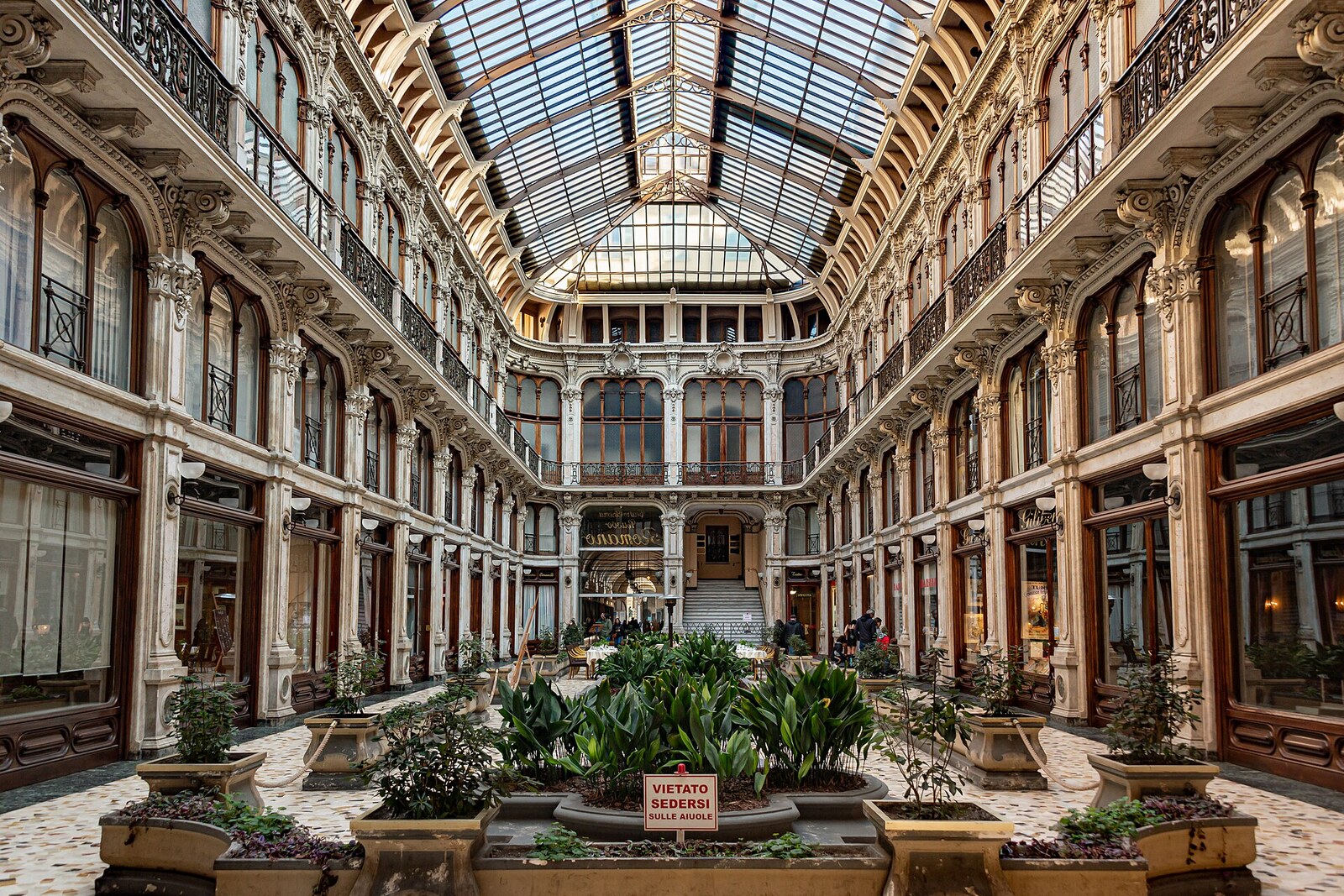
Look around first
What to notice
- Glass roof
- Balcony gallery
- Pietro Carrera plaque
- Entrance to Cinema Romano
The story of the place
Beneath the glass roof stretches a covered arcade with shops and cafés, while a balcony gallery runs around the shopping hall. It was built with money from Banca Subalpina d'Industria, which is why the word Subalpina remained in its name; alongside commerce, spaces for entertainment were provided here from the very beginning. Beneath the hall, performances were staged at first, then a cinema operated, and after wartime damage and reconstruction the former interior disappeared. The entrance to Cinema Romano inside the gallery still leads to these underground rooms.
In nineteen twenty-four, twenty-two-year-old Erminio Macario came to the Teatro Romano beneath this gallery. Until then, he had been making ends meet through various jobs: he had worked at a Turin factory, performed with provincial troupes, and carried scenery along with the other actors. Now he needed a paid engagement on a city stage.
Giovanni Molasso, a dancer and theatrical impresario, was then recruiting performers for a program of dances, comic acts, and pantomimes. The audition lasted a few minutes. Molasso immediately hired Macario for fifteen lira a day as the second comic—the partner expected to support the leading performer.
In the very first two productions, it was the newcomer whom the audience took to. Macario stopped being the second act and became the program's main comic. Within a few months, he was performing in major Milan theaters. In the spring of the following year, Isa Bluette, a star of Italian revue, was assembling her own troupe and offered him sixty lira a day, with a guarantee of six months' work in Turin. Four years later, Macario led his own company. Molasso's fifteen lira proved to be the price of entry into a profession to which Macario would later devote more than half a century.
The theater was here because of the gallery's very design. Engineer Pietro Carrera designed it as a covered commercial arcade with shops, cafés, and spaces for entertainment. Banca Subalpina d'Industria paid for the construction; that is where the word “Subalpina” in the gallery's name came from. On a surviving plaque, Carrera is named as the man who conceived the building and directed the work, while the bank and its associates are named as those who erected it. The gallery opened in December eighteen seventy-four.
In the rooms beneath the shopping hall, performances were staged at first, then the Lumière Cinema opened, and from nineteen sixteen theatrical variety shows were presented again. It was this very stage that Macario reached. After wartime damage and the reconstruction of nineteen fifty-eight, the former interior disappeared. The entrance to Cinema Romano is still in the gallery and marks that underground address where Molasso put Macario on the program for fifteen lira a day.
Useful on site
Historic public passage; no single official schedule has been confirmed in a publication, and the gates may be closed.
Checked: June 24, 2026. Check the official source before visiting.The gallery remains an active commercial space. View the interiors from the public passage, and use the tables, cafés, and cinema only as a patron of the relevant establishment.