 Guide On Map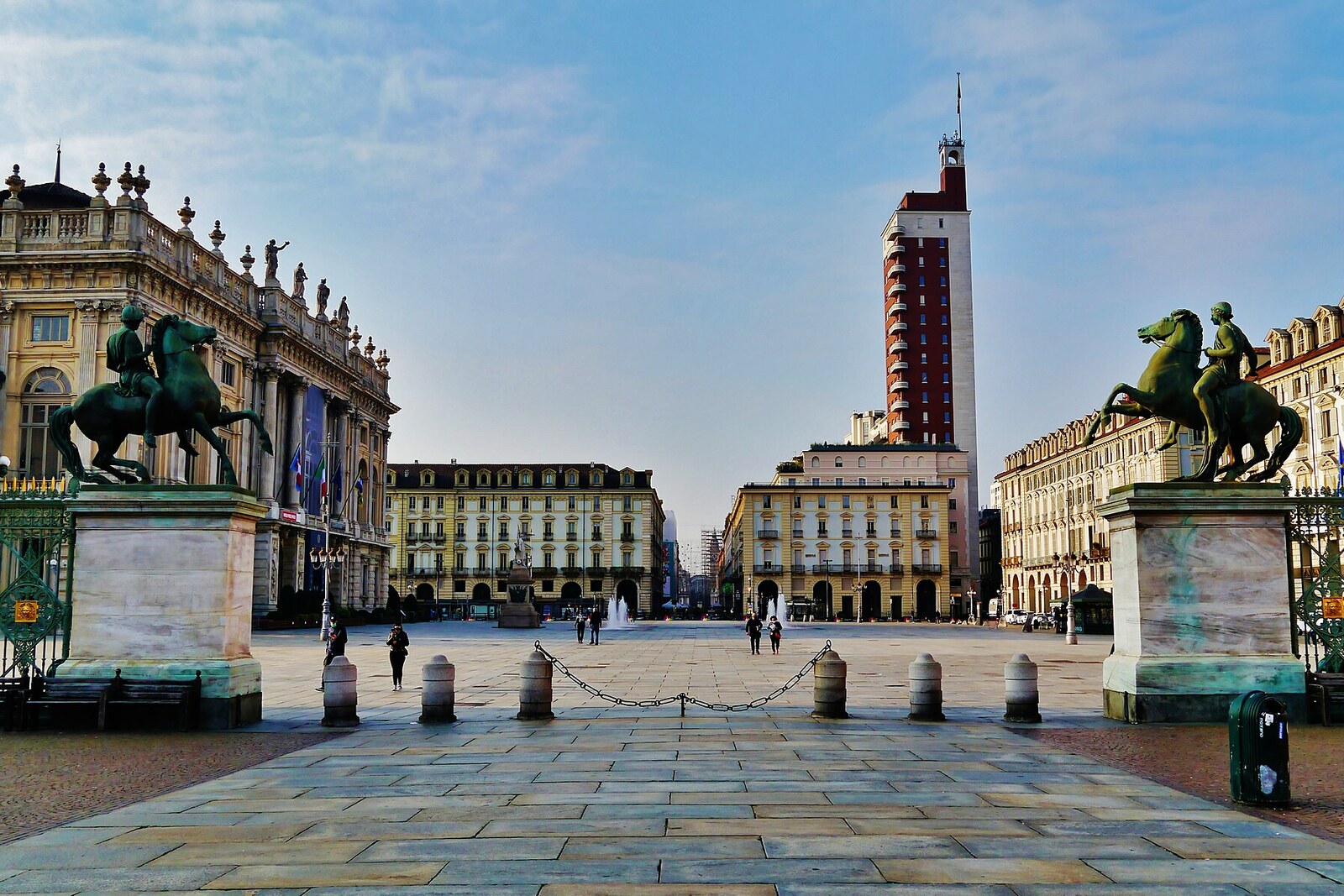
Look around first
What to notice
- The long Prefecture building
- The arcades on the eastern side
- The brick towers of Palazzo Madama
The story of the place
The brick towers of Palazzo Madama rise from the medieval castle that gave the square its name. The fortress was later transformed into a palace, and the royal quarter took shape beside it: the monarch’s residence occupied the northern side, while the secretariats and ministries occupied the eastern side. Monarchs lived here, and officials who governed the kingdom worked here.
The long building beneath the arcades on the square’s eastern side is now occupied by the Prefecture of Turin. In eighteen sixty-four, the Ministry of the Interior of the Kingdom of Italy was behind these windows. On September twenty-first, a crowd carrying a tricolor flag, a drum, and sticks approached it. A few minutes later, the Carabinieri opened fire.
Turin had then been the capital of the unified kingdom for only three years. Prime Minister Marco Minghetti sought an agreement with the French Emperor Napoleon the Third: France was to withdraw its soldiers from Rome, and Italy was to guarantee the inviolability of the Papal States. Moving the capital from Turin served as proof that the Italian government did not yet intend to occupy Rome. A deadline of six months appeared in the secret protocol. Florence was chosen as the new capital.
When the contents of the protocol leaked into the newspapers, Turin’s residents saw it as a direct threat to their livelihoods. Civil servants, military personnel, diplomats, and their families were to leave with the ministries; the city’s tailors, printers, innkeepers, shop clerks, and property owners would lose customers and orders. The fears proved justified: over the next four years, Turin’s population fell by almost thirty-three thousand people.
On the evening of September twenty-first, the demonstrators walked along Via Nuova—what is now called Via Roma—and emerged onto Piazza Castello. The soldiers blocking the entrance to the square opened their ranks and let them through. Carabinieri cadets stood outside the ministry. Interior Minister Ubaldino Peruzzi was responsible for order and wanted to keep the crowd away from the building. The mayor had asked him in advance to call up the National Guard—an armed militia of the city’s own residents, which could speak with fellow locals without a bayonet charge. Peruzzi delayed authorization; it arrived only shortly before the shooting, when there was no longer enough time to assemble the men.
Eyewitness accounts differed on one point: no one could establish with confidence where the first single shot came from. The cadets then fired a volley into the square. A later register by the city’s sanitary inspector records fifteen people who died from wounds received here. Eighteen-year-old shop clerk Ernesto Ceresito died that same day. Next to him on the list are thirty-year-old innkeeper Giuseppe Picena, twenty-two-year-old tailor Giuseppe Longo, and twenty-three-year-old carpenter Olisio Meinardi. Occupations that depended on the capital’s daily life were listed in a medical report on the shooting.
After further shooting on the following evening, Minghetti’s government resigned. Fifty-eight Carabinieri and cadets were arrested, but the case never reached a verdict: no one was convicted. Nor was the move of the capital canceled. In February of the following year, the king and ministers left Turin for Florence.
The square takes its name from the medieval castle standing at its center, later transformed into Palazzo Madama. To its north stood the royal residence; to its east, the state secretariats and ministries. That is why the protesters came here: the minister they needed was beneath the arcades opposite the castle. There is no monument to the fifteen people killed in Piazza Castello. The building they were heading toward remains: the Prefecture of Turin still operates in the former Ministry of the Interior, as the territorial office of the same ministry.
Useful on site
Open urban space; accessible around the clock, with temporary closures possible during events.
Checked: June 24, 2026. Check the official source before visiting.Stop where you can see the entire square: this story needs a wide view, not an entrance to a particular building. Watch the flow of people and do not block the way.