 Guide On Map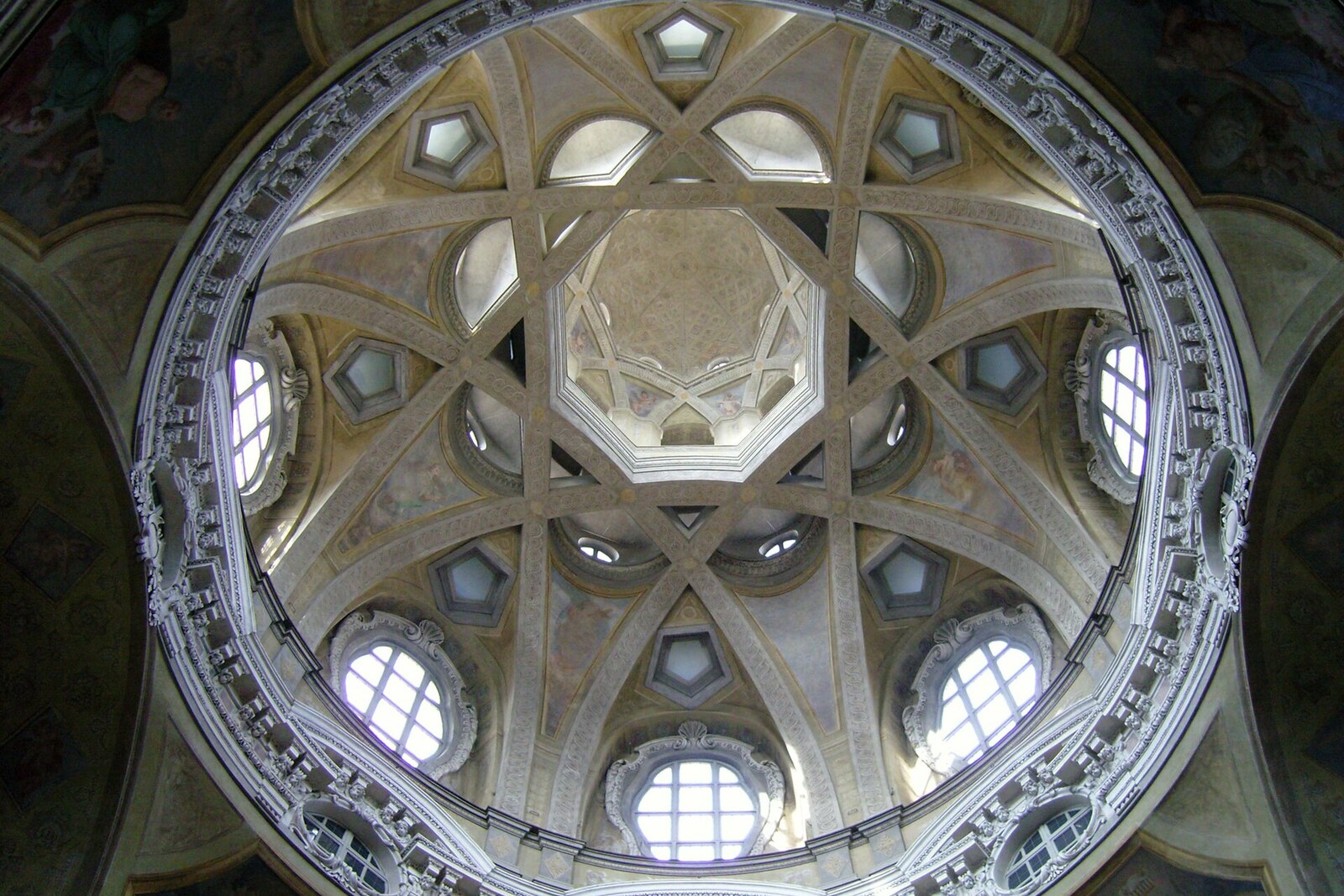
Look around first
What to notice
- Main altar
- Scene of the vow on the altar
- Gilded screened boxes
- Dome of intersecting arches
The story of the place
At first, San Lorenzo was a small medieval chapel in the palace garden. A century later, it was replaced by a large church built around an octagonal space; above it, arches intertwine into a tall dome. On either side of the main altar, gilded screened boxes survive, from which the ducal family took part in the service, while in the painting itself Saint Lawrence holds the instruments of his execution.
The front of the main altar depicts a military vow. It is made by Emanuele Filiberto of Savoy, a duke who possessed the title but scarcely possessed the duchy. French troops had occupied most of his family's possessions for two decades already. He sought a military career, money, and allies in the service of the Habsburgs; defeat could have left him a hereditary ruler without a country.
On August tenth, fifteen fifty-seven, Emanuele Filiberto commanded the army of the Spanish king Philip II at Saint-Quentin in northern France. Before the battle was decided, the duke promised to dedicate a church to the saint whose feast day fell on that date. The army under his command defeated the French.
The victory did not yet return his possessions to him. Two years of negotiations were needed before, under the Peace of Cateau-Cambrésis, France agreed to return the Duchy of Savoy. Emanuele Filiberto moved the capital to Turin and began rebuilding the state: he built a citadel, restored the administration, and sought the return of cities where foreign garrisons still stood.
There was not yet enough money for the promised church. In the palace garden stood the medieval chapel of Santa Maria ad Praesepe—Saint Mary by the Manger. In fifteen sixty-three or the following year, the duke gave it the name San Lorenzo. Saint Lawrence was a Roman deacon executed in two fifty-eight; August tenth marks the day of his martyrdom. There is no Turin episode in the saint's life behind the name: it preserves the date of the victory after which the duke gained the opportunity to return to his own country.
Emanuele Filiberto died without ever seeing the large church. A century later, the House of Savoy commissioned the priest and architect Guarino Guarini to build the present octagonal hall with a dome of intersecting arches. In sixteen eighty, Maria Giovanna Battista of Savoy, who governed the duchy for her underage son, brought the family promise to completion, and Guarini celebrated the first solemn Mass here.
The word “Royal” refers to the House of Savoy. On either side of the altar, gilded screened boxes intended for the ducal family survive. In the altar painting, Saint Lawrence is shown with the instruments of his martyrdom; below is the scene of the vow at Saint-Quentin, and above the arch an inscription divides what was done between two people: Emanuele Filiberto made the promise, and Maria Giovanna Battista fulfilled it.
Useful on site
According to the published schedule: weekdays 9:00–12:00 and 15:30–18:00; holidays 15:30–18:00; check on the day of your visit.
Checked: June 24, 2026. Check the official source before visiting.This is an active church: enter quietly, turn off your phone's sound, and do not continue visiting during a service. If you cannot enter, its exterior still explains its place beside the palace.