 Guide On Map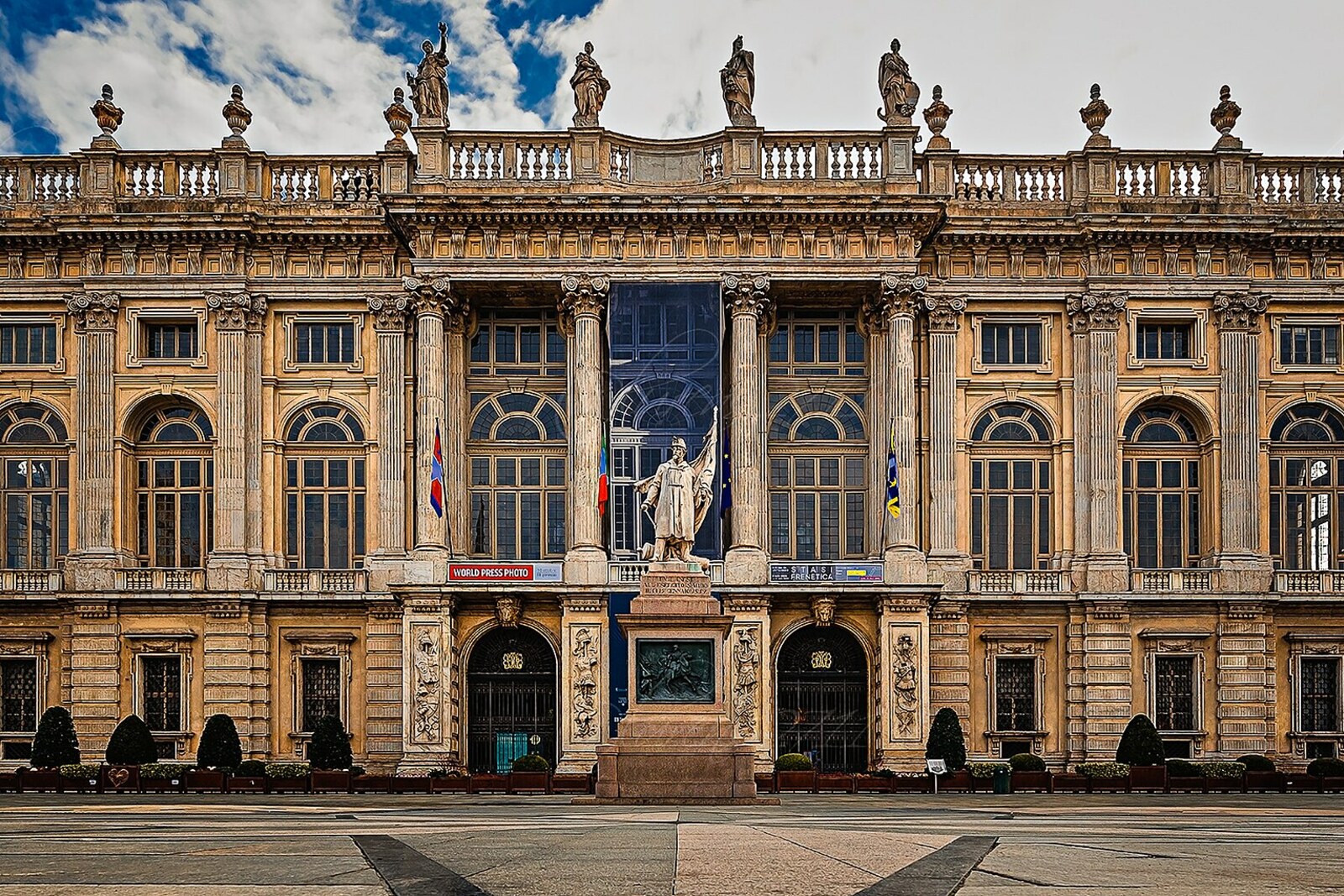
Look around first
What to notice
- White stone facade
- Ceremonial staircase
- Medieval brick towers
- Covered inner courtyard
The story of the place
Palazzo Madama is an old castle in the middle of Piazza Castello. In sixteen eighty-four, the eighteen-year-old Duke Vittorio Amedeo II removed his mother from governing Savoy. Maria Giovanna Battista of Savoy-Nemours had ruled in her son's name ever since he lost his father at the age of nine, and she had no intention of giving up her position immediately after he came of age. For several years, the duke pretended to agree with her, until he had gathered enough supporters. Then he dismissed his mother's circle and began to rule on his own.
Maria Giovanna withdrew to the old Castle of Acaja in the middle of Piazza Castello. Before her, another widowed regent had lived here—Cristina of France, who governed the duchy for her underage son. Cristina was the first at the Turin court to bear the French title Madama Reale—“royal lady.” She turned the castle into her ceremonial residence and ordered the open medieval courtyard to be covered with vaults. Maria Giovanna inherited both the residence and the same title. The old castle received the name Palazzo Madama from the two regents.
Having lost the right to rule, the second Madama turned her attention to her palace. The work lasted about thirty years. In seventeen eighteen, she commissioned the court architect Filippo Juvarra to create a new ceremonial entrance and a staircase suitable for grand ceremonies. Juvarra intended to surround the medieval castle with new wings, but only the part facing the square was built. That is why the white stone facade and broad staircase end where the old brick towers begin.
The courtyard covered on Cristina's orders became the Senate Hall two centuries later. In eighteen forty-eight, King Carlo Alberto assigned it to the upper house of parliament. Senators were not elected: the king appointed them for life. After the unification of the country, the Senate of the Kingdom of Italy met here.
On December ninth, eighteen sixty-four, the senators gathered in this hall to decide Turin's fate as the capital once and for all. The September events in the square had already led to the government's resignation, but the new cabinet introduced the same proposal. Moving the capital to Florence was a condition of the agreement with France: French troops were to leave Rome gradually, and Italy promised not to attack the Papal States.
The debate lasted eleven days. Of the one hundred eighty-one senators who voted, one hundred thirty-four supported the move and forty-seven opposed it. Two days later, Vittorio Emanuele II signed the law: the capital was to be moved to Florence within six months, and seven million lire were allocated for the relocation. The following year, the king, the ministries, and parliament left Turin.
This vote was the Senate's final meeting in Palazzo Madama. The hall's parliamentary furnishings were kept until nineteen twenty-seven, then removed when the museum was created. The Civic Museum of Ancient Art is now inside: the volume of the former Senate Hall remains, but the chairs from which the senators approved the capital's departure are no longer there.
Useful on site
Monday and Wednesday–Sunday 10:00–18:00; Tuesday closed; ticket office closes at 17:00.
Checked: June 24, 2026. Check the official source before visiting.Be sure to walk around the palace from the outside and compare its facades. The ceremonial staircase can be fully viewed inside the museum route; do not plan this visit as a quick stop.