 Guide On Map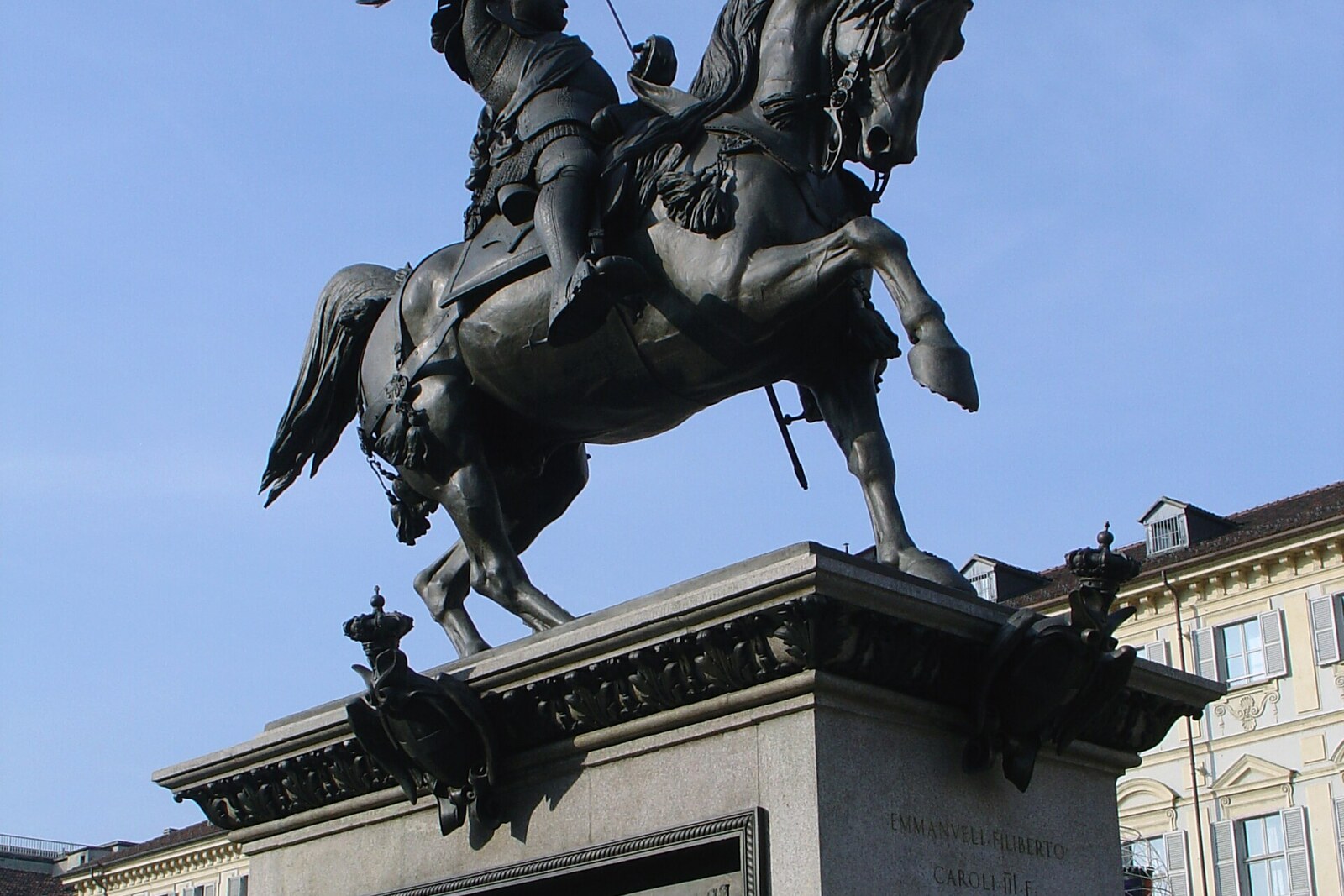
Look around first
What to notice
- Two similar churches
- Facade of the Church of San Carlo
- Main altar of San Carlo
- Memorial plaque with two names
The story of the place
The elongated square is closed off by a pair of nearly identical church facades. The western church is dedicated to Carlo Borromeo, and the square received its present name from it; it was previously called Royal Square. On the main altar of San Carlo, the archbishop is depicted before the Shroud, and this image recalls why Turin became its permanent home.
Two names are engraved on the memorial plaque by the square: Erika Pioletti and Marisa Amato. They explain what happens in this long rectangle between the arcades. In the seventeenth century, markets and court ceremonies were held here; now organizers choose Piazza San Carlo for concerts, broadcasts, and city celebrations. Juventus fans traditionally gather here after important matches.
On the evening of June third, two thousand seventeen, a huge screen was set up in the square for the Champions League final between Juventus and Real Madrid. Tens of thousands of people stood before it. Four young robbers came for gold chains. They made their living by stealing at crowded events: they sprayed an irritant substance, snatched jewelry, and left in the confusion that followed.
In the second half, they used the spray in the dense crowd. People nearby did not understand what had happened and decided that an attack had begun. Some ran, carrying others with them; several waves of crush swept across the square. Glass bottles on the pavement broke, and people fell onto the shards and onto one another. More than one thousand six hundred people were injured.
Thirty-eight-year-old employee Erika Pioletti had come from Domodossola: watching the match was a birthday gift for her companion. She agreed to go to the organized broadcast, expecting security controls. When the crowd began to move, Erika tried to shelter under the arcades, but she could not get past the barriers. She died in the hospital twelve days later.
Sixty-four-year-old Marisa Amato was not interested in football. She was walking with her husband along Via Santa Teresa when people from the square poured into it. Marisa was knocked down and trampled; after her injury, she remained paralyzed and died a year and a half later. The four robbers received sentences of a little more than ten years. By decision of the city council, a plaque bearing the names of Erika and Marisa was installed here in two thousand twenty-one; flowers are laid there every June third.
The square's elongated rectangle ends with two similar churches. The western one explains the name Piazza San Carlo. Carlo Borromeo was Archbishop of Milan. During a plague epidemic, he vowed to walk to the Shroud, which was kept in Chambéry. Duke Emanuele Filiberto of Savoy had already moved the capital of the Duchy of Savoy to Turin and wanted to bring his dynasty's chief relic here. In fifteen seventy-eight, he ordered the Shroud brought to Turin, officially to shorten the archbishop's journey. Borromeo walked here from Milan and fulfilled his vow; the Shroud was not returned to Chambéry.
The duke's son, Carlo Emanuele I, dedicated to Borromeo the church whose first stone was laid in sixteen nineteen. The square was first called Royal Square, and later the church's name was transferred to it. On the main altar of San Carlo, the archbishop is still depicted before the Shroud.
Useful on site
Open urban space; access around the clock, temporary closures are possible during events.
Checked: June 24, 2026. Check the official source before visiting.Walk around the monument: its main gesture, reliefs, and bullet marks cannot be seen from a single point. The square and monument can be fully viewed from outside.