 Guide On Map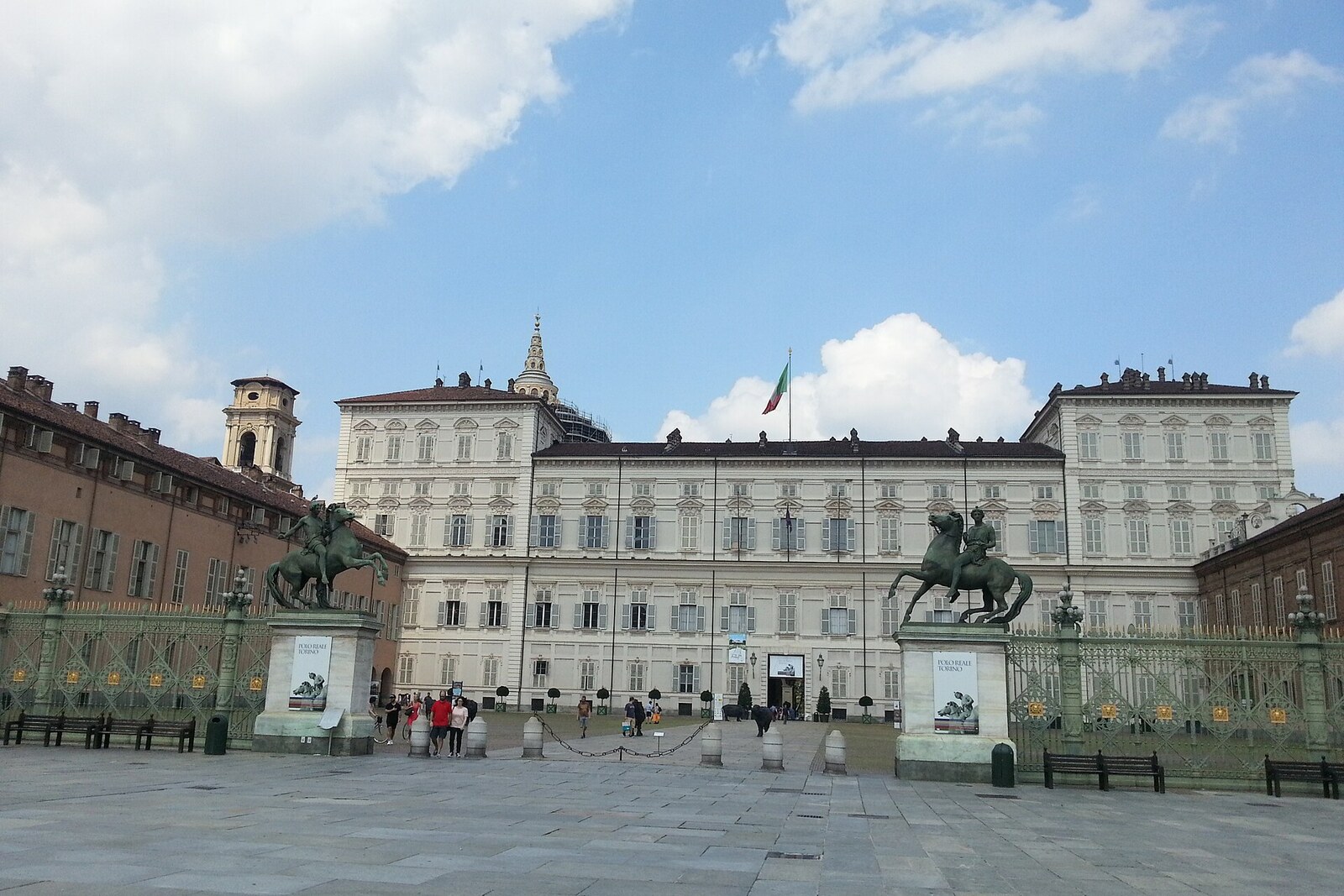
Look around first
What to notice
- Council Room
- Table of gilded bronze
- Facsimile copy of the Statuto Albertino
The story of the place
The Royal Palace of Turin served as the monarchs’ residence and working home: ministers gathered here and affairs of state were decided here. In the Council Room among the state rooms, a table with gilded bronze has survived; on it lies a facsimile copy of a document whose original is kept in the State Archives of Turin.
In the Council Room on the first state floor of the Royal Palace of Turin stands a table of gilded bronze. On March fourth, eighteen forty-eight, King Carlo Alberto signed the constitution of the Kingdom of Sardinia on it. The Savoy family lived in this palace, and the king also gathered his ministers here. That is why the question of what he was prepared to sacrifice to preserve the crown was decided here.
For Carlo Alberto, this signature repeated a choice that had once nearly destroyed him. In March eighteen twenty-one, he was crown prince and temporarily governed the country after the abdication of the previous king. Rebel officers demanded a constitution that would limit the monarch’s decisions, and Carlo Alberto agreed.
His uncle and the new king, Carlo Felice, sought to restore the former order. He abolished the constitution, declared its supporters rebels, and sent his nephew and family to Florence. To regain his uncle’s favor, Carlo Alberto went with the French army to Spain to fight the local supporters of the constitution. In eighteen twenty-three, he swore to Carlo Felice that, once he received the crown, he would never again grant his subjects a fundamental law.
A quarter of a century later, Carlo Alberto was himself king. The Kingdom of Sardinia then included Piedmont, Liguria, Savoy, and the island of Sardinia, while Turin remained the capital. In January eighteen forty-eight, an uprising in Palermo forced the King of the Two Sicilies to promise a constitution. The municipal councils of Turin and Genoa also demanded representative government. People gathered in the streets, while ministers persuaded Carlo Alberto that further refusal could end in an uprising.
On February first, the king still replied that he would not yield to pressure. On February third, the ministers unanimously recognized that a constitution was necessary. On February seventh, a meeting took place at the palace, lasting from eight in the morning until about four in the afternoon. Ministers and senior officials discussed the future order; four participants spoke against an elected chamber. Carlo Alberto himself seriously considered abdication. That way, he could preserve his old oath, but he would lose the crown for the second time over the same issue.
On February eighth, a royal proclamation of fourteen points was posted in Turin: Carlo Alberto promised a representative system. The full text was prepared for another three weeks. There was as yet no parliament that could discuss it. The king himself granted his subjects eighty-four articles and signed them in the Council Room on March fourth.
The document was called the Statuto Albertino, after Carlo Alberto. The king retained control of the government, army, and foreign affairs, and appointed ministers and senators for life. Laws were now passed with the participation of the Senate of the Kingdom of Italy and the elected Chamber of Deputies. The Statuto recognized equality before the law, personal inviolability, the right of assembly, and limited freedom of the press. Only men who met property and tax qualifications could vote, meaning a small share of the population.
The first parliament assembled in May. A year later, Carlo Alberto abdicated after the military defeat at Novara and left for Portugal, where he soon died. His son and successor, Vittorio Emanuele II, retained the Statuto, although other Italian monarchs abolished the constitutions granted during the revolutions. In eighteen sixty-one, the Turin document was extended to the united Kingdom of Italy. Formally, it remained its fundamental law until the republican constitution came into force on January first, nineteen forty-eight.
Today, the palace is part of the Royal Museums of Turin. In the Council Room, the table at which Carlo Alberto broke the oath he had made for the sake of his future crown has survived. A facsimile copy of the Statuto Albertino lies on the table; the original is kept in the State Archives of Turin.
Useful on site
Royal Museums of Turin are open Thursday through Tuesday 9:00–19:00; Wednesday closed; last entry and ticket office at 18:00.
Checked: June 24, 2026. Check the official source before visiting.Outside, focus on the connection between the facade and the square. The throne and council rooms, the Armory, and the library are part of a full museum visit, which is worth planning separately.