 Guide On Map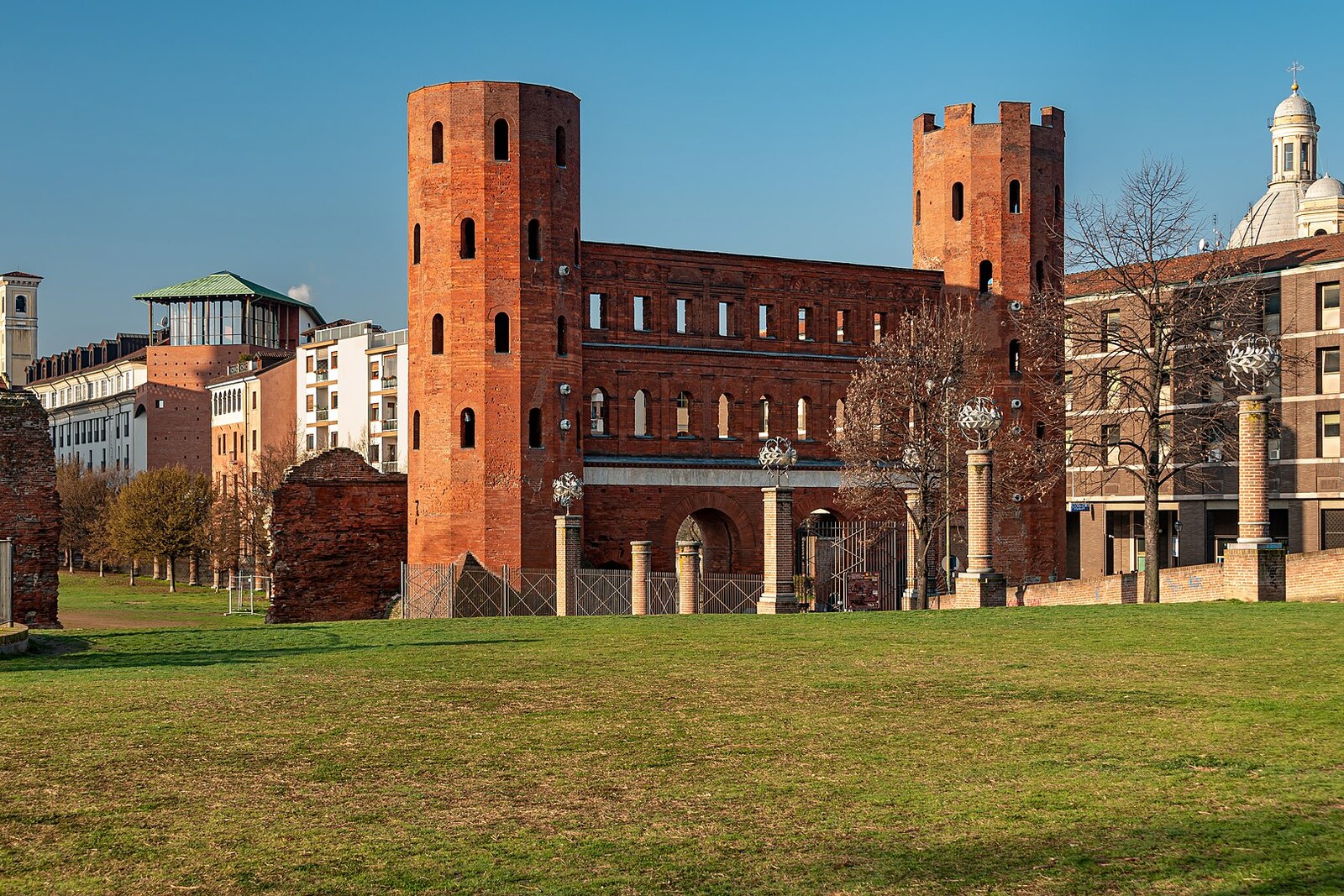
Look around first
What to notice
- Two brick towers
- Wide passageways for carts
- Narrow passages for pedestrians
- Inner courtyard
The story of the place
Between the two brick towers, the northern entrance to the Roman Augusta Taurinorum has survived. Two wide passageways were intended for carts, while pedestrians used two narrow passages; in the inner courtyard, arrivals were stopped for inspection. The name “Palatina” is probably associated with a palace that stood somewhere near today’s Largo IV Marzo, although historians do not know exactly which building gave the gate this name. In the nineteenth century, the central passageways were opened again after the later additions were demolished.
On June sixth, seventeen ninety-one, Giuseppe Parena was locked up behind these towers. He was studying surgery and learning the profession from a practicing physician. After the prostitute Vittoria Fontana, known as La Bella Cabassina, had, according to the case records, robbed him, Parena struck her. Fontana sought punishment for the slap, and Lorenzo Oddono helped her—a barber and informant for the city vicariate who managed to secure the student’s arrest.
By then, the Roman gate had already served as a prison for seven decades. In seventeen twenty-four, King Vittorio Amedeo II transferred the towers to the city on condition that guards and vicariate cells be housed here, without changing the structure’s outward form. The ancient openings thus ended up inside the prison complex, and the towers themselves received a new city name: the Towers of the Vicariate.
What outraged Parena’s companions was not the cause of the quarrel itself. Students at the University of Turin enjoyed the privilege of being tried by the university rather than by city officials. If the deputy assessor Antonio Zappa could send one student of surgery to an ordinary prison, that privilege ceased to be worth anything.
Sources disagree on one important point. According to one version, Zappa protected Fontana and knowingly used Oddono’s false testimony. According to another, Oddono deceived Zappa himself. What followed is known more reliably: the students demanded Parena’s release, armed themselves, and went to the Towers of the Vicariate. Artisans and small traders joined them. From June sixth through the tenth, the crowd besieged the prison, while soldiers blocked its way.
Less than two years had passed since the fall of the Bastille, so the Savoy court took the attack on the city prison seriously. The troops were withdrawn, and Parena was released. Zappa made a public apology in the university courtyard and lost his post. Oddono and Fontana were arrested and put in the pillory.
The prison itself changed as well. To prevent another assault, the male prisoners were transferred from here to criminal prisons. The towers retained women convicted of minor crimes.
Originally, this was the northern entrance to the Roman Augusta Taurinorum: two wide passageways for carts, two narrow passages for pedestrians, and an inner courtyard where arrivals could be stopped and inspected. The medieval name “Palatina” probably meant the gate by a palace that stood somewhere near today’s Largo IV Marzo; historians have not established exactly which building gave the gate its name.
In the nineteenth century, the prison additions were demolished, and the central passageways were opened again. There are no cells here any longer, but the brick towers before us are the very Towers of the Vicariate that the students came to for the student of surgery.
Useful on site
The archaeological area can always be viewed from outside; local barriers may be in place during works and events.
Checked: June 24, 2026. Check the official source before visiting.View the gate from several sides to see its volume and traces of different periods. Do not mistake the bronze rulers for finds from Roman times—they are a later addition.