 Guide On Map
Marunouchi and the Imperial Palace: From the Station to Edo Castle
From Tokyo Station through Kokyo Gaien National Garden to Ninomaru Garden
Guide On Map on your phone
Open the walk like a regular app
It takes about 10 seconds to install. No app store needed.
The whole path
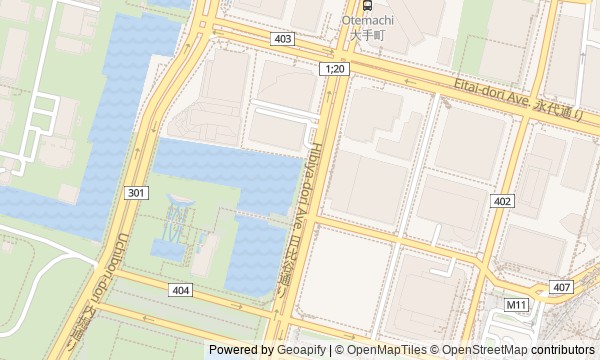
Route map
About the walk
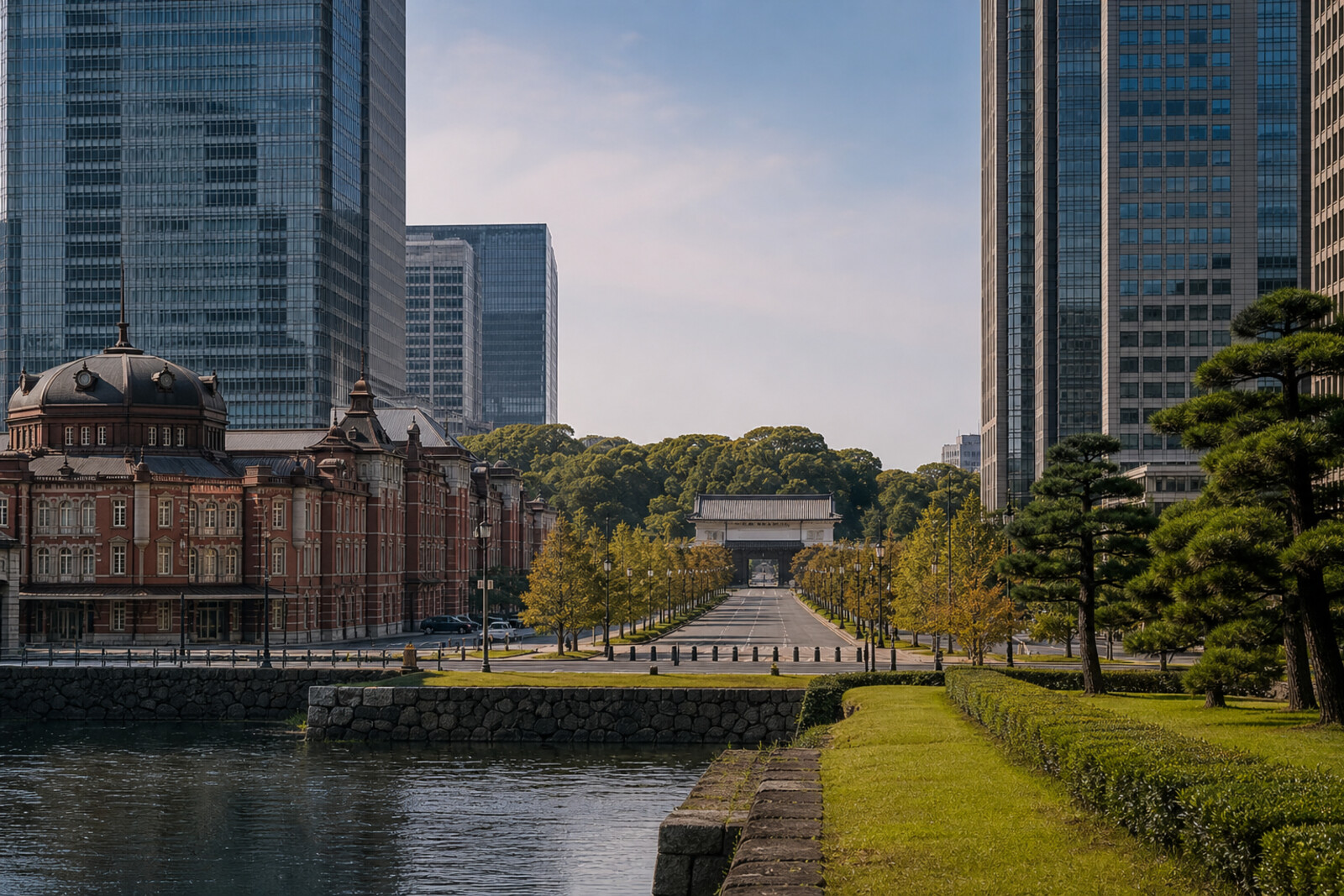
You will begin beneath the brick domes of Tokyo Station and step out onto the straight avenue leading to the palace. Marunouchi's office blocks will fall away behind the ginkgo trees. Ahead lie moats, black pines, bridges, and gates of former Edo Castle. The walk moves from the ceremonial capital to its service entrance, then climbs to an empty stone foundation and descends to the pond in Ninomaru.
Along the way, you will find out why a small circle was set into the station floor, why an ambassador will travel to the palace by carriage, and why even the city refused the price demanded for an empty military parade ground. By the bridges, another question emerges: why the famous name belongs not to the structure usually photographed. The story follows people's decisions and their visible traces—a seam in bronze, an unbuilt foundation, long fins in a pond.
After the walk, you will be able to point out where the boundaries of Edo Castle can still be read in the modern center: in the streets, gates, and the site left without its tower.
Why this order
Tokyo Station begins the route where the ceremonial capital meets the mass city: its central exit faces directly onto Gyoko-dori Avenue. Where the avenue crosses Marunouchi Naka-dori, you will see the palace's ceremonial axis cut across the business grid that grew over the former military parade ground. From here, you will head toward the water at Wadakura and the castle moats; beyond the fountains lies Kokyo Gaien National Garden, with a statue facing the palace bridges. That is why Seimon Tetsubashi Bridge (Nijubashi) follows the monument: first comes the open square of the imperial image, then its closed threshold. You will then follow the moat to Ote-mon Gate—not a viewpoint now, but the entrance to the former castle. Beyond the gate, you will climb from the defensive enclosure to Tenshudai, the site of the chief symbol of shogunal power. From Tenshudai, you will descend into Ninomaru: the empty foundation gives way to a restored garden, and the route ends by a pond with the result of a twentieth-century experiment.
Those who want to connect central Tokyo today with the plan of Edo Castle Lovers of political and urban history without ceremonial rhetoric Those who value details they can verify with their own eyes
Those looking for old residential neighborhoods and small lanes Those who want a route only about the imperial family Those who prefer architecture without political and human drama
Before you go
The route's main dependency is access to the East Gardens of the Imperial Palace: it has regular closing days and occasional closures for palace events, so check its status just before your walk. Entry into the palace and crossing Seimon Tetsubashi Bridge (Nijubashi) are not part of the route; the bridges are usually viewed only from the square. Be ready for a bag check at the garden entrance, and leave large filming equipment behind. Much of the route runs through open space and over gravel, so comfortable shoes, water, and protection from sun or rain will help. Do not leave the garden until the last minutes before closing—there is still a substantial stretch from Ote-mon Gate to Ninomaru.
When to go
Start on a weekday morning: around the station and on the business streets, it will be easier to look around, and there will be enough time for the East Gardens of the Imperial Palace. Allow a relaxed pace for the full route, with extra time for the check at the entrance, the climb to Tenshudai, and a pause by the pond.
Backup plan
If the East Gardens of the Imperial Palace are closed, do not try to replace them with a walk to the palace: the public areas and the palace residence are different spaces. Finish with the outer part of the route instead: after Seimon Tetsubashi Bridge (Nijubashi), walk along the moats, return to Kokyo Gaien National Garden, and look at the stone walls from the city side. Then you can pass through Wadakura and Marunouchi to the station again, this time noticing the reverse view—from the closed palace to glass towers and red brick.
Route conditions
Elevation. Ascent — 43 m; descent — 49 m
OpenStreetMap extract of June 18, 2026: database data, not a check on the ground. Data © OpenStreetMap contributors, ODbL licence
Walk plan
Open in maps ↗- 1
Tokyo Station
It will connect the layout of the main station with a turning point in parliamentary politics. - 2
Gyoko-dori Avenue
It shows how an ordinary pedestrian strip temporarily becomes a state road. - 3
Marunouchi Naka-dori
Explains why a former military parade ground became a business center beside the palace. - 4
Wadakura Fountain Park
It brings together monuments to two imperial weddings within a single water ensemble. - 5
Kokyo Gaien National Garden
It will reveal how a medieval warrior was turned into a monument of the Meiji era. - 6
Seimon Tetsubashi Bridge (Nijubashi)
It will explain two bridges, one confused name, and the consequences of a New Year’s crush. - 7
Ote-mon Gate
It connects the gates’ defensive design with the family drama of the last Tokugawa. - 8
Tenshudai
It will show the price that post-fire Edo refused to pay for the castle’s chief symbol. - 9
Ninomaru Garden
The route concludes with the story of a restored garden that became the site of a breeding experiment.
Route features
Everything you need stays in the browser
Progress, saves and your trip plan are stored on this device.
Add Guide On Map to your home screen so the walk opens outside the browser.
How we handle sources, maps and corrections: our editorial standards