 Guide On Map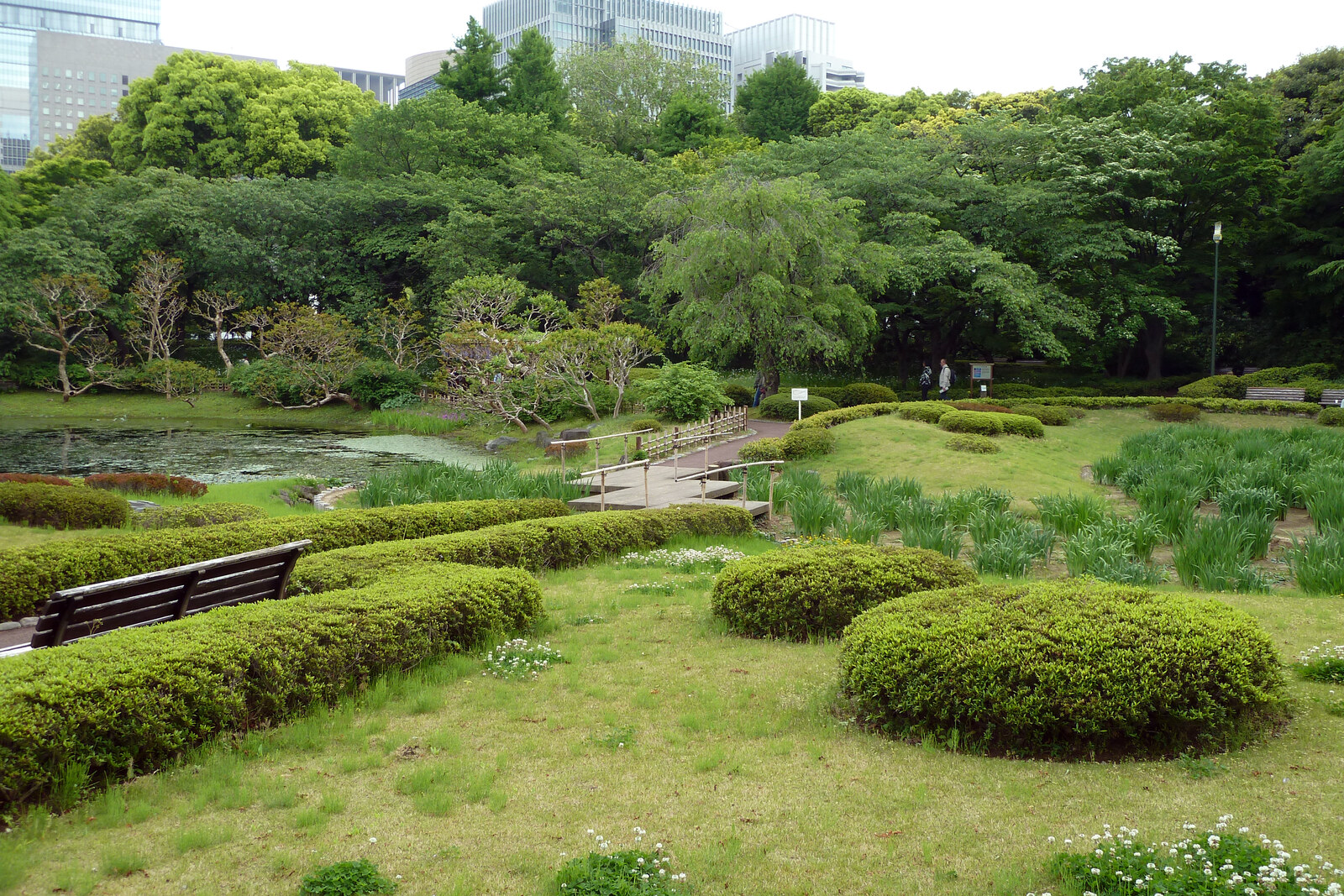
Look around first
What to notice
- Ninomaru Pond
- Longfin koi
- Islands
- Garden paths
The story of the place
The pond water curves around the islands, while the paths gather them into a small garden within the second courtyard of Edo Castle. The palace buildings have disappeared from here, and later the eastern part of the castle grounds was designated for walking access. The outlines of the pond, islands, and paths were restored from an old garden drawing. Among the stone walls, what remains is not a surviving palace garden but its layout, re-created anew.
Ninomaru Garden is a little more than half a century old, although its plan is more than two hundred years old. Ninomaru is the second courtyard of Edo Castle. A palace for the shogun’s heir stood here, with a garden and pond laid out beside it. The palace burned several times; the last one was lost in eighteen sixty-seven. After the castle was turned into an imperial residence, this part of the grounds fell into disrepair.
In nineteen fifty-nine, the Imperial Palace Construction Council proposed building new residential and ceremonial buildings in the western part of the complex and turning the former castle courtyards in the east into a garden. The government approved the plan. The designers did not create Ninomaru anew: they found a garden drawing from the middle of the eighteenth century, made under the ninth shogun, Tokugawa Ieshige, and used it to lay out the paths, islands, and pond. On the first of October, nineteen sixty-eight, the East Gardens opened to visitors. Nothing remains here of the former palace; today’s Ninomaru is a restored layout on the site of the lost residence.
Later, fish bred at the suggestion of the heir to the Japanese throne were released into this restored pond. In July nineteen seventy-seven, Prince Akihito visited the Saitama Prefectural Fisheries Experimental Station. He told its staff about an Indonesian carp with long fins and suggested crossing it with Japanese colored koi.
The experiment required fish from another country. In February nineteen eighty, the Indonesian Institute of Freshwater Aquaculture provided the station with long-finned carp. Two years later, the researchers began the crossbreeding. They needed to preserve the spotted coloring of Japanese koi while also producing elongated tail, pectoral, and dorsal fins; the desired combination appeared in only part of the offspring. After several years of selection, a new variety emerged: longfin nishikigoi.
In nineteen ninety-one, Akihito, already emperor, and Empress Michiko released these fish into the Ninomaru pond. They repeated the release in two thousand twelve. In November two thousand eighteen, several months before Akihito’s abdication, the couple brought another batch here: he wanted to increase the number of fish so visitors would continue to see them. The long fins of the carp in the pond are the result of an experiment Akihito proposed fourteen years before the first release here.
Useful on site
The same hours as the East Gardens: 9:00–17:00 from 1 March to 14 April and in September, 9:00–18:00 from 15 April through August, 9:00–16:30 in October, and 9:00–16:00 in winter. Closed on Mondays and Fridays, 28 December — 3 January, and during palace events.
Checked: June 27, 2026. Check the official source before visiting.Walk slowly: the composition reveals itself as you move, not from a single viewpoint. An interior visit to the teahouse is not included in the walk.