 Guide On Map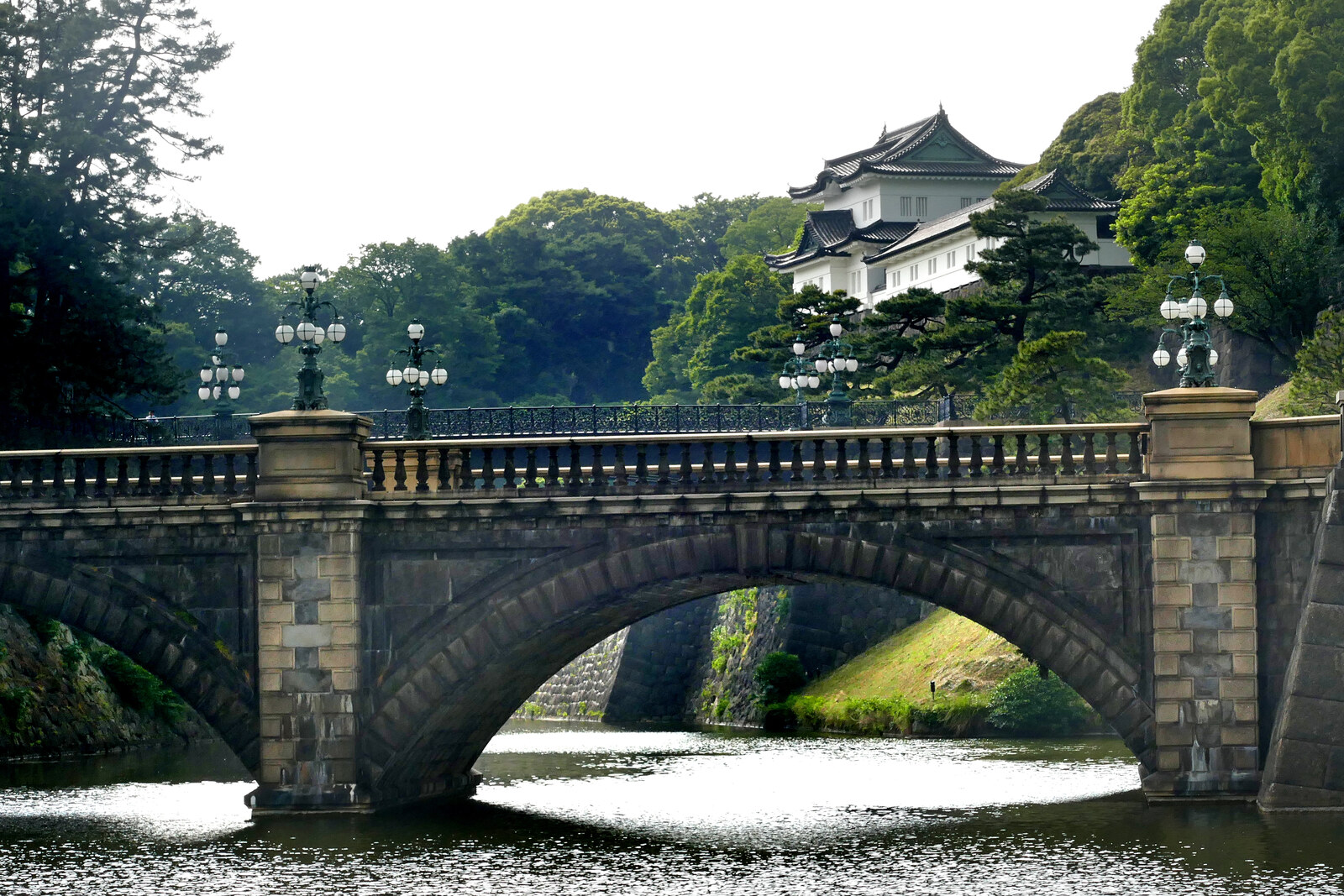
Look around first
What to notice
- Stone bridge with two arches
- Iron bridge beyond the gates
- Main gates
The story of the place
The two stone arches in front of the main gates and the iron bridge behind them cross the same moat. In the Edo period, a wooden crossing stood beyond the gates, where princes arriving at the castle dismounted from their horses and stepped out of their palanquins. The depth of the moat required a lower row of supports beneath the main span, making the bridge appear two-tiered. The present iron structure was installed in nineteen sixty-four, and the lower tier had already disappeared by then.
On January second, nineteen fifty-four, people passed through these gates for a New Year’s meeting with the imperial family. The custom appeared after the war. City residents were admitted from the square, crossed the stone bridge in front of the gates, then the iron bridge inside the palace, and left a written greeting. The emperor and empress came out to them several times on the balcony of the Imperial Household Agency building.
By one p.m., the passage was filled from the square to the inner buildings. People on the stone bridge could no longer move, but new visitors continued arriving from behind. After two p.m., police stretched ropes across the bridge: one at the entrance and another in the middle. They tried to stop the flow, but those farther back in the square could not see the barrier and continued pressing forward. The pressure became so great that some people’s feet left the ground, yet they could not fall—the bodies of others held them up.
At about a quarter past two, police loosened one rope to let several trapped people through. Those standing at the beginning of the bridge decided that the passage was open again and moved forward. An elderly woman fell; more than fifty other people fell after her. Sixteen visitors died, and sixty-three were injured.
A parliamentary commission examined the actions of the city and palace police and the Imperial Household Agency. Before the next general greeting, the three services coordinated the passage procedure again, and the appearance of the imperial couple was moved from the cramped balcony to an open lawn. The ceremony itself was retained. On New Year’s greeting days, people still enter through the main gates and leave the palace through other exits; at ordinary times, this route is closed.
The disaster was called the Nijubashi Incident, although people fell on the front bridge—the granite, two-arched Seimon Ishibashi. In the strict sense, Seimon Tetsubashi Bridge (Nijubashi) is beyond the gates: it is the present-day iron bridge. In the Edo period, a wooden Gejobashi—the “dismounting bridge”—lay in its place, where princes arriving at the palace left their horses and palanquins. Because of the deep moat, builders placed an additional support beneath the main span, and the bridge became two-tiered. Hence the name “double bridge.”
The wooden structure was replaced with an iron one in eighteen eighty-eight, and the present bridge was installed in nineteen sixty-four. The old second tier has long been gone. The stone arches in front of the gates remained the site of the crush, while the name Nijubashi belongs to the iron bridge behind them.
Useful on site
The view of the bridges is available around the clock; the bridges themselves are opened only for state ceremonies and selected palace visits.
Checked: June 27, 2026. Check the official source before visiting.For ordinary visitors, the bridges are accessible primarily for viewing from a distance; do not mistake the viewing platform for an entrance to the palace.