 Guide On Map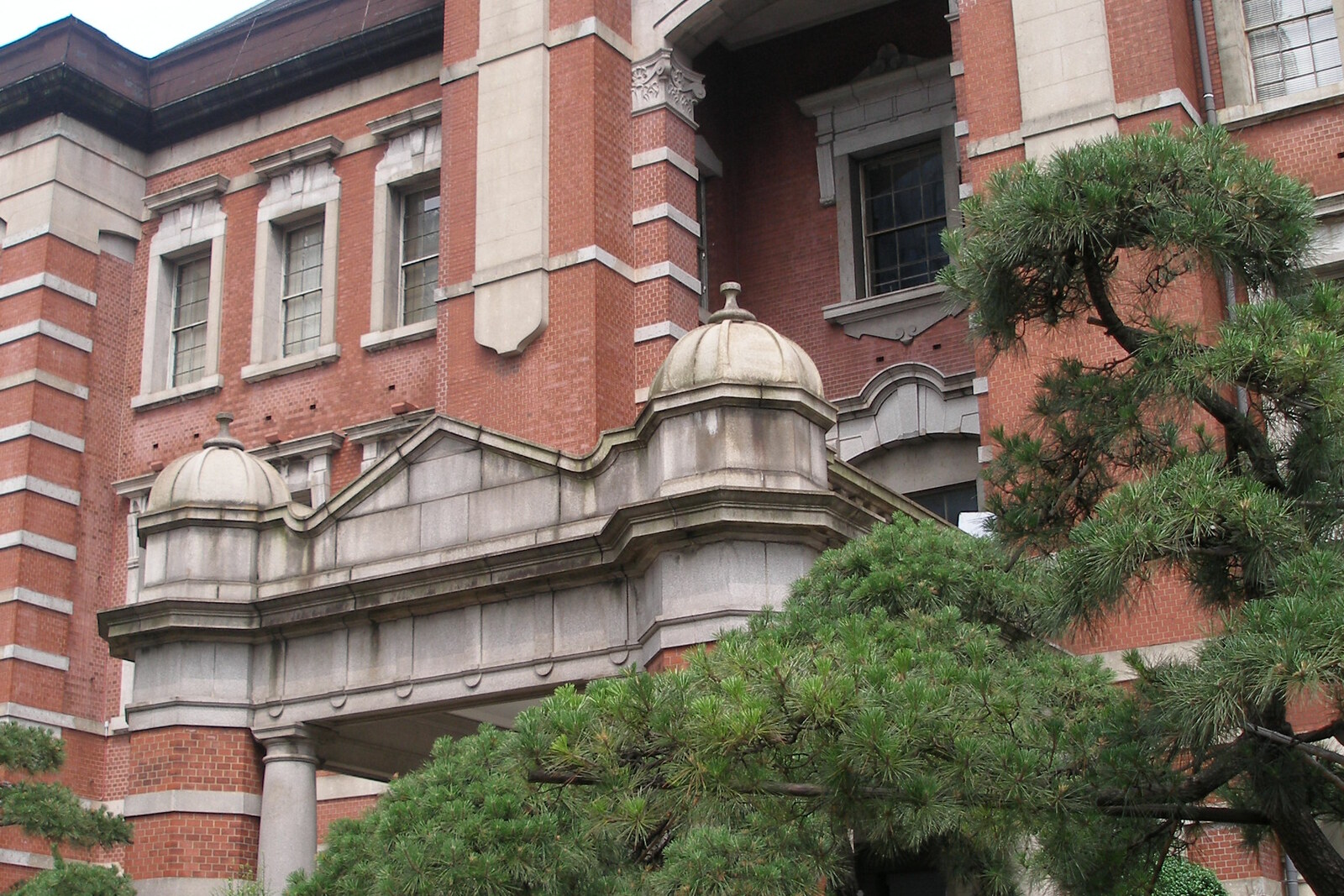
Look around first
What to notice
- Southern dome
- Round marker in the floor
- Red-brick façade
The story of the place
On the evening of November fourth, nineteen twenty-one, Prime Minister Hara Takashi was heading beneath the southern dome of Tokyo Station. He wanted to catch the seven-thirty night train to Kyoto and make it to a meeting of the ruling party, Rikken Seiyūkai. Hara led Japan's first cabinet backed by a parliamentary party and intended to speak personally with its regional leaders. He was called the “commoner prime minister”: unlike his predecessors, he held no noble title.
The station's very layout brought Hara to this entrance. The railway administration opened it in nineteen fourteen as Tokyo Central Station, linking lines that had previously ended in different parts of Tokyo. The southern dome was intended only for departing passengers, the northern one for arrivals, while the central entrance opposite the Imperial Palace was reserved for the imperial family. That was why every long-distance passenger, including the head of government, passed through the southern hall to reach the platforms.
There, nineteen-year-old Nakaoka Kon'ichi, a switchman from Ōtsuka Station, was waiting for him. He earned his living throwing railway switches, took an interest in politics, and believed that Hara's cabinet put the interests of Rikken Seiyūkai above those of the country. Nakaoka came to the station to kill the prime minister. When Hara approached the passageway, the young man sprang from the crowd and drove a fifteen-centimeter blade into the right side of Hara's chest.
Hara fell where he stood. He was carried to the stationmaster's office and an attempt was made to save him, but the wound proved fatal. Nakaoka was seized here as well; the court sentenced him to life imprisonment. After Hara's death, Takahashi Korekiyo was chosen as the new prime minister and leader of Rikken Seiyūkai. He promised to continue the previous course, but his cabinet lasted only a few months, and the party began to fall apart.
Tokyo Station now has twenty-eight platforms, Shinkansen trains depart from here, and the zero markers inside indicate where the country's main railway lines begin. The southern entrance has long ceased to be a passageway only for departing passengers. Beneath the restored dome, near the Marunouchi ticket gates, a small round marker is set into the floor. It indicates the exact spot Hara Takashi reached on his way to his train.
Useful on site
The Marunouchi façade and square are accessible at any time; interior passageways, shops, and platforms operate according to the schedules of the lines and tenants.
Checked: June 27, 2026. Check the official source before visiting.It is easy to get lost in the flow of passengers inside; to look at the dome, step away from the line of movement and do not linger in passageways.