 Guide On Map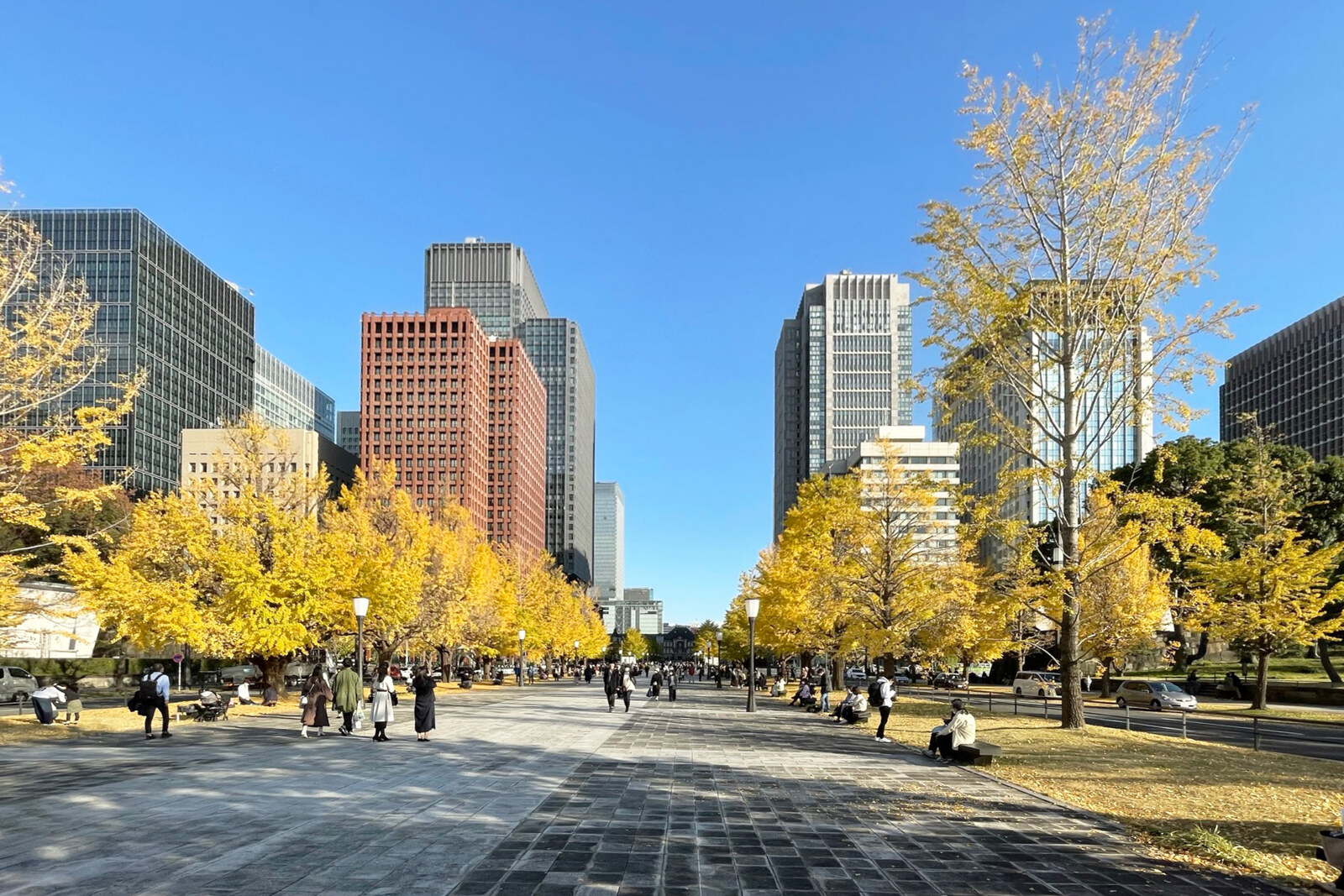
Look around first
What to notice
- Central pedestrian strip
- Four rows of ginkgo trees
- Side carriageways
The story of the place
On an ordinary day, the middle of Gyoko-dori Avenue is given over to pedestrians. Cars use the side carriageways, while the broad strip between four rows of ginkgo trees looks like an extension of the station square. But its surface was designed for carriages, and sometimes people are cleared from here: a ceremonial carriage is due to pass along the avenue.
On December eleventh, two thousand seventeen, Makarimi Abissola Adechoubou, appointed ambassador of Benin to Japan, took his seat in one. His appointment at home was not enough. He carried a letter from the head of his state to Emperor Akihito—a request to recognize him as a person entitled to speak on Benin's behalf. After the letter of credence was accepted, the ambassador could officially begin his duties.
The carriage waited at the ceremonial entrance of Tokyo Station. Adechoubou took his place in a carriage drawn by a pair of horses, with a mounted escort lined up ahead of and behind it. The procession crossed Gyoko-dori Avenue, passed through the palace gates, and about ten minutes later stopped at the palace's southern entrance. In Matsu-no-ma, Adechoubou handed Akihito the letter. Japan recognized his credentials, and he returned to the station by the same route, now after officially taking up his post.
It was his carriage that restored the avenue to its old purpose after a ten-year break. From two thousand seven, because of the reconstruction of the station and the square, ambassadors were collected closer to the palace. When the work was complete, Adechoubou was the first to travel the entire ceremonial route from the station's ceremonial entrance.
This route appeared after the Great Kanto Earthquake. In nineteen twenty-six, planners relaying out the streets of burned-out Tokyo completed the broad road between the palace and the station's central entrance. They divided it into fast and slow lanes and planted four rows of ginkgo trees. Later, the central section was closed to ordinary cars and reserved for the emperor's departures and the reception of foreign ambassadors. This is where its colloquial name comes from: “gyoko” means an emperor's journey beyond the palace.
So the same strip serves two different statuses of the same person: toward the palace, an appointed ambassador travels with a letter; on the way back, with recognized credentials. Between ceremonies, pedestrians walk along this road again.
Useful on site
Open around the clock; sometimes closed for state ceremonies, parades, and city events.
Checked: June 27, 2026. Check the official source before visiting.If a mounted ceremony is taking place, stay behind the barriers, do not use a flash, and follow the attendants' requests.