 Guide On Map
San Telmo: Old City, Markets, and Tango
From Lezama Park along Defensa Street to Plaza Dorrego
Guide On Map on your phone
Open the walk like a regular app
It takes about 10 seconds to install. No app store needed.
The whole path
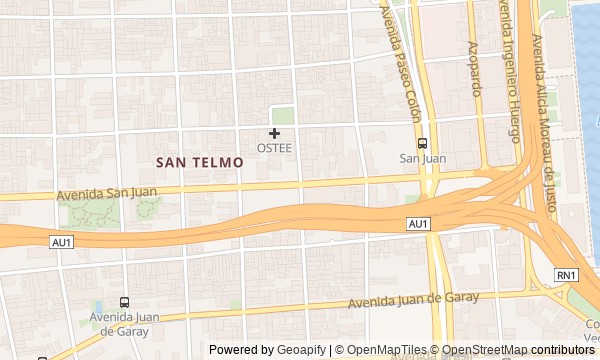
Route map
About the walk
You will begin at the southern edge of old Buenos Aires, in Lezama Park, and make your way through San Telmo to Plaza Dorrego. First, the route links a former estate to the museum housed in its old home and the long rental façade across the street. Then you will reach red-brick warehouses that became home to contemporary art. From there, Defensa Street leads to underground drainage channels, the neighborhood’s narrowest façade, a covered market, and a square with tango.
The story turns on human decisions: a document signed on a car hood; a restaurant stopped by the void beneath its floor; a mistake in the length of a wall; a labyrinth reconstructed from an old photograph. The answers emerge inside the stops. We will separate documents from urban legend and connect visible details to the people who left them behind. By the end, you will be able to point out why San Telmo survives in fragments: a fence, oak doors, a brick vault, and a market stall.
Why this order
Lezama Park and the National Historical Museum of Argentina come one after the other because the museum occupies the former estate house: the walk first takes in the whole property, then enters its preserved center. Across from the park, the rental building on Caseros Avenue shows how housing for railway workers was built beside a former private garden. From its residential façade, the route leads to former tobacco warehouses and two art museums—the next way old buildings were repurposed. After the museum galleries, the walk goes underground at El Zanjón de Granados, where the city’s earlier terrain comes into view. This drainage channel explains the bend in nearby Pasaje San Lorenzo, while Casa Mínima reveals the later subdivision of a large estate. Private homes then give way to a covered market, and the market to Plaza Dorrego: two neighboring stops showing how trade moved from food to antiques and ended in a Sunday fair with tango.
Those who want to understand San Telmo through the lives of its buildings, not a sightseeing overview Fans of urban archaeology, markets, and industrial architecture Those who care about the line between documents and urban legend
Those expecting a walk only about tango Those who do not want to enter museums and underground spaces Those looking for a quick route without detailed stories
Before you go
Choose in advance which places you want to enter: the two art museums, the National Historical Museum of Argentina, and the underground complex can easily overload one day with impressions. Visits to El Zanjón de Granados and Casa Mínima are arranged separately and with a guide, so book them before the walk. Wear sturdy shoes for park stairs and cobblestones, bring water, and leave room in your schedule for the market. If the San Telmo Fair at Plaza Dorrego matters to you, plan to finish on a Sunday, keeping in mind the heavier crowds on Defensa Street.
When to go
Without visiting the exhibitions, the route takes about two hours. One museum, an unhurried market stop, and time spent looking at façades extend the walk to roughly three hours. An underground tour or several museums turn it into a half-day program; it is wiser to choose one main indoor stop and save the rest for another time.
Backup plan
If you cannot get inside, keep the same order: every closed door still has an exterior layer worth reading. In the park, focus on the changes in elevation and the monument; on Caseros Avenue, look at the unified façade of separate houses; on San Juan, compare the red brick and glass geometry of the two museums. At El Zanjón de Granados, pause by the old house, and Casa Mínima is easy to view from the passageway. In rain, shorten the park and the final square, making the covered market your main pause; if there is no fair, Plaza Dorrego still completes the story of an urban emptiness repeatedly filled anew.
Route conditions
Surface. Paved — 2.1 km (data covers 87% of the route)
Facilities. Toilets — 4; drinking water — 1
Elevation. Ascent — 15 m; descent — 21 m
OpenStreetMap extract of June 18, 2026: database data, not a check on the ground. Data © OpenStreetMap contributors, ODbL licence
Walk plan
Open in maps ↗- 1
Lezama Park
This is where the route's main theme begins: how private estates on the southern outskirts became part of the city. - 2
National Historical Museum of Argentina
This stop shows what it took to bring together the nation's history under one safe roof. - 3
Caseros Avenue
This building explains whom they housed near the railway and how rental income shaped an entire facade. - 4
Museum of Modern Art of Buenos Aires
Here you will see how an industrial warehouse was adapted for a museum collection. - 5
Museum of Contemporary Art of Buenos Aires
This stop is included for the story of how a vanished artwork was reconstructed without plans. - 6
El Zanjón de Granados
The underground route will connect a chance construction discovery with the former topography of Buenos Aires. - 7
Pasaje San Lorenzo and Casa Mínima
The tiny façade shows how an error in documents could change a real house. - 8
San Telmo Market
The market will link the immigrants’ food district with today’s antique stalls and cafés. - 9
Plaza Dorrego and the San Telmo Fair
The finale will explain how a museum experiment brought commerce back to the square and changed the whole neighborhood.
Route features
Everything you need stays in the browser
Progress, saves and your trip plan are stored on this device.
Add Guide On Map to your home screen so the walk opens outside the browser.
How we handle sources, maps and corrections: our editorial standards