 Guide On Map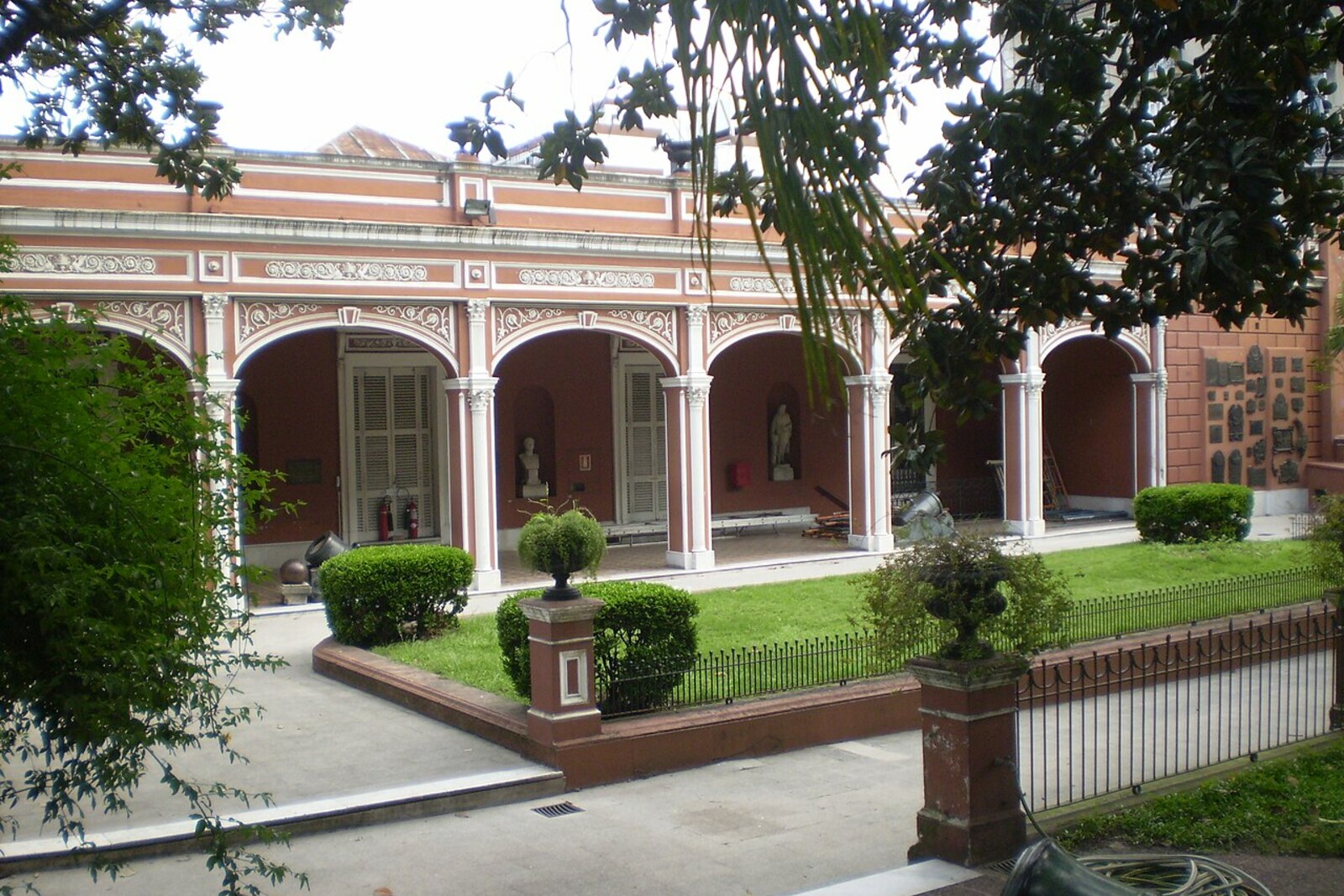
Look around first
What to notice
- Tower
- Open gallery
- Italianate façade
- Section of the estate fence
The story of the place
The Italianate mansion with a gallery and tower was built for the Lezama family. The National Historical Museum of Argentina ended up here after seven years of moves, when its director already feared entrusting the collections to yet another unsuitable building.
Adolfo Pedro Carranza, a lawyer and historian, campaigned for an institution that would gather the items—scattered among private homes and government offices—from the May Revolution—an uprising that marked the beginning of the River Plate's Spanish colonies breaking away from metropolitan rule—and the wars of independence. In eighteen ninety, the museum opened in a rented house under the name Historical Museum of the Capital. A year later, it was transferred to the state, and the word “National” appeared in its name: Carranza was collecting evidence of the history of all Argentina.
For the first year, the director worked without pay. He was then assigned three hundred pesos a month, while the entire staff, including him, consisted of only a few people. The money barely covered rent and the care of the objects. When the city stopped paying for the first house, the staff moved the exhibits to Moreno Street. The museum occupied the ground floor, while the municipal chemical service was housed above it. Carranza complained to President Carlos Pellegrini that sulfuric acid was damaging the paintings. The director kept some items at home: he did not dare bring them into rooms where what had already been collected was suffering.
Carranza asked for a separate museum to be built, but was refused. Then, in eighteen ninety-seven, he proposed a cheaper solution: exchange the museum premises near today’s botanical garden for the vacant Lezama mansion. The city received the former building, and the state received this house. In July, the collection was moved here. Carranza then moved his family in and made his own home in the museum. His work, his home, and the family heirlooms he had collected were all under one roof.
Carranza still regarded the mansion as a temporary residence. In nineteen oh six, parliament ordered a special building to be erected for the centenary of the May Revolution, but it was not built. Carranza died in nineteen fourteen, without ever seeing the move.
The tower, open gallery, and surviving section of the estate fence belong to the Lezama house. Behind them still stands the National Historical Museum of Argentina, placed here by Carranza as a temporary measure in eighteen ninety-seven.
Useful on site
Wed–Sun and holidays 11:00–19:00; entry until 10 minutes before closing; Mon–Tue closed.
Checked: July 1, 2026. Check the official source before visiting.The collections will require a separate visit. Do not mistake the cast of the famous saber for the original; if time is short, appreciate the connection between the house and the park from outside.