 Guide On Map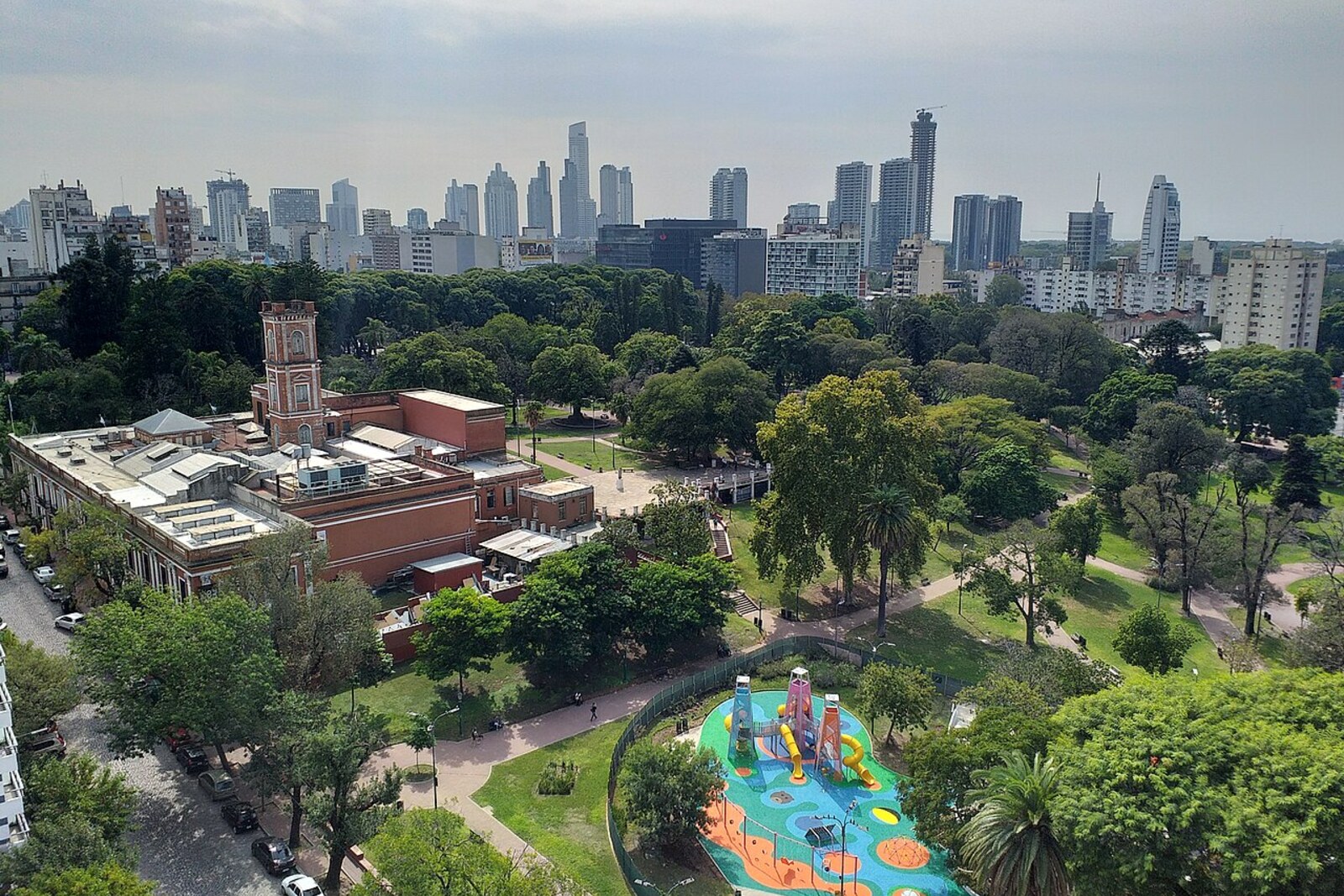
Look around first
What to notice
- A section of the iron fence
- Paths and stairways
- Fountains and statues
- The house at the top of the bluff
The story of the place
Lezama Park occupies a natural slope above the former shoreline of the River Plate, along which Paseo Colón Avenue now runs. In the upper part stands the house transferred to the National Historical Museum of Argentina. Beside it, a piece of iron fence survives; paths and stairways run along the slope, while fountains and statues stand among dozens of species of trees and shrubs. The garden here was laid out so as to descend from the house toward the water.
In eighteen fifty-seven, José Gregorio Lezama bought a country estate here that city residents called Quinta de los Ingleses—the English Country House—after its former owners. Lezama was a merchant and landowner from Salta Province. He made his fortune from livestock farming, land, and commercial ventures, then invested part of the money in this plot on the southern outskirts of Buenos Aires.
The house stood at the top of a natural bluff. Where Paseo Colón Avenue now runs, the shore of the River Plate began then. Lezama extended the estate as far as what is now Brasil Street, remodeled the house, laid out paths and stairways, and installed fountains, statues, and gazebos. More than sixty species of trees and shrubs were brought in for the garden. A high iron fence surrounded it all: what is now a city park was one of Buenos Aires's most expensive private gardens.
In eighteen eighty-seven, the municipality began negotiations to buy the estate. The project was called Paseo al Sur—Southern Park. The chairman of the city's Public Works Commission, architect Juan Antonio Buschiazzo, advocated for a large garden right here. Residents of La Boca and the port neighborhoods were too far from Tres de Febrero Park in the north of the city; the ready-made Lezama estate could give the south a place of its own for walks.
Gregorio Lezama died in this house in eighteen eighty-nine. His widow, Ángela Álzaga, inherited the estate and the enormous fortune. Five years later, she agreed to sell the land to the municipality for a symbolic sum, while retaining the right to live in the house and use the carriage sheds. The deal had one binding condition: the garden had to become a public park and be named after her husband.
The City Council approved the agreement by fourteen votes to eight. The name Southern Park disappeared from the project, and Lezama Park appeared in eighteen ninety-four. The municipal gardener Carlos Thays adapted the private garden for city residents, and the former residence was later transferred to the National Historical Museum of Argentina.
Only a section of the estate fence survives, near this house. Behind it stands the home of Gregorio and Ángela, while paths across the former private estate now lead through a public park whose name still fulfills the condition of her sale.
Useful on site
Open city park; best visited during daylight hours.
Checked: July 1, 2026. Check the official source before visiting.Watch your step on the descents. The monument marks an influential version of the city's first founding, not a confirmed site of the settlement.