 Guide On Map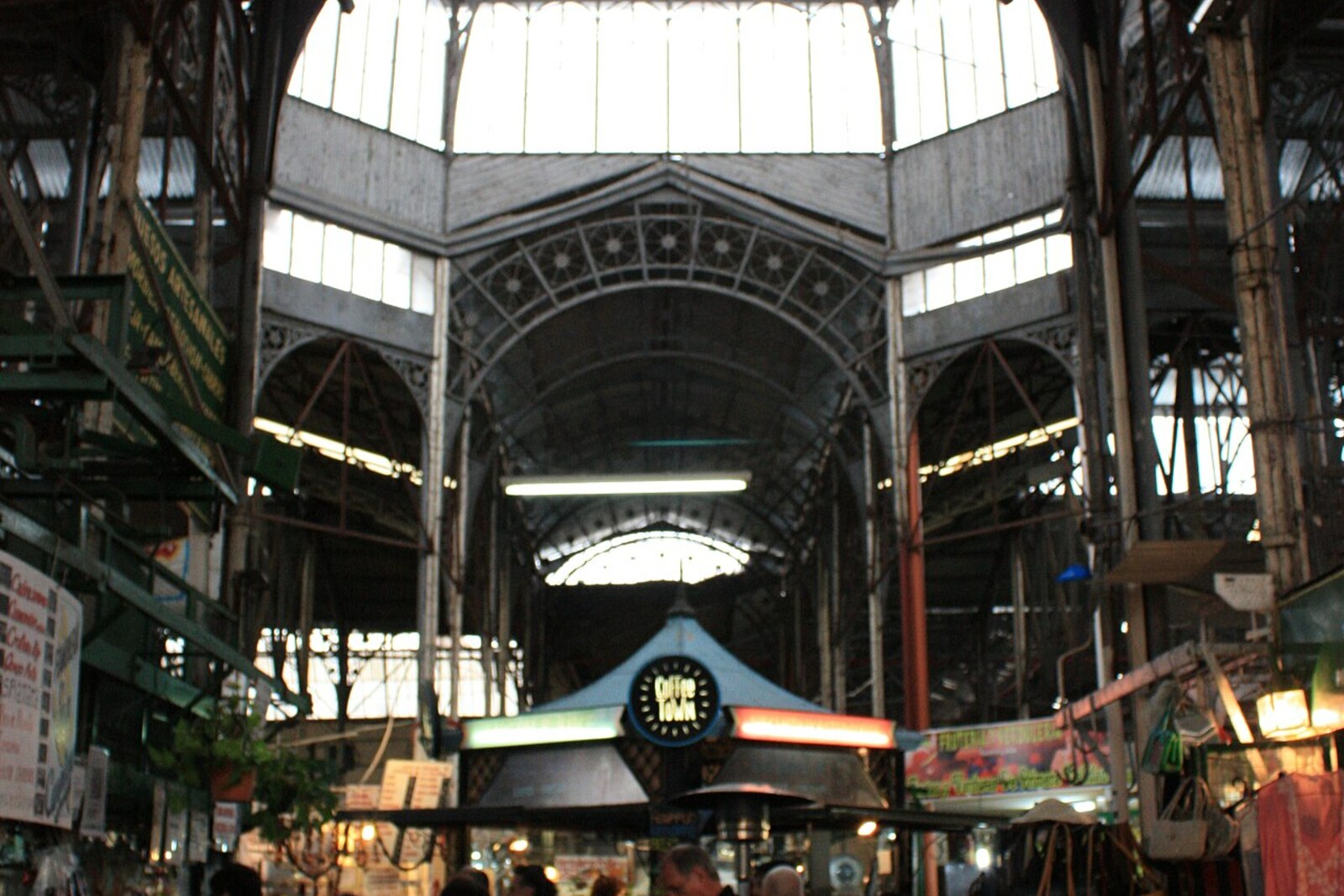
Look around first
What to notice
- Eight-sided dome
- Iron columns
- Glass sections of the roof
- Marble drains
The story of the place
The market took its name from the district. San Telmo is the shortened name of Pedro González Telmo, a thirteenth-century Dominican preacher. He was revered as the patron saint of sailors and fishermen; in the port district of Buenos Aires, a parish was named after him, then the district, and finally the market after the district.
By the end of the nineteenth century, thousands of newcomers from Europe were settling in local conventillos. They needed food close to home, and merchants needed permanent premises protected from the street. The former market occupied the neighboring square, today’s Plaza Dorrego. In eighteen ninety-seven, José Ocanos, the owner of the new venture, opened a covered food market here. The old market rows on the square closed afterward.
The architect Juan Antonio Buschiazzo designed the building for perishable goods. He surrounded the inner hall with shops that had separate entrances from the street: the outer rooms held back dust before it reached the meat, fish, and vegetables. Iron columns freed up space for counters, glass sections of the roof provided daylight, and the high dome and openings ensured ventilation.
Each vendor rented a small section of this hall. A collector made the rounds of the counters every day to collect payment. There were no refrigerators yet: merchants chipped ice for fish, and kept chickens alive in wooden crates until they were sold. Poles, Neapolitans, and people from Sorrento and Galicia earned their living here. Shoppers asked for products familiar from their former lives, so one market came to offer Spanish sausages, German sausages, chestnuts, and bread with labels for immigrants from Eastern Europe.
There were so many shoppers that the owners expanded the building twice. In nineteen hundred, they extended a gallery to Defensa Street. In nineteen twenty-two, they added a wider wing with two parallel passageways to Estados Unidos Street. The market thus occupied almost the entire block and gained four exits.
Later, supermarkets took a substantial share of the merchants’ customers. In the middle of the twentieth century, there were about twenty fish shops here; then the last one disappeared. Antique dealers began renting the vacant premises, following the customers of the nearby San Telmo Fair. One of them, Manuel “Kike” Fernández, sold old items here for more than thirty years. Antique shops first occupied the gallery leading to Defensa Street, and then cafés and small kitchens appeared among them.
Under the eight-sided dome is the core from eighteen ninety-seven: meat, vegetables, and other food are still sold here. The corridor of antiques leading to Defensa Street was added three years later, and the double passageway to Estados Unidos Street another twenty-two years after that. The fish counters and crates of live chickens are gone; the iron trusses, marble drains, and division of the hall into small rental spaces remain.
Useful on site
Daily 9:00–20:00 according to official city tourism; individual shops may keep different hours.
Checked: July 1, 2026. Check the official source before visiting.The passageways can be narrow: stop at the edge and ask permission before photographing vendors. The market is suitable for a break, but leave time not only for food, but for the building itself as well.