 Guide On Map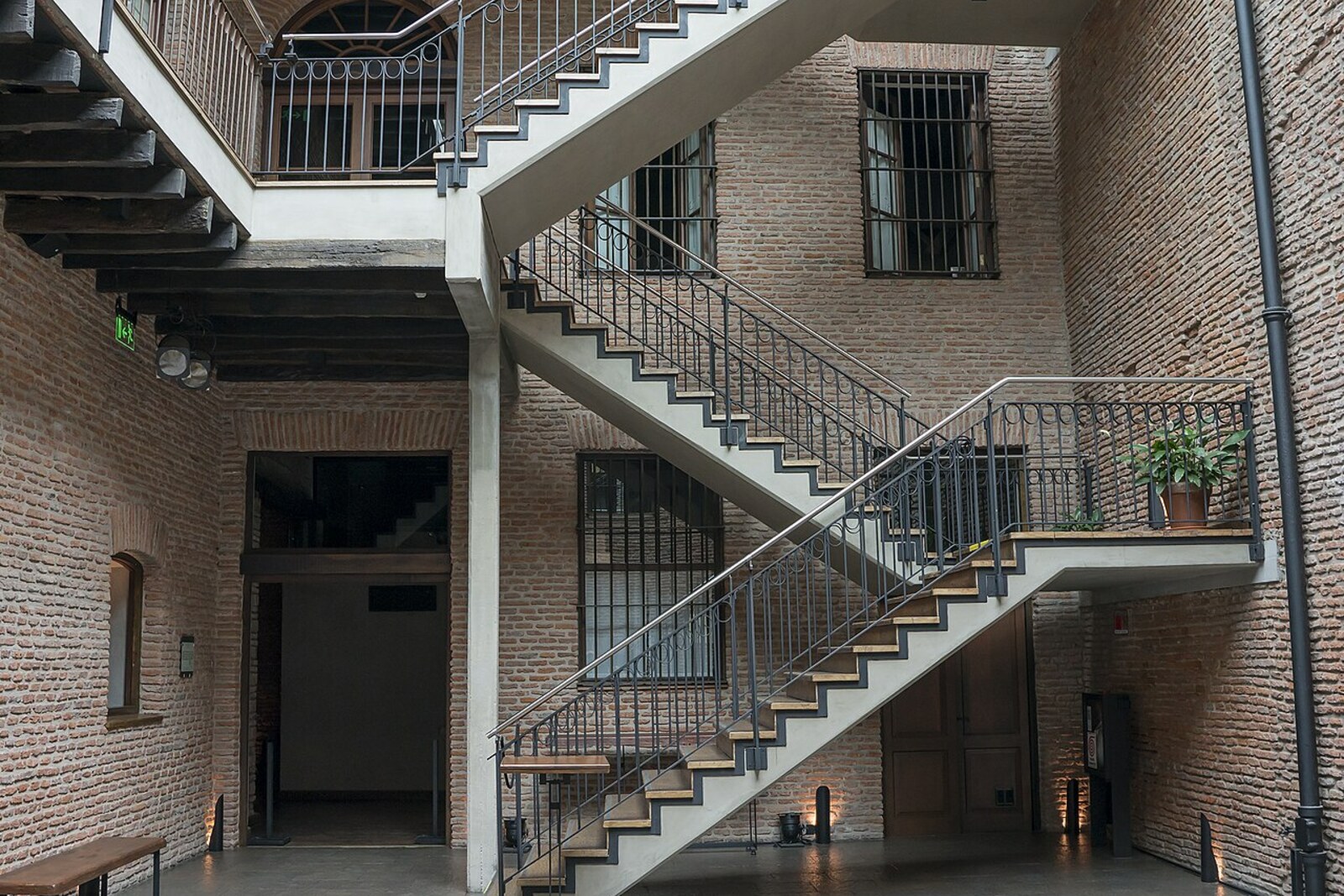
Look around first
What to notice
- Brick vaults
- Buried streambed
- Old foundations
- Archaeological display cases
The story of the place
Beneath the brick vaults, rainwater from the city's heights once flowed into the River Plate. The Tercero del Sur stream passed beneath the present-day courtyard, turned along Pasaje San Lorenzo, and in the era when the city was refounded, served as its southern boundary. Several houses are now connected by an underground route: foundations of earlier buildings remain beside the old streambed, while display cases hold objects recovered from the fill. Above the tunnels, restored rooms are used for exhibitions and city events.
Jorge Eckstein bought this half-ruined house for a restaurant. He was a chemist, producing food oils and then industrial oils, and was looking for a new investment for the money he had earned. In nineteen eighty-five, the abandoned building on Defensa Street cost him about the price of two cars. The risk was obvious: the house could not be demolished, nor could a new building be constructed in its place, and the ground floor lay beneath four meters of trash and rubble.
A year later, an architect examining the house's foundation found a dry brick gallery beneath it, with a semicircular vault. Inside were bottles, shards of pottery, tiles, old foundations, and a buried streambed. The gallery had served as drainage for Tercero del Sur—the Southern Third—one of the small streams through which rainwater flowed from the city's heights into the River Plate. When Buenos Aires was refounded by Juan de Garay in fifteen eighty, this stream marked the city's southern boundary. It ran directly beneath the present-day courtyard, turned along Pasaje San Lorenzo, and flowed out to the river, whose shore then lay not far from today's Paseo Colón Avenue.
The name “Granados” also came from this bank. Old recollections of the city link it to the Granados family, who owned land by the ditch and became known for their layered pastries. A popular local version speaks of two sisters who sold them near the bridge; their names and the details of this trade have not been reliably established. The surname became attached to the stretch of stream that passed through the Granados property, and later passed to the present-day museum.
The discovery made Eckstein abandon the restaurant. He invited specialists in urban archaeology and worked downstairs with builders for twelve hours a day. One hundred thirty-five truckloads of fill were removed from the first gallery alone, with the earth sorted so that objects belonging to former residents would not be discarded with the trash. Over two years, researchers documented more than twelve thousand finds.
When it became necessary to find out whether the vault continued beneath the neighboring house, an elderly caretaker of the conventillo showed them a hatch in the floor of one of the rooms. Beneath it was a similar brick gallery, packed to the ceiling. Eckstein offered to lease the underground section for ten years in exchange for clearing it out, and later bought the neighboring building on the Chile Street side. That is how a separate cavity beneath the courtyard became a connected underground route.
Eckstein handed oil production over to his son and devoted thirty-eight years to restoring these houses and tunnels. The first part of the complex opened to visitors in two thousand one. Tours now follow the brick drains, found objects are displayed in cases, and the restored rooms above them are used for exhibitions and events. The restaurant never appeared: beneath its planned hall, the dry vault remained, and it made the owner change his occupation completely.
Useful on site
Daily 11:00–17:00; guided tours only; check current slots and languages on the website.
Checked: July 1, 2026. Check the official source before visiting.The underground spaces are visited with a guide, so arrange your visit in advance. It is cramped, and stairs may be an obstacle; without a tour, limit yourself to viewing the house from outside.