 Guide On Map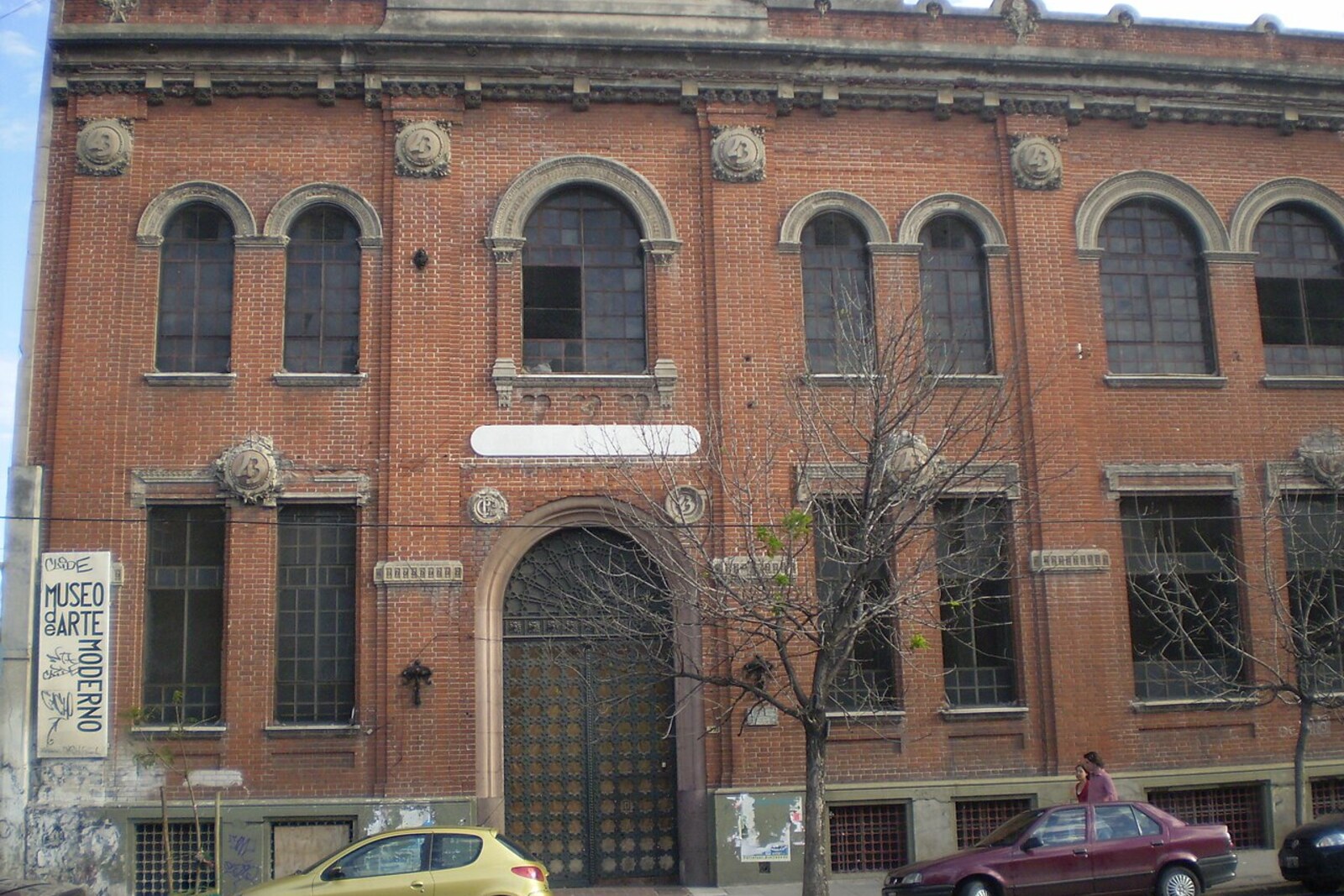
Look around first
What to notice
- Red-brick facade
- Large wooden door
- Iron fittings
- Metal rivets
The story of the place
Red brick, a heavy wooden door with iron strips, and protruding rivets have preserved the building's working exterior. Behind this facade operates the Museum of Modern Art of Buenos Aires: its collection is kept here, and exhibitions of Argentine and foreign art from the twentieth and twenty-first centuries change regularly. The door and the metal at the entrance remained from the building's former owner, while the interior is now occupied by the collection and exhibitions.
The act granting the museum this building was signed on the hood of a car parked by the entrance. In nineteen eighty-six, Mario Pacho O'Donnell, deputy head of the city cultural department, was seeking permanent premises for the collection. Mayor Julio César Saguier agreed, and officials formalized the transfer of the former tobacco warehouse right on the street.
By then, the Museum of Modern Art of Buenos Aires was thirty years old. Its founder and first director, Rafael Squirru, a thirty-one-year-old lawyer and art critic, wanted to give young Argentine artists a place alongside established masters and to include photography, design, and other new genres in the museum program. The institution was founded in nineteen fifty-six, but the floors promised to it in the future San Martín Theatre were still under construction. For four years, Squirru arranged exhibitions in other people's galleries, the botanical garden, and other available premises. Newspapers dubbed the institution the Ghost Museum.
In nineteen sixty, the museum received space in the San Martín Theatre, but it still had no building of its own. The collection grew through purchases and donations, and the holdings took up more and more space. Roberto del Villano, who became the museum's director in nineteen eighty-three, decided to see the move through to the end. The paper signed on the hood transferred to him the warehouse of the Noblesa Piccardo tobacco company, built in nineteen eighteen. The warehouse still had to be turned into exhibition halls.
Del Villano brought in the Friends of the Museum Association. Its president, architect Santiago Sánchez Elía, provided the design and the work of his architectural firm free of charge. Film director María Luisa Bemberg and other members of the association gave money for the construction. During the conversion, they preserved the red-brick facade, the large wooden door, the iron fittings, and the sharp metal rivets—details from the former industrial warehouse.
On September first, nineteen eighty-nine, more than five thousand people came here. Del Villano was finishing his work as director in the very building the museum had lacked since its founding. Now, behind the warehouse facade, the museum collection is kept and temporary exhibitions of Argentine and foreign art from the twentieth and twenty-first centuries are shown. The wooden door with its iron fittings remained from the tobacco company; the museum behind it appeared thanks to the act signed outside on a car hood.
Useful on site
Mon, Wed–Fri 11:00–19:00; Sat–Sun and holidays 11:00–20:00; Tue closed, except on holidays.
Checked: July 1, 2026. Check the official source before visiting.The exhibitions require separate time and admission. Even without visiting, the facade reveals the museum's factory past; do not try to take in both neighboring collections in a rush.