 Guide On Map
From the Berlin Wall to the Landwehr Canal
From the East Side Gallery through Kreuzberg to Admiralbrücke
Guide On Map on your phone
Open the walk like a regular app
It takes about 10 seconds to install. No app store needed.
The whole path
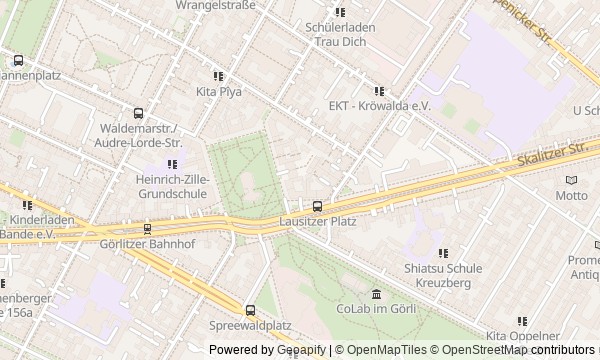
Route map
About the walk
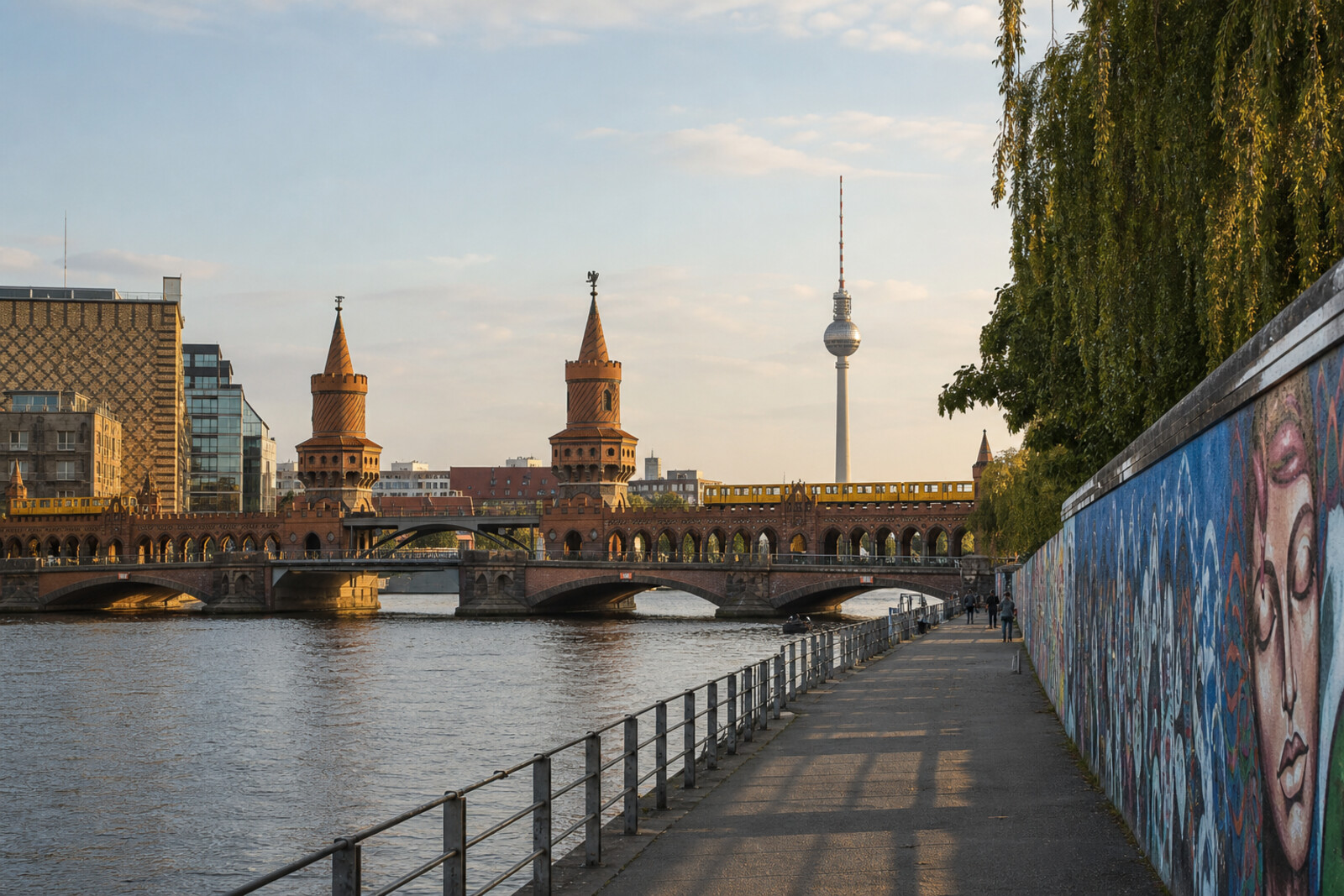
You will begin by a painted stretch of the Berlin Wall and follow the Spree toward the brick towers of Oberbaum Bridge. The bridge will take you from Friedrichshain into Kreuzberg, and the route will then run beneath the elevated rail line, along residential streets, past a church, a market, and a club district, all the way to the Landwehr Canal. Along the way, you will notice places where residents changed a building's purpose or defended its right to remain. Why was painted concrete about to be sold off in pieces? Why were badges handed out at the entrance to a party? And how did a protest against selling a market go ahead disguised as a coffee gathering? This will be a calm, concrete story: instead of legends about free Berlin, there will be actual doors, contracts, bans, and decisions. By the end, you will recognize this Berlin through places where the right to stay had to be defended—from a concrete panel to a spot on the dance floor.
Why this order
The route begins on the eastern side of the former wall and follows the old border toward Oberbaum Bridge: after the painted concrete, the river and bridge show how that border worked in the city. On the Kreuzberg bank, the elevated line leads to Burgermeister's pavilion—from a vast border structure to one saved urban building. The residential streets of Wrangelkiez then bring you to Tabor Church, where repurposing a space became a way of helping people. Next comes the market: here, residents defended not one room but the workings of an entire public building. From the market stalls, the route continues to the club door on Oranienstraße, where the community fought for the right to set the rules of its own space. Admiralstraße then leads to the canal. At Admiralbrücke, the same theme reaches an open ending: the roadway was freed from through traffic, and people took it over to meet.
Anyone who wants to see Berlin beyond its showpiece center Lovers of urban history, architecture, and neighborhood initiatives Those interested in human decisions rather than a list of dates
Anyone looking for a walk limited to Berlin's most familiar sights Those who are not comfortable with difficult border stories Those who do not enjoy longer walks along city streets
Before you go
Most of the route is outdoors, so dress for the weather and bring water. Daylight is useful for seeing the murals, the memorial stele, and the details of the bridges. You do not need to visit Burgermeister, Markthalle Neun, SO36, or Tabor Church to follow the story: check opening hours, event schedules, and whether entry is possible separately. In residential areas, do not linger in passageways or courtyards without need, and at Admiralbrücke remember that apartments are nearby. The route touches on murder, Nazi repression, and political violence—worth keeping in mind if you are walking with children.
When to go
Start while it is still light, so you can take your time with the Wall paintings, the bridge architecture, and small memorial details. If you want to finish by the canal in an evening atmosphere, leave extra time for the final stops. Treat a concert at SO36, food, and market events as a separate part of the day, and check their current schedules.
Backup plan
In heavy rain or wind, you do not have to cover every open stretch. You can shorten the walk to the Schlesisches Tor — SO36 — Markthalle Neun section, after making sure the market is open to visitors. Use public transport between the more distant points, then return to the East Side Gallery and Admiralbrücke in clearer weather: those are the places where the view and the chance to linger matter most. If interiors are closed, you can still listen to the stories at Burgermeister, SO36, and the market from outside.
Route conditions
Surface. Paved — 4.2 km (data covers 96% of the route)
Facilities. Toilets — 7; drinking water — 4
Elevation. Ascent — 45 m; descent — 30 m
OpenStreetMap extract of June 23, 2026: database data, not a check on the ground. Data © OpenStreetMap contributors, ODbL licence
Walk plan
Open in maps ↗- 1
East Side Gallery
Here it will become clear why an open-air gallery could have disappeared as a single ensemble soon after it was created. - 2
Oberbaum Bridge
This stop shows how the border turned an ordinary rescue at the riverbank into negotiations between two sides of the city. - 3
Schlesisches Tor and Burgermeister
The pavilion reveals how many approvals and how much hands-on work stood behind a tiny food stand. - 4
Wrangelkiez and Tabor Church
The church will show how part of a vast hall became a link in daily winter aid. - 5
Markthalle Neun
The market hall offers an example of how neighbors intervened in the sale of municipal real estate. - 6
Oranienstraße and SO36
The club door will show how the community defended its own rules within a popular party. - 7
Landwehr Canal and Admiralbrücke
The finale will link the bridge’s engineering calculations to the way its broad roadway is used today.
Route features
Everything you need stays in the browser
Progress, saves and your trip plan are stored on this device.
Add Guide On Map to your home screen so the walk opens outside the browser.
How we handle sources, maps and corrections: our editorial standards