 Guide On Map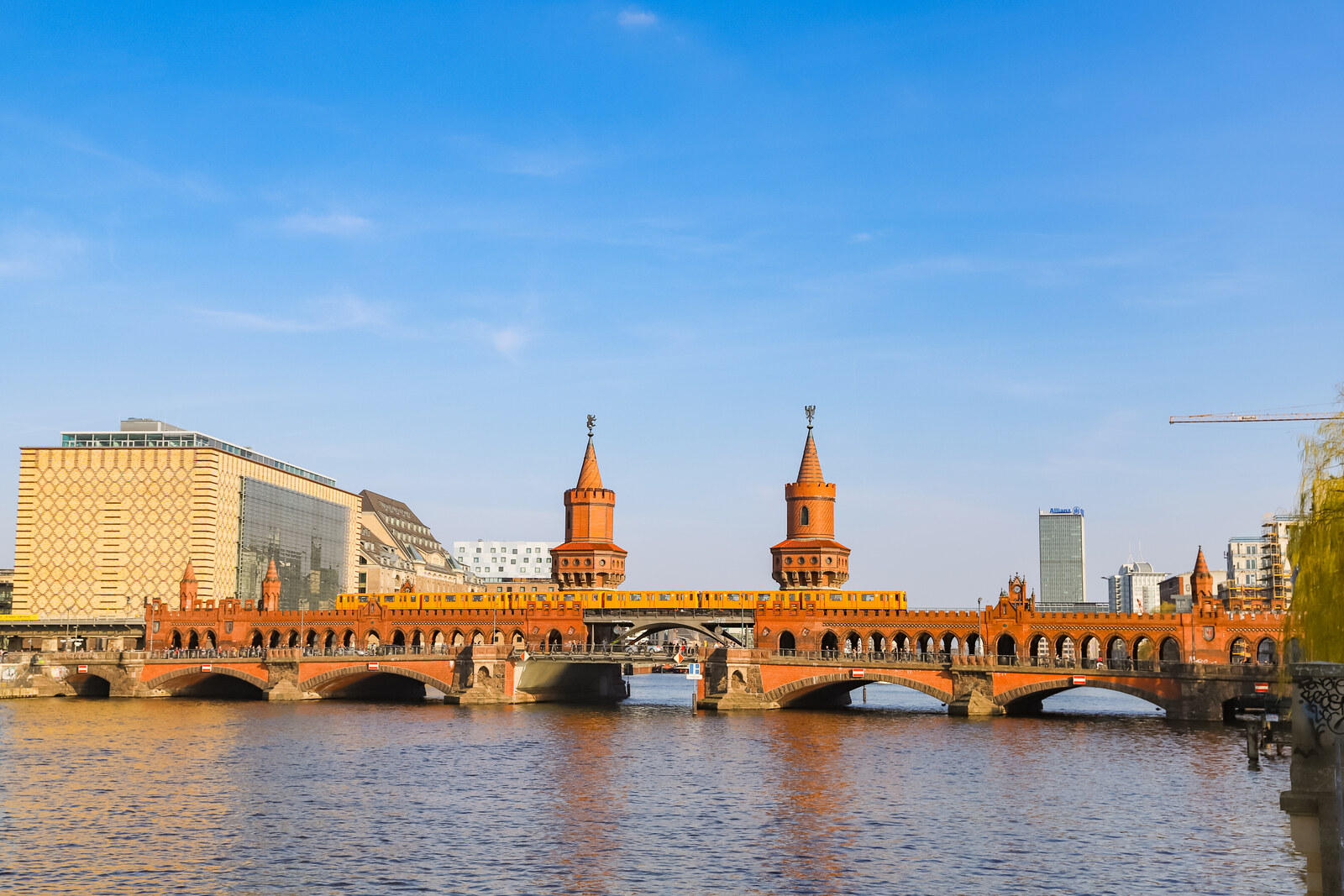
Look around first
What to notice
- Brick towers
- Trains above the roadway
- The stone retaining wall of the Kreuzberg bank
The story of the place
On October thirtieth, nineteen seventy-two, eight-year-old Cengaver Katrancı was feeding swans on a narrow strip of embankment, about one hundred meters from Oberbaum Bridge. He lived in Kreuzberg with his mother, who had come from Turkey, and three siblings. Cengaver lost his balance and fell into the Spree.
His friend ran for help. A fisherman on the bank began taking off his clothes to jump in after him, but stopped. The embankment was in West Berlin, while the entire river, right up to the stone retaining wall, was considered East Berlin territory. The fisherman risked crossing the border in front of armed border guards.
West Berlin customs officers called the fire brigade and tried to stop an East Berlin fireboat that was escorting a tanker along the river at that moment. They shouted and pointed toward the child. The vessel slowed briefly, then continued on its way. Police officers went to the checkpoint on Oberbaum Bridge and began negotiations with an officer of the German Democratic Republic (GDR) border troops. Two fire brigade divers were already standing by the water, but they were not granted permission to enter the river.
Even a boat of the East Berlin water police could not approach the western bank without a separate order. The police brought it closer, then turned back: a border patrol boat caught up with them for entering the restricted zone. A rescue vessel arrived only an hour and a half later. A diver found Cengaver right by the bank, but did not hand him over to the West Berlin firefighters—there were about two meters between them. The border guards could have taken the movement of a person carrying a child toward Kreuzberg for an attempt to escape.
That evening, Cengaver's mother was allowed to enter East Berlin and identify her son at Charité. The body was then returned to the western side and buried in Ankara.
After Cengaver's death, the Senate of West Berlin announced that it would secure rescue rules for the border waters. The negotiations dragged on: the two sides even argued over the wording of who the river belonged to and whether the appearance of a western rescuer meant recognition of the border. During that time, three more children drowned here and nearby. After the fifth death, in nineteen seventy-five, the Senate and the government of the German Democratic Republic (GDR) finally signed an agreement. In the spring of the following year, special signal columns were installed on the western bank: their circular light warned border guards that firefighters were entering the water to rescue a person. There were no more such child deaths here.
The name Oberbaum Bridge itself is also connected with control of the river. In seventeen twenty-four, Berlin officials built a wooden bridge here to collect a vessel tax. At night, the crossing was blocked by a heavy trunk—the upper log barrier, or Oberbaum; the lower one stood farther downstream. The present brick bridge was built at the end of the nineteenth century, and its towers were given the appearance of old city gates.
During the years of division, a pedestrian border checkpoint passed through these gates, while car and rail traffic stopped. Now trains once again run above the road, while below, cars, cyclists, and pedestrians cross the Spree. At the Kreuzberg retaining wall, the river no longer becomes another country.
Useful on site
The pedestrian crossing on the bridge is open around the clock; car and train traffic continues.
Checked: June 28, 2026. Check the official source before visiting.For this stop, simply cross the bridge on foot and pause at a safe edge of the pedestrian area. Do not block the way, and watch the traffic around you.