 Guide On Map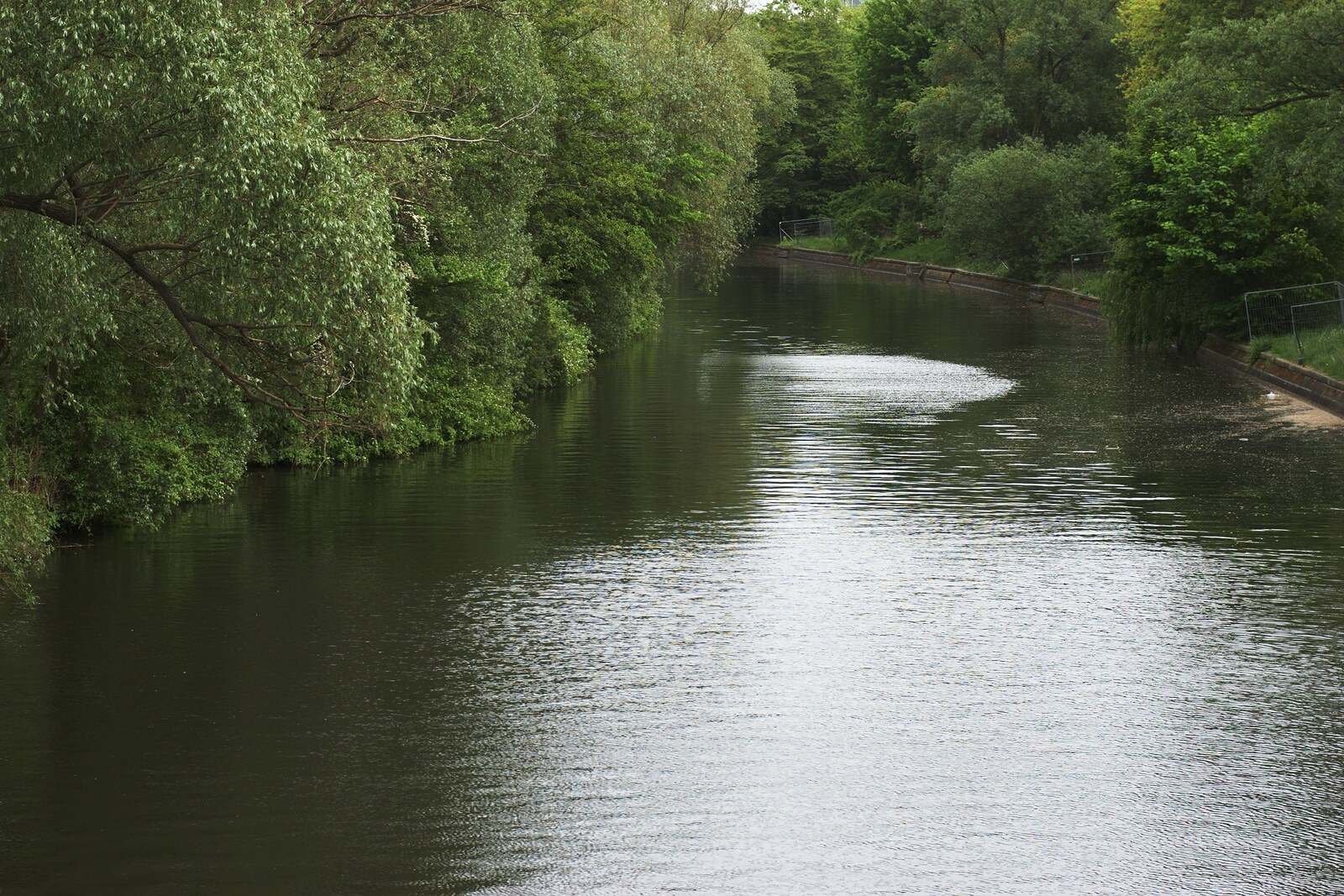
Look around first
What to notice
- Iron arches
- Wrought leaves on the railing
- The name Admiralbrücke in metal
- The broad roadway
The story of the place
Admiralbrücke crosses the Landwehr Canal, the oldest surviving iron bridge on this canal. Two large hinged arches carry an almost twenty-meter deck, while vessels pass beneath it through the unobstructed channel. The blacksmiths of Fabian & Krüger gave the load-bearing elements an ornamental design and filled the railing with wrought leaves. Cast into the old railing, the bridge’s name came from Admiralstraße, named after Prince Adalbert of Prussia.
The Landwehr Canal was built for freight. In the mid-nineteenth century, barges needed a bypass around the overcrowded Spree, and bricks, timber, and fuel were carried into growing Berlin along the new waterway. Here, the canal was crossed by the wooden drawbridge Badbrücke. When cart traffic became too heavy, the city decided to replace it with a bridge able to carry heavy street traffic over the water and vessels beneath it at the same time.
This task was assigned to Georg Pinkenburg, a city building inspector and head of Berlin’s bridge bureau. He served as an engineer, so he was responsible not for an expressive design on paper but for calculating a crossing that would carry trams, carriages, and pedestrians every day. Between eighteen eighty and eighteen eighty-two, Pinkenburg set the roadway on large two-hinged iron arches. They left the canal clear for vessels and made it possible to build a bridge almost twenty meters wide.
The blacksmiths of Fabian & Krüger were given another part of the work. They gave the load-bearing rods decorative shapes and filled the railings with rows of metal leaves. This gave a municipal transport structure a finish one would not normally expect on a bridge for freight carts and trams. Trams ran here until nineteen twenty-one. Later, engineers reinforced the arches and repaired the deck, but preserved the overall appearance and the wrought-iron railings. Admiralbrücke remained the oldest surviving iron bridge on the Landwehr Canal.
The name came from Admiralstraße, the street that continued Adalbertstraße. Both were named after the same person, Prince Adalbert of Prussia. During the war with Denmark in eighteen forty-eight, the lack of a fully fledged fleet left German shores and merchant ships vulnerable. Adalbert, then an artillery general, advocated the creation of naval forces: he wrote a memorandum on the future fleet, headed the technical naval commission, and then received command of Prussian military vessels. In eighteen fifty-four, naval affairs had become so extensive that he gave up command of the artillery and assumed the rank of admiral. With his involvement, Prussia acquired a stretch of coast on Jade Bight for a naval base, from which Wilhelmshaven grew. Admiralstraße was named during his lifetime, and the new bridge inherited the street’s name.
In the nineteen nineties, the district administration closed the bridge to through traffic: residential buildings come almost right up to the bridge and the banks. The broad roadway, which Pinkenburg had calculated for trams and heavy carts, was freed up. Residents and visitors began using it as a place to meet, especially on summer evenings.
At the center of the bridge, the name Admiralbrücke is still cast into the old railing. Nearby are the leaves forged for the transport crossing of the eighteen eighties, and people now sit right where tram cars once ran.
Useful on site
The canal and embankments are open around the clock; the weekly Maybachufer market is usually Tue/Fri 11:00–18:30, the fabric market Sat 11:00–17:00, Flowmarkt every other Sunday.
Checked: June 28, 2026. Check the official source before visiting.Rosa Luxemburg was thrown into the canal considerably farther west, not at this bridge. Here, it is important not to obstruct passage and to keep the volume down in the evening: the windows of residential buildings are nearby.