 Guide On Map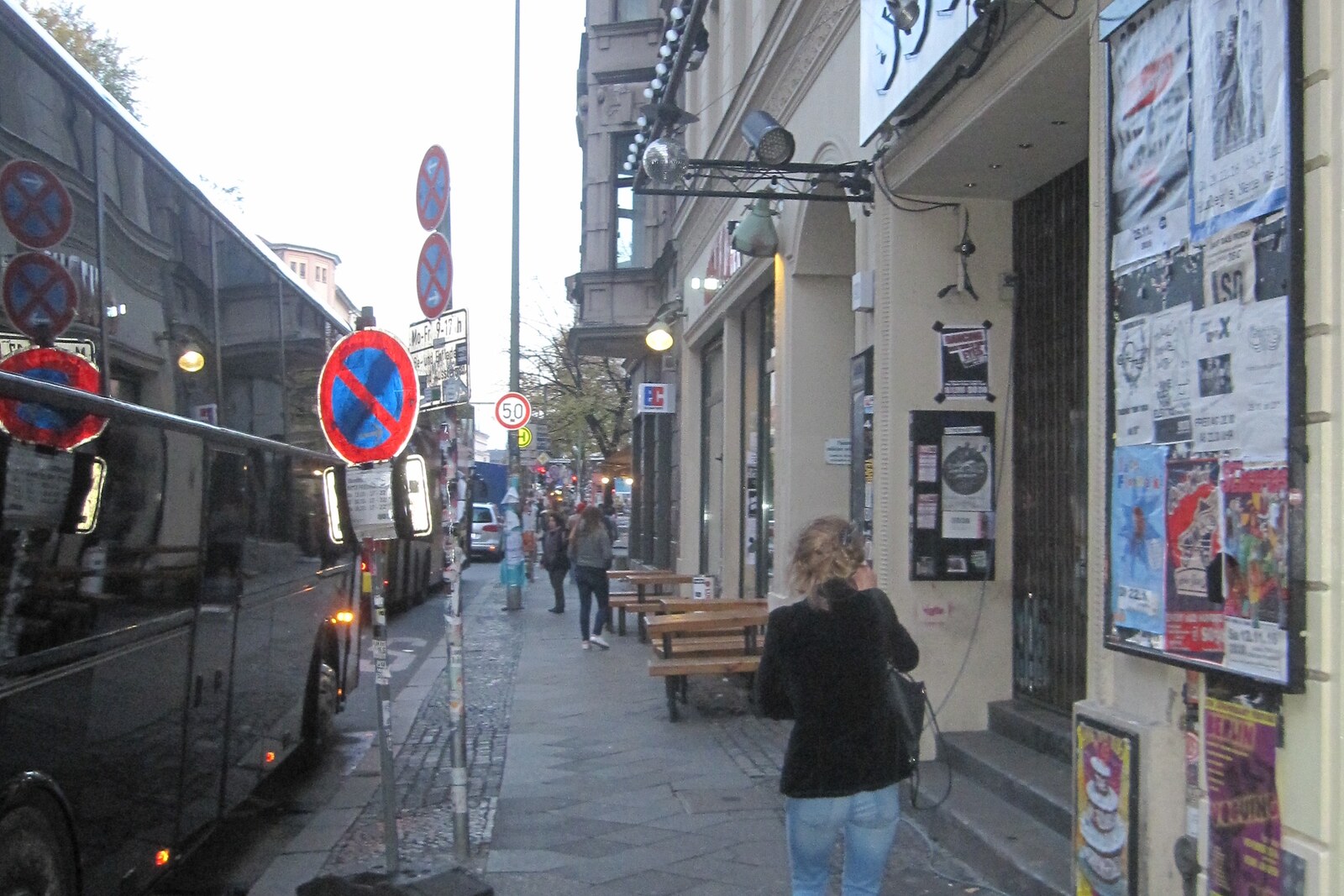
Look around first
What to notice
- Façade of number 190
- SO36 sign
- Club poster
The story of the place
On the “SO36” sign, the number looks like a house number, although the club has a different address—number one hundred ninety Oranienstraße. “SO” abbreviated the German word “Südost,” meaning “southeast”: that was the name of Berlin’s postal district number thirty-six. Postal codes changed long ago, but the old designation remained the name of both the neighborhood and the club.
Oranienstraße also preserves an older language of addresses. In eighteen forty-nine, the street was named after the House of Orange—a Dutch dynasty of stadtholders and kings. Before that, the form “Orangenstraße” was used. No member of the House of Orange lived here: this is a dynastic dedication, not a remembrance of a local event.
The club opened in nineteen seventy-eight in a hall that had previously housed a beer restaurant, a movie theater, and a supermarket. A year later, the first owners grew tired of debts and constant clashes with some of the punks. Hilal Kurutan bought out their stake—a youth worker who worked with teenagers in Kreuzberg and Neukölln. Turkish youths told him that they were not allowed into Berlin discos. Kurutan decided to create a hall where people could enter regardless of their background. He did not have enough money of his own, so he borrowed it from acquaintances all over the neighborhood.
A new name appeared on the façade: “Merhaba SO36.” “Merhaba” means “hello.” Kurutan held Turkish discos and weddings here. His Roma friends could celebrate for as long as three days and three nights—other owners would not agree to rent them the venue. He also invited Turkish theater troupes, including actors living in exile in West Berlin.
Concert organizers asked Kurutan to leave them the stage and the familiar club name. He agreed. Wedding evenings began to alternate with performances by punk bands; under Kurutan, Dead Kennedys and Einstürzende Neubauten played here. The owner, who had intended to open a disco for people not accepted elsewhere, also retained the former crowd.
At the beginning of nineteen eighty-three, the building authority limited the number of visitors to two hundred and required concerts to end by ten in the evening. The bands were still entitled to their full fees, and Kurutan lost thousands of marks over several evenings. Soundproofing costing more than two hundred thousand marks was needed; he did not find that kind of money. On March thirtieth, a farewell concert took place, after which Kurutan declared bankruptcy and left the hall.
After renovations, the club reopened in nineteen ninety under the management of the Sub Opus 36 association. The word “Merhaba” disappeared from the sign. “SO36,” retained at the concert organizers’ request, remained, and punk concerts, roller discos, and Eastern dance evenings still alternate in the former movie theater.
Useful on site
The street is accessible around the clock; SO36 operates in the evening according to the current program, and tickets are usually sold in advance.
Checked: June 28, 2026. Check the official source before visiting.This account does not require entering the club. Concerts and other events require separate checking of the program and admission conditions; in the evening, the area may be noisy and crowded.