 Guide On Map
the Bund and East Nanjing Road: from bridge to square
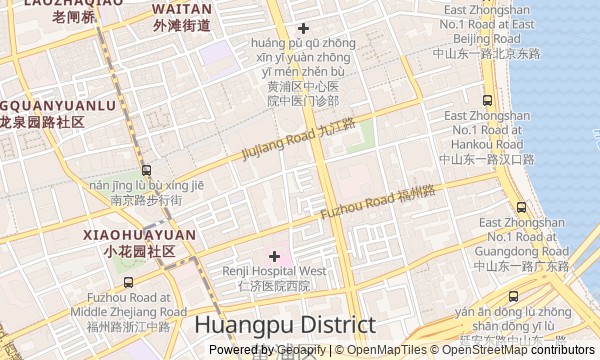
From Waibaidu Bridge along the Huangpu River and down East Nanjing Road to People's Square
Guide On Map on your phone
Open the walk like a regular app
It takes about 10 seconds to install. No app store needed.
The whole path
Route map
About the walk
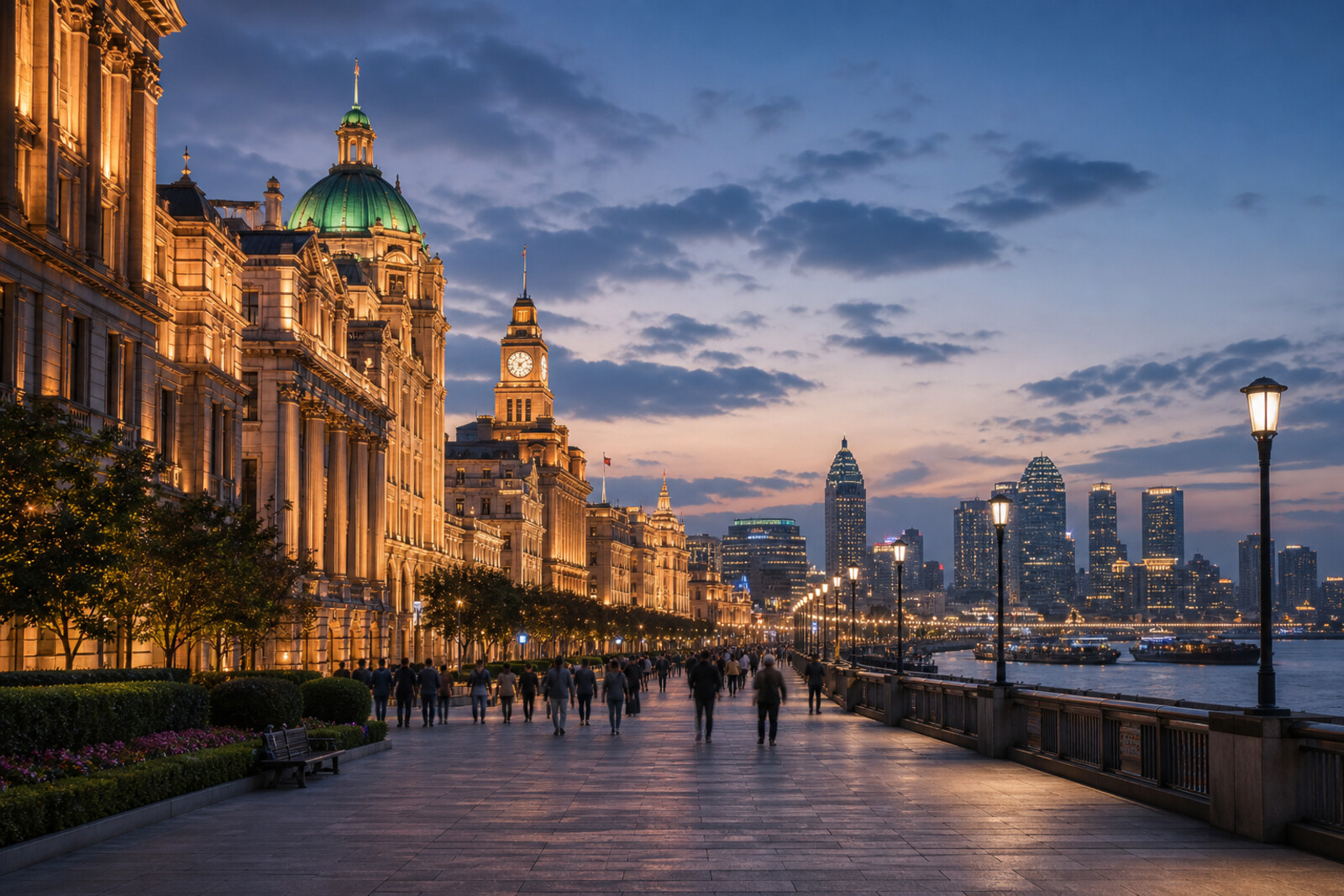
You will begin at Waibaidu Bridge, pass through the quiet former consular quarter, and reach the Huangpu River. From there, the route follows the facades of the Bund, turns onto East Nanjing Road, and ends at People's Square. By the water, you will untangle how a trading waterfront became a place for strolling—and who was first allowed to stroll there. Along the way, you will encounter a bridge that charged people to cross; Bibles at garden gates; a dome hidden beneath plaster; and two bags of beans that decided an expensive building choice. The story gives its answers not as slogans, but through accounts, letters, city rules, and people's decisions. By the time you reach People's Square, you will read this part of Shanghai as a long argument over who got the bridge, the waterfront, the shopping street, and the land of the former racecourse.
Why this order
The bridge is the first place to raise the question of the right to pass through; just beyond its southern end, the former consular site shows how the right to stroll by the river emerged beside it. Returning to the river mouth brings you to Huangpu Park, where public access to the waterfront collided with restrictions on entering the garden. From the park, the route joins the Bund's promenade: after the dispute at the gates, the argument over the entire waterfront becomes clear. Heading south along the facades, you reach the customs clock and the bank dome—two traces of the trading order. A short return north leads to the Fairmont Peace Hotel and the corner of East Nanjing Road, where the story of the business district gives way to the story of a dangerous intersection. Turning west from the river continues the theme of trade at Wing On Department Store. The same street leads to the former racecourse: after the struggle for customers, the route ends with a dispute over a large piece of city land.
Those who want to understand the Bund through urban conflicts rather than a list of architectural styles People who enjoy walks where a waterfront gives way to a busy shopping street Those interested in specific letters, rules, and human calculations
Those looking for a route made up only of quiet side streets Those who want to limit the experience to views of the Huangpu River and photographs of facades Those not prepared for a story about a military catastrophe at the site
Before you go
Wear comfortable shoes, and expect the slowest part of the walk to come not from the distance but from crossings, photo-taking groups, and stops at facades. The main story is designed for viewing from outside: entering a hotel, museum, exhibition space, or other active institution is not part of the route. If you would like to add an interior visit to Rockbund Art Museum, Fairmont Peace Hotel, or one of the museums near People's Square, check their visiting rules and current program in advance. On the waterfront, stay clear of the edge of the pedestrian flow, and before listening beside a busy street, find a spot where you will not block the way.
When to go
Start in the second half of the day to see the bridge and the northern Bund in natural light, then reach East Nanjing Road as the signs come on. Morning works for a quieter pace and a closer look at the details. Summer midday and holiday evenings make the walk noticeably more difficult.
Backup plan
If the riverfront is hit by strong wind, rain, or crowds that are too dense, do not try to complete the whole route in one push. See Waibaidu Bridge, Waitanyuan, and the nearest stretch of the Bund as briefly as the weather allows, then end the river section at Fairmont Peace Hotel. The inner half—East Nanjing Road and People's Square—can be done separately without losing its meaning. If you begin to feel unwell, skip the long promenade but keep the stops at the clock and the hotel, where the turn in the story is especially clear. People's Square works well as a self-contained ending and a transport exit point; leave museum visits for a separate plan.
Route conditions
Surface. Paved — 1.4 km (data covers 29% of the route)
Facilities. Toilets — 7
Elevation. Ascent — 65 m; descent — 65 m
OpenStreetMap extract of July 9, 2026: database data, not a check on the ground. Data © OpenStreetMap contributors, ODbL licence
Walk plan
Open in maps ↗- 1
Waibaidu Bridge
This is where the walk’s central question emerges: who has the right to control a public passage, and on what grounds? - 2
Waitanyuan and Rockbund
The district will show how the commercial waterfront gained a place for evening walks. - 3
Huangpu Park and the Memorial
Here, the theme of shared space runs up against the rules that separated taxpayers from the garden. - 4
the Bund Promenade
This stop explains why an open promenade without cargo piers was preserved in the center of the port. - 5
Customs clocks and a banking dome
Here, old city calculations remain in the clock faces, while a change of banks lies beneath the dome. - 6
Peace Hotel and the corner of Nanjing Road
The intersection will remind you that a commercial center and a shelter can stand beside a military target. - 7
East Nanjing Road
A department store will show how customer traffic was counted, retained, and turned into real estate. - 8
People's Square
The finale will explain why the former racetrack was divided among the square, the park, and city institutions.
Route features
Everything you need stays in the browser
Progress, saves and your trip plan are stored on this device.
Add Guide On Map to your home screen so the walk opens outside the browser.
How we handle sources, maps and corrections: our editorial standards