 Guide On Map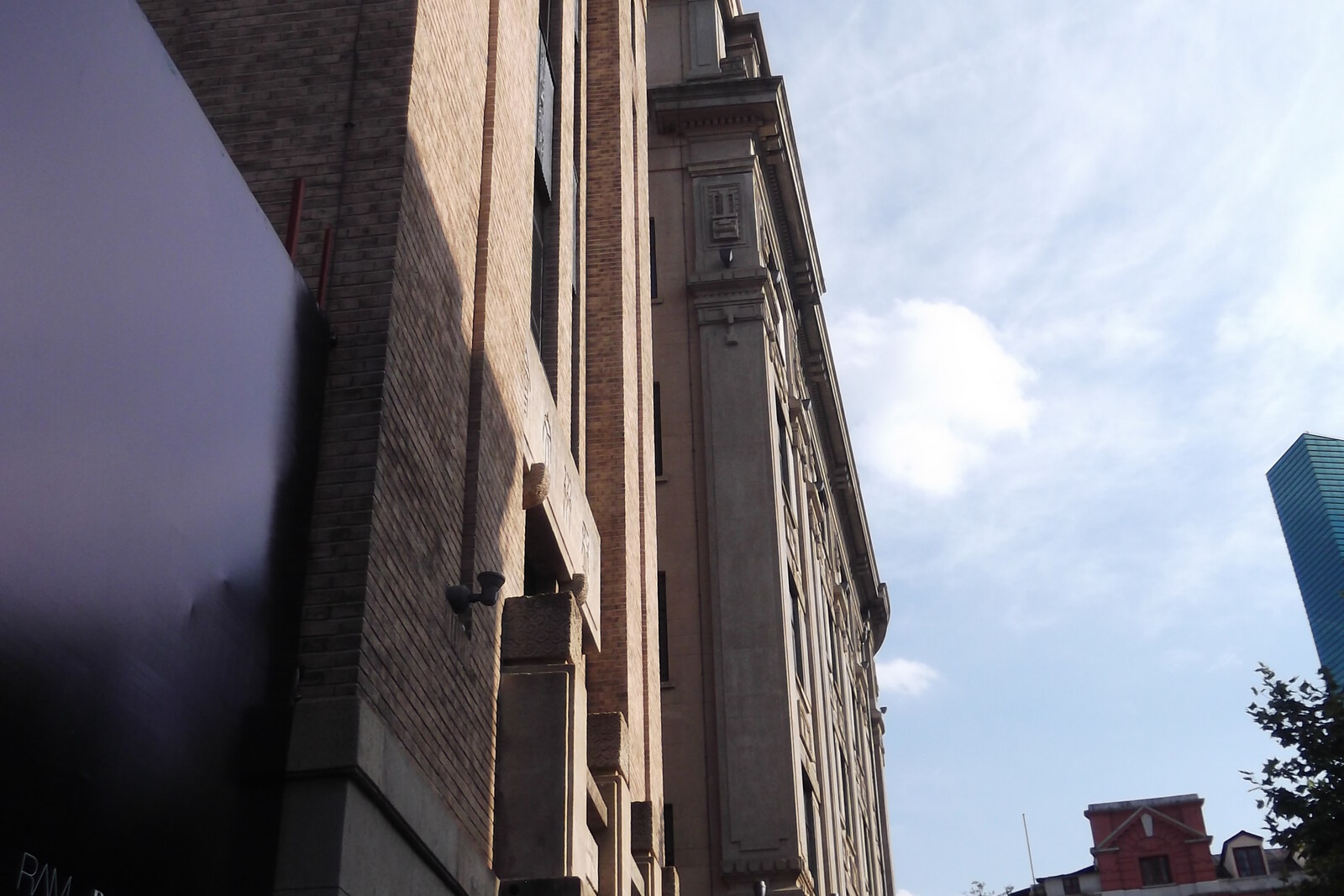
Look around first
What to notice
- The five-arched veranda of the former consulate
- The fence around the consular plot
- The district’s old and new buildings
- The facade of the contemporary art museum
The story of the place
Behind the fence, the third house of the British Consulate has survived; five arches open in succession along its veranda. The consular property occupied land at the mouth of Suzhou Creek, while a commercial waterfront gradually took shape beside it. The district’s old buildings were connected with new ones, and contemporary art, commerce, restaurants, and offices now stand side by side here. The name Waitanyuan was given to this place recently, recalling an early stretch of waterfront opened for public use.
In the summer of eighteen forty-eight, Rutherford Alcock was trying to move the British Consulate out of the old Chinese city. A former military surgeon who had become consul in Shanghai, he was responsible here for British merchants and pressed to move his residence and chancery to the Huangpu. After a severe wave of illness among foreigners, Alcock wrote to his superiors that he feared spending another summer at the former site.
At the time, the cause of illness was sought in foul air: doctors did not yet know about bacteria. Alcock relied on open space by the river, ventilation, and drainage. The plot beyond the present fence had already been purchased in eighteen forty-six, but officials in London did not approve the move. Alcock continued to press his case, and by the end of eighteen forty-nine he had moved the consulate here. He obtained an official residence where he wanted it—right at the mouth of Suzhou Creek.
The consul then ordered a strip of consular land along the Huangpu to be opened for passage. To the south, trading firms were already reinforcing the waterfront in front of their warehouses, so the first Bund did not emerge from a single point. But it was beside the consulate that a riverside plot was first officially set aside for public use. By the end of the eighteen fifties, foreign residents were already coming here on horseback and walking in the evenings. The commercial waterfront was beginning to acquire a second purpose: strolling.
Alcock’s house has not survived. The first building on the site collapsed, and the next one burned down in eighteen seventy. The present building of the former consulate, with its five-arched veranda, was completed three years later. It stands on the same property where Alcock secured the move and opened a passage to the river.
The name “Waitanyuan” translates as “the source of the Bund,” but it appeared only in the early two thousands, when the district was being prepared for reconstruction; it was officially approved in two thousand six. The consular plot and the early public waterfront provided the historical basis for this name.
“Rockbund” is an even more direct name. It was formed from the Rockefeller family name and the word “Bund”: a company of the Rockefeller family joined the project together with a Chinese developer. David Chipperfield’s architects restored the old buildings and inserted new ones between them for almost seventeen years. In two thousand twenty-three, the district reopened; it is now home to a contemporary art museum, shops, restaurants, and offices. Behind the fence stands the third consular house, while the investor’s surname remains on the signs—the investor who paid for the district’s present life.
Useful on site
Open urban space; choose a viewing spot that does not obstruct pedestrian traffic.
Checked: date not specified. Check the official source before visiting.You can understand the district’s history from the street; visit exhibition spaces and interiors separately, after checking their current conditions.