 Guide On Map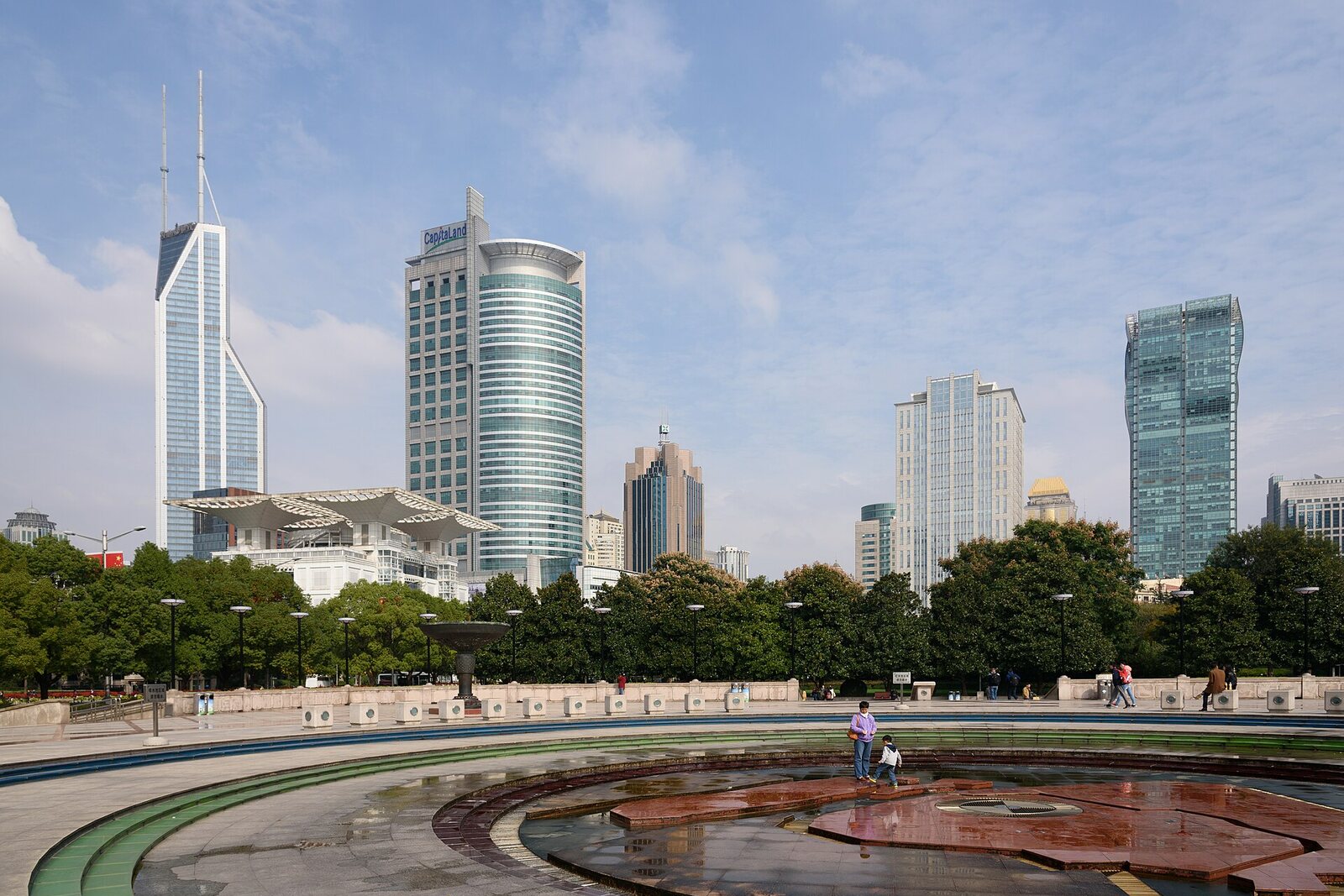
Look around first
What to notice
- The clock tower of the former club
- The square's open space
- The line of trees in People's Park
- The broad street between the park and the square
The story of the place
The open area in the city center serves as a place for city gatherings and celebrations. Across the roadway begins People's Park, and one large plot turns out to be divided into two different parts. At the edge of the square, the clock tower of the former club building remains; a library and museum first operated there, and it now houses the Shanghai History Museum. Metro lines meet below, so daily transfers are added here to holiday crowds.
In August nineteen forty-six, Shanghai's mayor, Wu Guozhen, tried to bring horses back here. The site of today's square was occupied by the racetrack of the private Shanghai Race Club. Racing had stopped as early as the spring of nineteen forty-five, and the huge plot in the middle of the crowded city stood empty. Shanghai was going through a housing crisis, and the city treasury had been drained by war and inflation. The mayor hoped to permit horse racing, impose a high tax on tickets and bets, and use that money to gradually buy the land for a park and a large gathering place.
The Race Club agreed to give the city half the proceeds from admission tickets, bets, and lotteries. The remainder would allow the club to keep the racetrack and the main activity from which it earned money. To city residents, the proposal sounded different: rare vacant land in the center was to be paid for with the money of the very people losing at the races.
The newspaper Shenbao put the question to a vote among its readers. Over four days, four thousand four hundred sixty-three letters arrived at the editorial office. Of the one thousand two hundred eighty-four completed ballots, only fifty-nine supported the return of horse racing. The rest demanded that the racetrack remain without horses and that the plot be handed over to the city. Deputies proposed creating a park, housing, a museum, a stadium, or a city hall here. They agreed on one thing: the former club must not occupy all this land again.
Wu Guozhen began negotiations to buy the land, although he openly admitted that the city had no money for such a purchase. He offered the club a plot outside the city limits. In response, the club demanded a new racetrack of the same size, a guarantee that racing would resume, and the right to set the competition days and betting rules itself. By the end of nineteen forty-eight, prices were rising so quickly and city residents' everyday needs had become so difficult that the negotiations ceased. Horse racing never returned here.
After the change of regime, the new city administration inherited the same unresolved question. On August twenty-seventh, nineteen fifty-one, Shanghai's military administration declared the racetrack land a municipal plot. Newspaper readers suggested names: Peace Square, Democracy Square, Liberation Square, People's Victory Square. A special commission chose “Shanghai People's Square.” The word “People's” indicated for whom the former grounds of a private club were now intended: city residents, for gatherings, celebrations, and recreation.
In September, workers, students, and members of youth organizations came here for voluntary public work. In twenty days, they laid out a broad ceremonial road and prepared a site for mass events. The southern part of the racetrack was set aside for the square, and the northern part for People's Park. The former club building with its clock tower first opened as a library and museum; it now houses the Shanghai History Museum.
The horse-racing oval itself disappeared. Its plot is still divided as was decided in nineteen fifty-one: the park lies to the north, the square to the south, with a broad street running between them. City institutions, the Shanghai Museum, and the Shanghai Grand Theatre stand around it, while metro lines intersect underground. The open field disputed by the mayor, the Race Club, newspaper staff, and thousands of readers has remained the city's main place for public gatherings and transfers.
Useful on site
Open urban space; choose a viewing point that does not obstruct pedestrian flow.
Checked: date not specified. Check the official source before visiting.The square is large, so choose one quiet edge for the final story; the museums around it require separate time and checking their visiting conditions.