 Guide On Map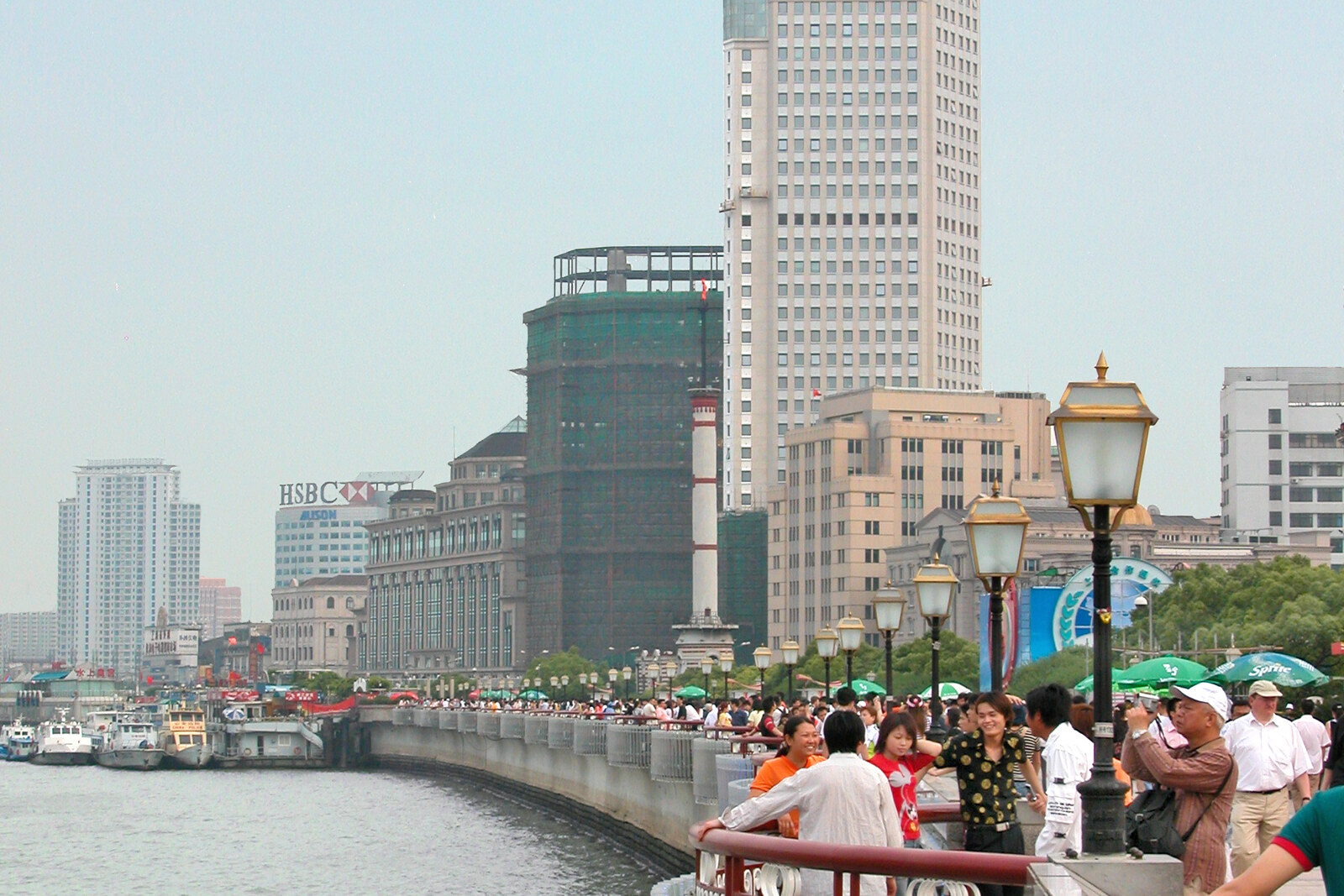
Look around first
What to notice
- Granite parapet
- Lawns by the water
- A row of stone facades
- Huangpu River
The story of the place
The embankment along the Huangpu River consists of granite reinforcement, a road, and lawns laid on raised ground. When a tidal flat still remained here, long wooden walkways stretched out to ships in the river. Ships did not come right up to shore: people and cargo were carried in small boats. On the other side of the road stand the stone facades of buildings where banks, insurance companies, and shipping offices operated.
At the end of eighteen sixty-nine, Edward Cunningham sent a four-page letter from Yokohama to Shanghai. He had just left his post as chairman of the Shanghai Municipal Council and demanded that the Huangpu waterfront be kept free of cargo piers.
At the time, that outcome did not seem inevitable. The word “Bund” entered English from India and meant an embankment or a dam; the Chinese name Waitan means “outer shore.” In the middle of the nineteenth century, the name described the place almost literally: a fortified road, a tidal flat, and long wooden walkways leading to ships. An open strip near the consulate already existed, but farther south the owners of waterfront plots repeatedly proposed filling the tidal flat with piers and warehouses.
Cunningham opposed people in his own line of business. He was a partner in the American trading house Russell & Co., came up with the Shanghai Steam Navigation Company, and raised money for it when his partners in the United States refused to risk capital. His income depended on shipping on the Yangtze River. He also founded an insurance company that covered losses from the destruction of ships and cargoes.
It was this steamship operator who explained to the council that piers would harm trade. Cunningham believed that the chief thing Shanghai had to offer along this waterfront was open space: banks, exchanges, and offices would settle here as long as a promenade, rather than stacks of cargo, remained outside their windows. He did not want noisy port districts like those in Liverpool in central Shanghai, although he himself made money from steamships.
One letter was not enough. The plot owners continued to argue with the Shanghai Municipal Council. Municipal doctor Alex Jamieson, who was seeking to have the tidal flat cleared, presented a separate report on the need to widen the embankment. In eighteen seventy-one, the consular court ruled that the waterfront strip belonged to the public, not to the owners of the neighboring land. A year later, the council reached an agreement with them: the city would pay for the granite reinforcement and the road, and the cleared tidal flat would be turned into a public garden. By eighteen seventy-nine, the buildings by the water had been demolished, the ground had been raised, and lawns had been laid.
Large ships were never brought up to the Bund. They remained in the river, while people and cargo were carried to shore in small boats. But banks, insurance companies, and shipping-company offices did indeed gather opposite the promenade.
Cunningham did not live to see the final confirmation of his calculation: he died in eighteen eighty-nine. Three decades later, a stone building numbered twenty-six was built for the insurance company he had founded. Its offices received a facade facing the Huangpu River; no cargo piers appeared beneath their windows.
Useful on site
Open urban space; choose a viewing spot that does not obstruct pedestrian flow.
Checked: date not specified. Check the official source before visiting.For a panoramic view, stop outside the main flow; some buildings are still in use, so the account does not require going inside.