 Guide On Map
Vyborg: Old Town, Castle, and Monrepos Park
From Alvar Aalto Library through Market Square and Vyborg Castle—to Monrepos Park
Guide On Map on your phone
Open the walk like a regular app
It takes about 10 seconds to install. No app store needed.
The whole path
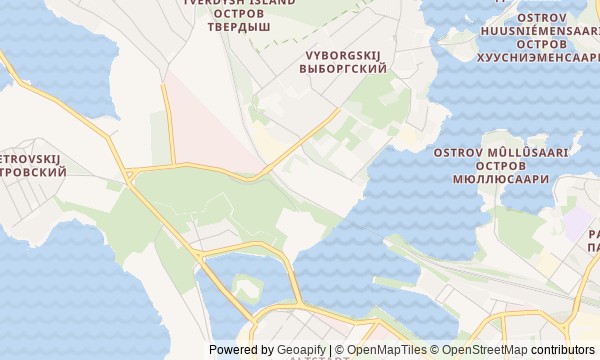
Route map
About the walk
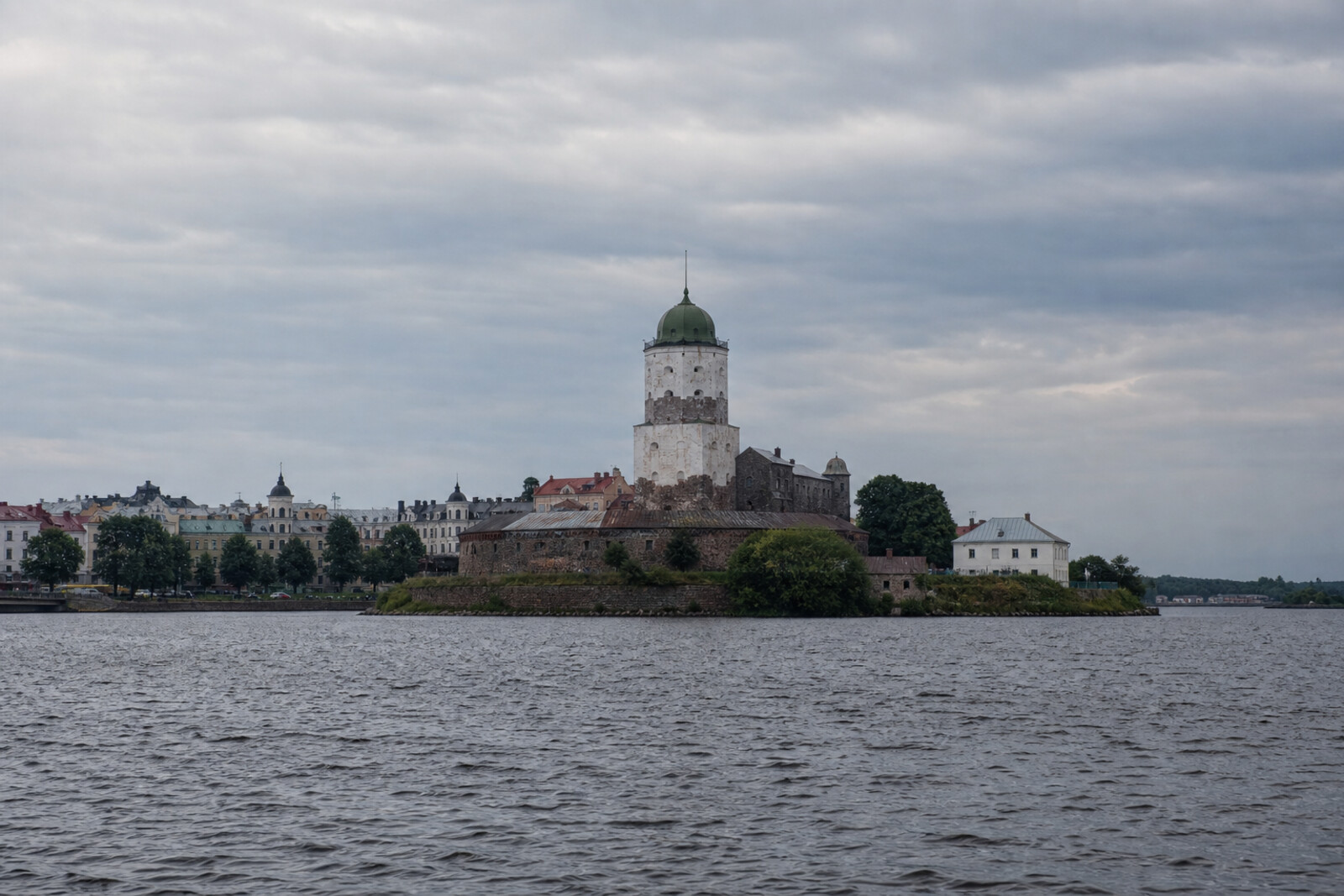
You will begin in the park, at Alvar Aalto Library, and finish among the granite cliffs and water of Monrepos Park. Between them lie Market Square, the narrow streets of the old town, a bridge, and the castle courtyard.
The route gathers Vyborg in layers. Finnish modernism gives way to a mercantile town, a Swedish fortress to a Russian siege, and city facades to a family park. On the paving stones, you will come across stones stamped with numbers. On a building, you will see dates older than the building itself. Beneath a modern bridge, you will find a separate stone support. A surprising keeper will appear beside stopped clocks.
The story moves at an unhurried, practical pace. It separates what is documented from city tradition, and shows great changes through individual decisions.
After the walk, you will recognize Vyborg by more than its towers. You will read it in the line of a dismantled wall, the company dates on granite, old buildings with new work to do, and a family chapel beyond the water.
Why this order
At the library, you will begin with an architect's project that restorers reconstructed from drawings and details. The walk through the park to Market Square immediately widens the frame: after one building comes an urban area created where fortifications were dismantled. That is why Round Tower comes next—the surviving fragment of the wall removed around it. From the tower, Severny Val Street leads to Granite Palace: here the line of fortifications becomes a street, and the memory of a trading house becomes dates on a new facade. The climb from the facade to Clock Tower reveals a second way life continues: not a commemorative inscription, but a working mechanism beside the ruins of Old Cathedral. Then Krepostnaya Street brings you to Old Town Hall Square, where a knight faces the castle; the statue's position sets up the next step. Before reaching Vyborg Castle, you must cross Fortress Bridge—the place where the water route competed with the land route. Beyond the bridge, the history of the border shifts from traces in the city to the fortress itself and its siege. The final passage from Castle Island to Monrepos Park trades military space for a family estate: after conquest and rebuilding, the route ends where the owners tried to keep the land from breaking apart.
Those who want to see Vyborg's different layers in one walk Lovers of architecture, urban history, and precise human stories Those looking for one continuous route from the center to Monrepos Park
Those looking for a short loop only through the old town Those who want a light overview without difficult episodes of war Those who do not want to finish the walk far from the center
Before you go
Check separately in advance whether you can enter Alvar Aalto Library, Clock Tower, Vyborg Castle, and St. Olaf's Tower: viewing them from outside does not require the same arrangements, while access to the interiors may be limited.
Wear sturdy shoes: the route includes cobblestones, climbs, bridges, and the natural trails of Monrepos Park. Wind and rain protection will come in handy by the water and in open areas.
Do not tie an essential break to Vyborg Market or Round Tower Restaurant—their opening does not determine the value of these stops. Bring water and save some energy for the park, where it is especially easy to linger longer than planned.
When to go
Start in the first half of the day, so you can take your time at the library and in Vyborg Old Town. Set aside a substantial stretch for the castle, especially if you plan to climb the tower. Leave Monrepos Park for daylight, and do not schedule essential stops after it: the park is best explored without rushing.
Backup plan
If the library interiors are unavailable, take in its volumes from outside and keep the account of its interior as an explanation of hidden architecture. A closed St. Olaf's Tower does not undo the route either: the boundary between stone and brickwork can be read from the island, while the castle's story is carried by its walls and the view across the strait.
In heavy rain, shorten the Old Town section to Vyborg Market, Round Tower, Clock Tower, and Old Town Hall Square, choosing confirmed accessible interiors for breaks. In Monrepos Park, do not try to cover the distant trails: focus on the main estate area, the nearest cliffs, and the restored park scenes.
Route conditions
Surface. Paved — 2.8 km; unpaved — 654 m (data covers 67% of the route)
Stairs. Flights: 1, 8 m in total
Access. Wheelchair — no; stroller — limited (stairs)
Facilities. Toilets — 5
Elevation. Ascent — 41 m; descent — 26 m
OpenStreetMap extract of July 4, 2026: database data, not a check on the ground. Data © OpenStreetMap contributors, ODbL licence
Walk plan
Open in maps ↗- 1
Alvar Aalto Library
The distinction between repairing the building and restoring the architect’s original vision matters here. - 2
Market Square and Vyborg Market
The square is needed to see how the demolition of the fortifications changed Vyborg’s commercial geography. - 3
Round Tower
This stop connects the vanished city wall with the tower for which the townspeople found a purpose that paid for itself. - 4
Granite Palace and Severny Val Street
The carved dates make it possible to link a family decision, commercial success, and construction on the site of the wall. - 5
The Clock Tower and the Ruins of the Old Cathedral
Here we will compare the ruins of a church with the clock that townspeople brought back into operation after a fire and a period of disuse. - 6
Old Town Hall Square
The fate of the statue will explain how the city's right to remember its supposed founder changed. - 7
Fortress Bridge
The bridge will explain why, for decades, the land route gave way to vessels. - 8
Vyborg Castle
The story of the siege will show the price of written terms after a border fortress falls. - 9
Monrepos Park
At the end, you will see how family burials and a ban on dividing the estate helped preserve Monrepos Park intact.
Route features
Everything you need stays in the browser
Progress, saves and your trip plan are stored on this device.
Add Guide On Map to your home screen so the walk opens outside the browser.
How we handle sources, maps and corrections: our editorial standards